
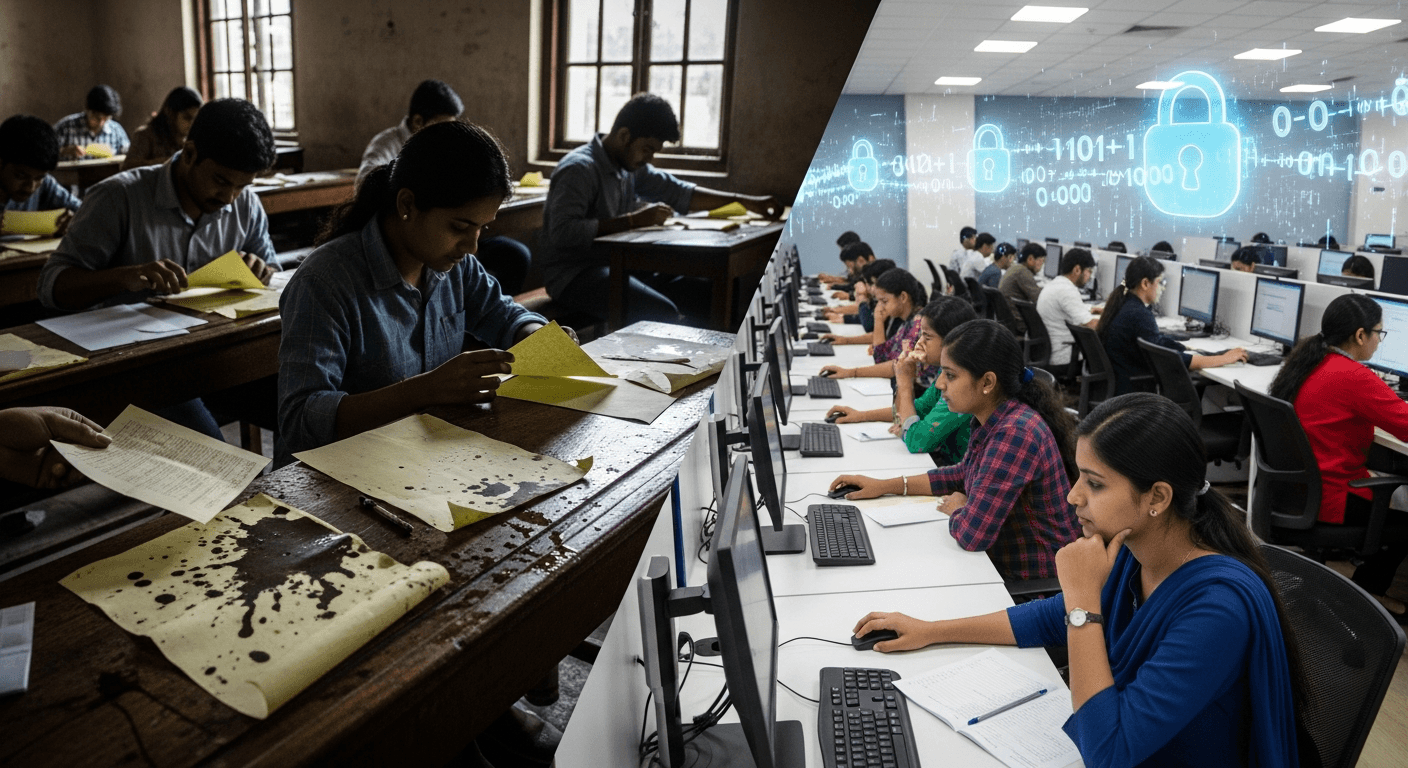
I read a recent Hindustan Times (HT) interview that claimed Computer Based Testing (CBT) can eliminate "95%" of the vulnerabilities that have plagued NEET. That’s a bold, headline‑friendly number — and as someone who thinks about how systems, people and technology intersect, I want to explore what that claim means in practice.
What the 95% claim gets right
- CBT does remove many classic, paper‑era vulnerabilities: no physical printing, no centralized storage and transport of question papers, and fewer points for physical theft or printing‑stage leaks.
- When implemented well, CBT allows for strong randomization (unique question sets or shuffled options per candidate), time‑stamped digital logs, and more auditable trails than paper OMR sheets.
- CBT also opens the door to rapid forensic analysis: server logs, access records, and cryptographic proofs can show exactly when and how material moved.
Why 95% sounds optimistic
- Digital systems have their own attack surface. Replacing printing‑room leaks with servers and networks doesn’t remove risk — it changes it. Threats include server compromise, insider access at test‑delivery vendors, tampering with client applications, or manipulation of databases.
- Operational complexity introduces new failure modes: misconfigured encryption, supply‑chain attacks on testing software, or outsourced proctoring teams with weak controls.
- Equity and access aren’t vulnerabilities to be eliminated by security alone. If CBT rollout ignores the realities of device access, bandwidth, local testing centers and candidate familiarity, it trades one set of problems for another.
The practical shape of real improvement
If the goal is to substantially reduce vulnerabilities, not to claim a perfect fix, then a combination of the following measures matters:
- End‑to‑end design: generate encrypted question bundles, deliver them only inside secured, auditable test clients, and ensure keys are never exposed on public networks.
- Air‑gapped or controlled delivery at centres: avoid sending live questions over open internet at the last mile wherever possible; consider secure hardware tokens for decryption at the centre.
- Deep randomization: build large, vetted item banks and assemble per‑candidate papers so that even leaked items have minimal value.
- Independent monitoring and audit: third‑party monitors, continuous real‑time logging, immutable audit trails, and post‑exam forensic teams.
- Human checks: biometric authentication, on‑site proctors, CCTV with tamper‑proof storage and routine cross‑checks of anomalous patterns.
- Training and mock runs: students, administrators and vendors must practice the CBT experience so glitches become predictable and solvable.
I have advocated practical readiness for a CBT shift before — especially the need to make students comfortable with online tests and mock environments so transition friction is low How to Beat NEET‑UG – 2025.
Unintended consequences we must watch for
- A false sense of invulnerability: overreliance on technology can blunt oversight; regular audits and red‑team testing are essential.
- Vendor concentration risks: if a single vendor runs exam infrastructure for millions, their single point of failure becomes systemic risk.
- Accessibility gaps: rural candidates, those with disabilities, and low‑income students will need reliable centers and accommodations — otherwise the reform will widen inequality.
My practical recommendation (a short checklist)
- Accept that CBT can remove many paper‑era vulnerabilities, but not magically '95%' unless paired with protocol, audits and equity measures.
- Build layered security: cryptography + center controls + human oversight + independent audits.
- Run large public mock CBT programs (free and widely accessible) so students and administrators don’t learn under pressure.
- Publish post‑exam forensic summaries (redacted as needed) to build public confidence and to show what worked and what didn’t.
A final thought
Technology gives us powerful tools — but not a magic wand. Moving NEET to CBT is a necessary modernization that can dramatically reduce certain classes of risk. Yet security is socio‑technical: it requires clear protocols, capable institutions, trained people and transparent accountability. If we treat CBT as one element in a broader reform — not the entire solution — we will make far more durable progress.
Regards,
Hemen Parekh
Any questions / doubts / clarifications regarding this blog? Just ask (by typing or talking) my Virtual Avatar on the website embedded below. Then "Share" that to your friend on WhatsApp.
Get correct answer to any question asked by Shri Amitabh Bachchan on Kaun Banega Crorepati, faster than any contestant
Hello Candidates :
- For UPSC – IAS – IPS – IFS etc., exams, you must prepare to answer, essay type questions which test your General Knowledge / Sensitivity of current events
- If you have read this blog carefully , you should be able to answer the following question:
- Need help ? No problem . Following are two AI AGENTS where we have PRE-LOADED this question in their respective Question Boxes . All that you have to do is just click SUBMIT
- www.HemenParekh.ai { a SLM , powered by my own Digital Content of more than 50,000 + documents, written by me over past 60 years of my professional career }
- www.IndiaAGI.ai { a consortium of 3 LLMs which debate and deliver a CONSENSUS answer – and each gives its own answer as well ! }
- It is up to you to decide which answer is more comprehensive / nuanced ( For sheer amazement, click both SUBMIT buttons quickly, one after another ) Then share any answer with yourself / your friends ( using WhatsApp / Email ). Nothing stops you from submitting ( just copy / paste from your resource ), all those questions from last year’s UPSC exam paper as well !
- May be there are other online resources which too provide you answers to UPSC “ General Knowledge “ questions but only I provide you in 26 languages !




No comments:
Post a Comment