
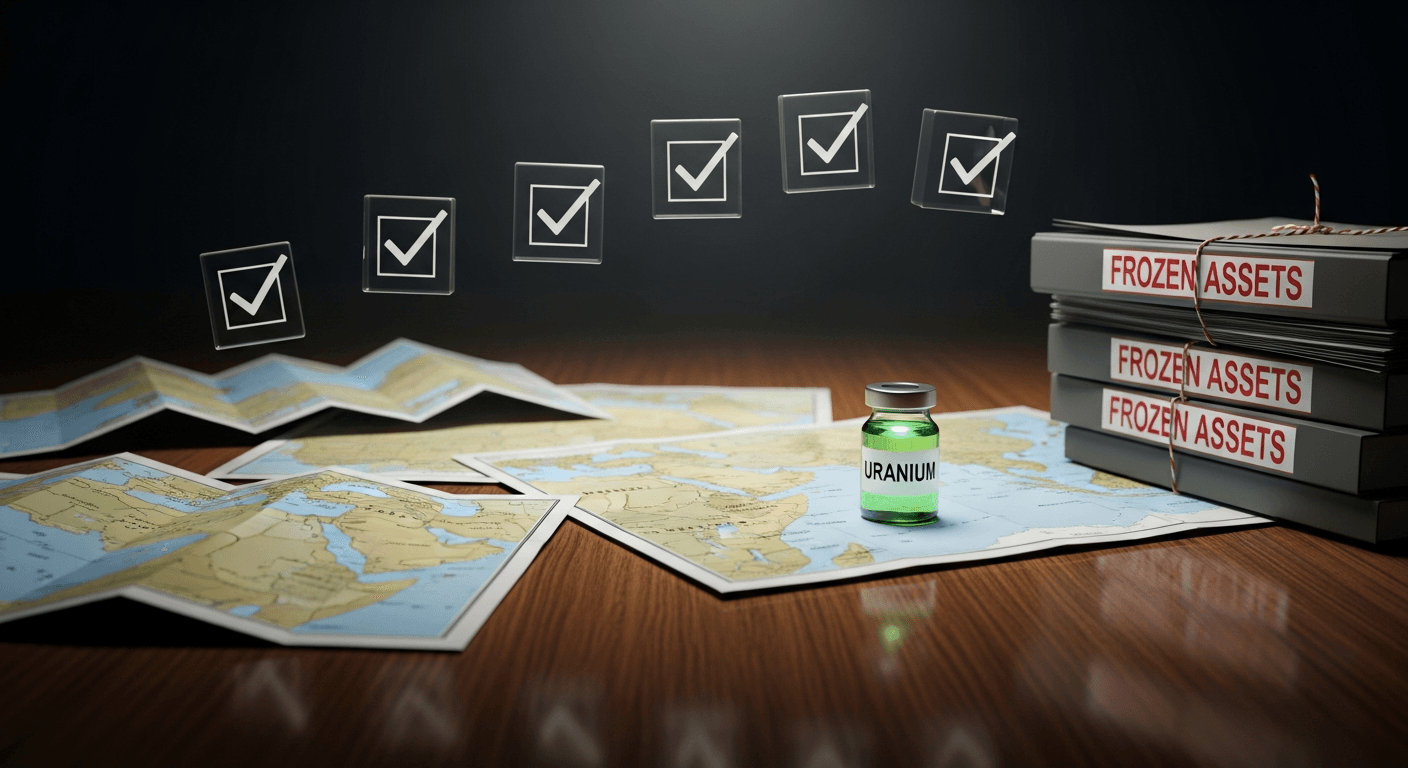
From uranium transfer to frozen assets: US sets five conditions on Iran proposal
I write this as someone who watches geopolitics less like a chessboard and more like a temperamental ecosystem — where a single policy shift ripples through economies, alliances and domestic politics. The recent headlines about a U.S. response to an Iranian proposal — framed around uranium transfers and the release of frozen assets — underline how fragile any path back to a negotiated settlement remains.
Quick background: JCPOA and what led us here
The 2015 Joint Comprehensive Plan of Action (JCPOA) limited Iran's nuclear program in exchange for sanctions relief. After the U.S. withdrawal in 2018 and subsequent re‑imposition of sanctions, Tehran steadily rolled back limits and expanded its enrichment capacity. Efforts to revive a return to the JCPOA framework have been intermittent — punctuated by diplomacy, domestic politics in Washington and Tehran, and mounting regional tensions. The International Atomic Energy Agency (IAEA) has been central to monitoring and reporting; its technical findings have repeatedly shaped negotiating positions.
I have written before about how frozen assets and sanctions architecture can become central levers in diplomacy — and how they can also harden into bargaining chips that slow compromise Will this work? Your guess.
The U.S. five conditions — a summary
Public reporting and official briefings (and the tone of recent statements) point to five core conditions that the United States appears to be attaching to any serious engagement with Iran’s latest proposal. For clarity I frame these as the five conditions being emphasized in U.S. messaging rather than as unilateral, legally codified demands:
- Verifiable cessation of uranium transfers and a rollback of enrichment activity
- The core U.S. ask is that uranium shipments, enrichment levels and stockpiles immediately cease moving toward weapons‑usable thresholds, and that Iran allow an independent verification regime to confirm this.
- Restored and enhanced IAEA access and monitoring
- The U.S. insists on uninterrupted IAEA access to sites and data (including camera feeds and chain‑of‑custody assurances) as a non‑negotiable verification baseline.
- Phased release of frozen Iranian assets tied to measurable compliance
- Frozen assets abroad would be released in tranches only after verifiable milestones are met, with legal and financial safeguards to prevent diversion to destabilizing activities.
- Concrete limits on regional proxy activities and missile programs (at least confidence‑building measures)
- While the nuclear file is primary, Washington is seeking commitments — or pragmatic steps — that reduce the risk of Tehran using financial or material flows to escalate across the region.
- A durable, enforceable mechanism for dispute resolution and sanctions snapback
- Any re‑entry pathway must include clear, rapid remedies (including a credible snapback mechanism) if violations occur, to reassure partners and deter backsliding.
I present these as distilled themes observed in U.S. statements and negotiation posture rather than as a verbatim checklist from a single document.
What this means for diplomacy
These conditions aim to make verification and sequencing central. Diplomatically this is sensible: it replaces trust with verifiable steps. But it also raises the bar for Iran to accept an agreement it can sell domestically. The insistence on phased asset releases tied to verifiable steps is a compromise approach — it offers economic relief while trying to limit the political risks that led Washington to pull back in 2018.
Hypothetical voices illustrate the split:
(Hypothetical U.S. official): "We can unfreeze resources that improve the lives of ordinary Iranians, but only when inspectors can account for every kilogram of nuclear material."
(Hypothetical Iranian analyst): "Any deal that leaves major assets frozen at political whim will be portrayed at home as surrender — and could strengthen hardliners."
Sanctions, regional security and domestic politics
Sanctions: Tying releases to milestones transforms sanctions from a blunt instrument into a calibrated policy tool. That can preserve leverage, but it also adds complexity — financial intermediaries will demand ironclad assurances against secondary sanctions and reputational risk.
Regional security: If successfully implemented, the five‑condition approach could reduce nuclear escalation risk. Yet without parallel diplomacy on missiles and proxies, the region may see transactional calm without structural reassurance — a fragile equilibrium.
Iranian domestic politics: The hardliners who profit politically from resistance to Western pressure will likely cast conditional unfreezing as an attempt to control Iran’s sovereign choices. Reformists or pragmatists may argue incremental relief is better than continued isolation. The bargaining dance will be as much about internal narratives as about checkpoints and cameras.
(Hypothetical security analyst): "A phased approach lowers the chance of a sudden breakdown, but it also gives domestic spoilers in both capitals more time to rally opposition."
Risks and opportunities
Risks:
- Negotiations stall over sequencing disputes (money now vs. inspections first).
- Regional actors (Israel, Saudi Arabia) press for broader security guarantees, complicating consensus.
- Financial institutions balk at handling Iranian funds without ironclad legal protections.
Opportunities:
- A verifiable, stepwise deal could rebuild multilateral inspection norms and revive elements of the JCPOA framework.
- Phased asset releases tied to clear verification could deliver near‑term relief to civilians while maintaining pressure on problematic behavior.
Conclusion
If the United States is indeed setting five conditions around uranium transfers, IAEA access, phased asset releases, regional behavior, and enforceable snapback mechanisms, the approach is sober and verification‑centred. That makes strategic sense — but it also makes diplomacy harder. The success of any deal will depend less on a single headline demand and more on the sequencing, political narratives, and the ability of mediators to craft tangible guarantees that reassure domestic audiences on both sides.
Suggested further reading
- International Atomic Energy Agency (IAEA): https://www.iaea.org/
- United Nations: https://www.un.org/
- Reuters coverage: https://www.reuters.com/
- New York Times: https://www.nytimes.com/
- BBC: https://www.bbc.com/
Regards,
Hemen Parekh
Any questions / doubts / clarifications regarding this blog? Just ask (by typing or talking) my Virtual Avatar on the website embedded below. Then "Share" that to your friend on WhatsApp.
Get correct answer to any question asked by Shri Amitabh Bachchan on Kaun Banega Crorepati, faster than any contestant
Hello Candidates :
- For UPSC – IAS – IPS – IFS etc., exams, you must prepare to answer, essay type questions which test your General Knowledge / Sensitivity of current events
- If you have read this blog carefully , you should be able to answer the following question:
- Need help ? No problem . Following are two AI AGENTS where we have PRE-LOADED this question in their respective Question Boxes . All that you have to do is just click SUBMIT
- www.HemenParekh.ai { a SLM , powered by my own Digital Content of more than 50,000 + documents, written by me over past 60 years of my professional career }
- www.IndiaAGI.ai { a consortium of 3 LLMs which debate and deliver a CONSENSUS answer – and each gives its own answer as well ! }
- It is up to you to decide which answer is more comprehensive / nuanced ( For sheer amazement, click both SUBMIT buttons quickly, one after another ) Then share any answer with yourself / your friends ( using WhatsApp / Email ). Nothing stops you from submitting ( just copy / paste from your resource ), all those questions from last year’s UPSC exam paper as well !
- May be there are other online resources which too provide you answers to UPSC “ General Knowledge “ questions but only I provide you in 26 languages !




No comments:
Post a Comment