
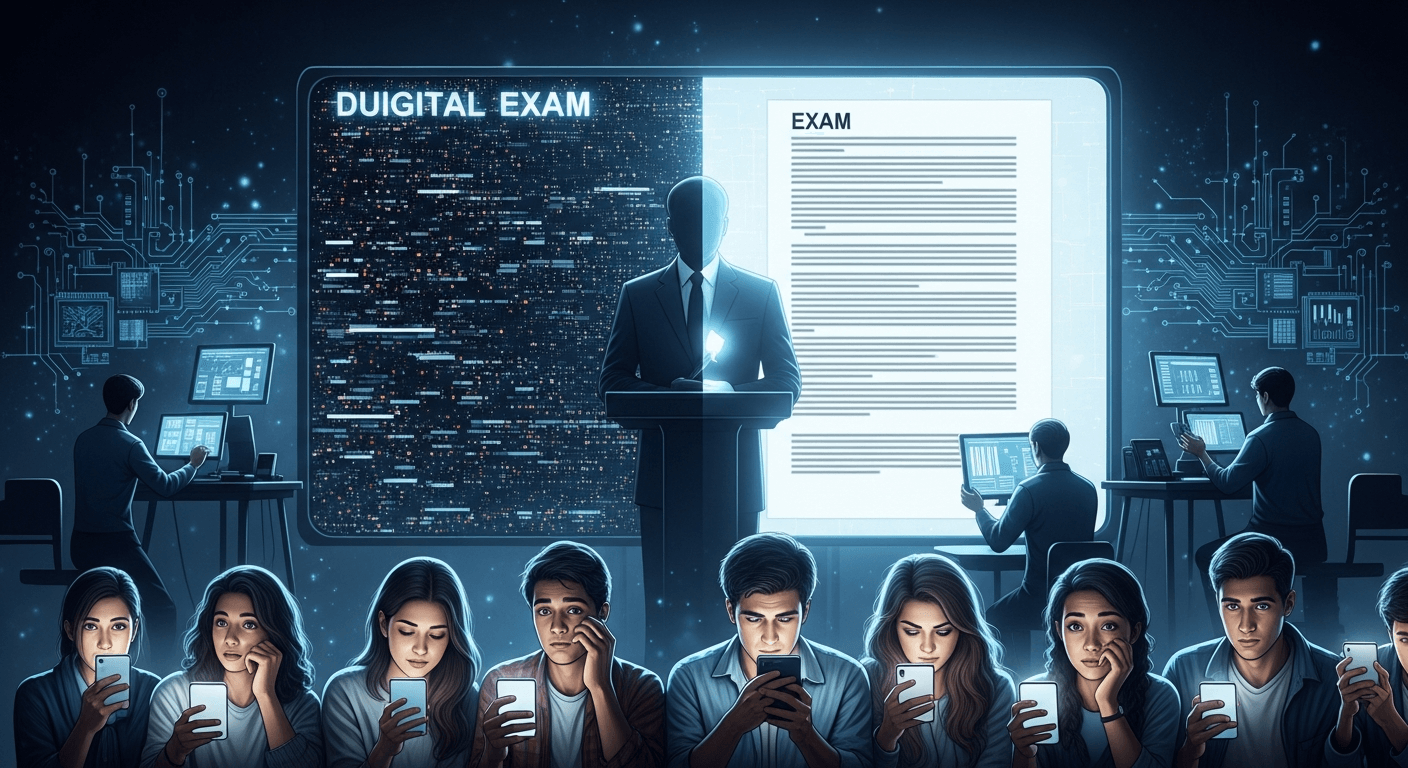
On-Screen Marking: My Take
I watched the recent defence of on-screen marking — and the candid admission that glitches have occurred — with a mixture of relief and concern. Relief, because a commitment to digital assessment is finally being treated as more than a buzzword; concern, because the human cost of a technology hiccup in high-stakes exams is real and immediate.
Why I support the idea (with caution)
I've long argued that thoughtfully designed digital assessment can expand access and reduce systemic friction. In my earlier writing I suggested mobile-friendly, unique-test delivery as a way to reduce cheating and scale testing Hallucinating Hemen?. The upside is clear:
- Speed: Results can be delivered far faster than paper-based workflows.
- Scale: Cloud-based delivery and automated marking make mass testing more manageable.
- Security: Randomized unique papers reduce copying and collusion.
- Analytics: Richer, faster insights into learning gaps and question fairness.
Those advantages are real — and they matter for millions of students trying to get fair, timely outcomes.
Why owning up to glitches matters
Admitting a problem is the first step to fixing it. When the minister publicly acknowledged glitches, it signalled two necessary things:
- Accountability. A system that affects thousands of lives must be accountable in public view.
- Transparency. Citizens deserve an honest timeline and explanation when an exam pipeline stumbles.
But words must be followed by robust action plans.
What should happen next (my checklist)
If we want on-screen marking to be trusted and durable, policymakers and implementers should commit to a clear, public roadmap:
- Pre-launch stress testing and independent technical audits of software and infrastructure.
- Clear fallback procedures: paper or hybrid options when critical failures occur.
- Publicly disclosed incident reports explaining root causes and corrective steps (not just PR statements).
- Difficulty-calibration and standard-setting so marks remain comparable across randomized or adaptive papers.
- Student support lines, fast re-evaluation windows, and remedial relief where glitches affected outcomes.
- Phased rollouts: start with lower-stakes or optional exams, learn fast, then scale.
- Open, third-party access to anonymized assessment logs for independent verification of fairness.
The ethical horizon: fairness over novelty
Technology is seductive. But in high-stakes assessment, fairness must outrank novelty. We must ask:
- Who suffers when the system fails? (Often the most vulnerable students.)
- How do we ensure parity across regions with uneven connectivity and device access?
- Are we prioritizing speed and cost savings over robust human oversight?
If the answer to any of those questions is "we'll fix it later," we are not ready.
A personal ask to those running the change
If you are implementing on-screen marking, please treat these as non-negotiables:
- Publish a public incident response plan now.
- Fund independent audits and make summaries public.
- Provide immediate remediation for students impacted by glitches — not a months-long bureaucratic slog.
I remain optimistic. I've seen how properly designed digital tools can level playing fields and create new learning opportunities. But optimism without discipline becomes hubris. Owning glitches is good. Owning the fix — transparently, equitably, and quickly — is what truly earns public trust.
I first flagged the potential of unique, mobile-friendly tests in my earlier post, and I keep returning to the same point: technology alone won't solve educational inequities. It can amplify good policy — or it can magnify gaps.
Regards,
Hemen Parekh
Any questions / doubts / clarifications regarding this blog? Just ask (by typing or talking) my Virtual Avatar on the website embedded below. Then "Share" that to your friend on WhatsApp.
Get correct answer to any question asked by Shri Amitabh Bachchan on Kaun Banega Crorepati, faster than any contestant
Hello Candidates :
- For UPSC – IAS – IPS – IFS etc., exams, you must prepare to answer, essay type questions which test your General Knowledge / Sensitivity of current events
- If you have read this blog carefully , you should be able to answer the following question:
- Need help ? No problem . Following are two AI AGENTS where we have PRE-LOADED this question in their respective Question Boxes . All that you have to do is just click SUBMIT
- www.HemenParekh.ai { a SLM , powered by my own Digital Content of more than 50,000 + documents, written by me over past 60 years of my professional career }
- www.IndiaAGI.ai { a consortium of 3 LLMs which debate and deliver a CONSENSUS answer – and each gives its own answer as well ! }
- It is up to you to decide which answer is more comprehensive / nuanced ( For sheer amazement, click both SUBMIT buttons quickly, one after another ) Then share any answer with yourself / your friends ( using WhatsApp / Email ). Nothing stops you from submitting ( just copy / paste from your resource ), all those questions from last year’s UPSC exam paper as well !
- May be there are other online resources which too provide you answers to UPSC “ General Knowledge “ questions but only I provide you in 26 languages !



No comments:
Post a Comment