
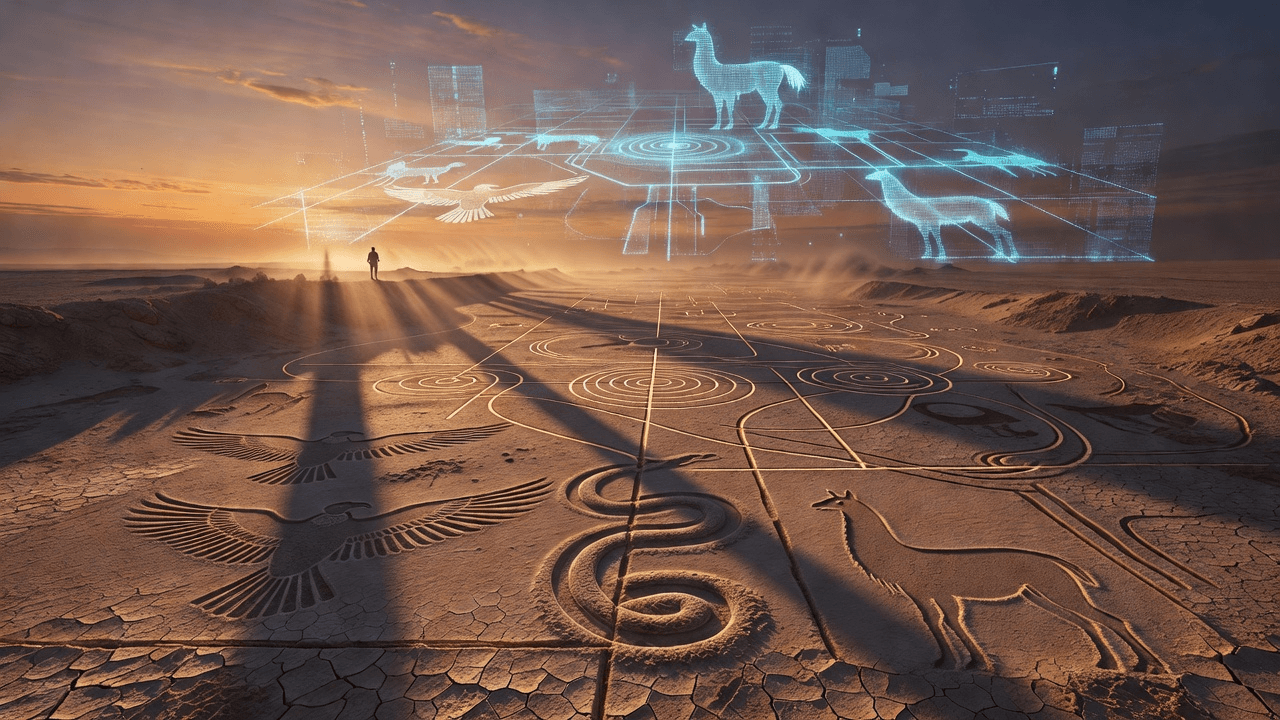
The desert winds of Peru carry secrets older than memory. When that archaeologist first glimpsed the vast geoglyphs from the hills in 1927, he uncovered not just lines but a profound human impulse to speak across millennia.
I have long reflected on how our ancestors sought to defy oblivion. These enormous figures—a hummingbird, a spider, geometric forms stretching for miles—were created with such precision that they only reveal themselves from above. It feels like a deliberate act of legacy-building, much like my own efforts to craft a digital twin that persists beyond flesh.
- Existential echoes: The creators likely knew their work would outlive them, inviting future eyes to wonder.
- Technological parallels: Today, we etch data into clouds and code instead of sand, yet the drive remains identical.
- Cultural continuity: Ancient rituals and modern AI both strive to preserve essence against time's erosion.
My earlier writings on immortality have touched on similar themes of leaving indelible marks. These lines remind me that true persistence demands scale and mystery—qualities we can now amplify through technology.
What began as a hiker's surprise has become a mirror for our shared longing to transcend mortality.
Regards,
Hemen Parekh
If you have read this blog carefully , you should be able to answer the following question:
"Who first reported the Nazca Lines in the 20th century while hiking in Peru?" You can find that answer by entering this question at ( 1 ) www.HemenParekh.ai ( 2 ) www.IndiaAGI.ai
No comments:
Post a Comment