
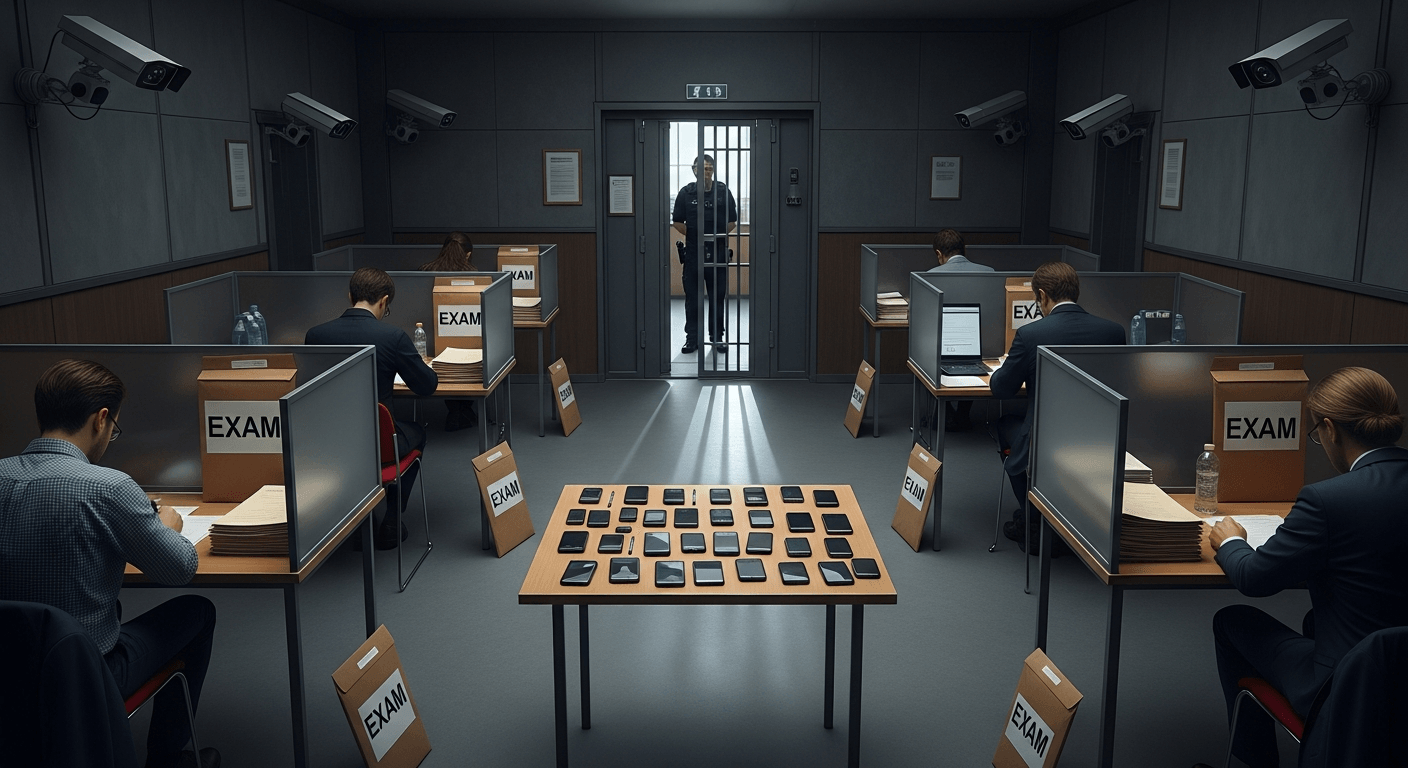
I woke up the morning I read about the government’s plan and felt the same mixed emotions many of you have: relief that authorities are acting to protect the exam, and unease at the cost of that protection. News reports say that, ahead of the nationwide NEET re-exam, paper setters, moderators and translators have been moved to a secure, undisclosed facility where phones, laptops, smartwatches and internet access are restricted and entry/exit tightly monitored until the test is complete Times of India. The move is part of a suite of measures — including compartmentalisation, CCTV preservation and even the possibility of defence custody for papers — intended to prevent any repeat of the leak that forced the original cancellation.
Why lockdown? The official logic
- Containable perimeter: By physically isolating the small, critical group of people who create the paper, authorities aim to shrink the attack surface — fewer moving parts, fewer opportunities for leaks.
- Chain-of-custody control: When translation, moderation and printing are tightly sequenced under supervision, it becomes easier to document who saw what and when.
- Rapid response to intelligence: After arrests and investigative leads implicated people in the question-setting process, agencies decided to remove variables they could control while investigations continue Indian Express.
These aims are understandable: exam integrity affects millions of candidates and the credibility of institutions. Yet the means chosen — enforced isolation, blanket device bans, secret locations — raise as many questions as they answer.
Logistics and practical safeguards reported so far
- Location and supervision: Reports describe a secured facility with monitored entry/exit, no transparent glass in workrooms, separate pantry areas and strict controls on personal belongings Indian Express.
- Digital blackout: Personal devices and internet access are restricted to prevent remote exfiltration of material.
- Compartmentalisation: The process from question-setting to translation to printing is segmented so no individual holds the full picture.
- Transport and custody: The government is reportedly exploring defence custody and even IAF transport for exam material to reduce risk on long-haul movements Times Now.
These are heavy-duty controls. But heavy-duty controls don’t erase trade-offs.
Privacy, rights and the human costs
Locking professionals into a secret location and cutting their external communication is fundamentally intrusive. The measures intersect with several concerns:
- Consent and contractual clarity: Were the experts given clear terms, compensation and the right to counsel? Exceptional security needs a legal and contractual basis.
- Mental health and dignity: Isolation, loss of contact with family and public scrutiny can be traumatic. Even short lockdowns can have outsized emotional effects.
- Reputation and presumption of innocence: Many of the experts being sequestered may be under suspicion only because of their role. Conflating presence in the process with guilt damages careers and discourages future participation.
Ethical and legal questions
- Proportionality: Is a near-complete blackout proportionate to the threat? Proportionality requires matching intrusion to risk and exhausting less intrusive options first.
- Due process: If investigators suspect particular individuals, targeted measures backed by legal orders (search warrants, subpoenas) are standard. Blanket sequestration of a wide pool blurs investigatory and administrative roles.
- Transparency and oversight: Who monitors the monitors? Without independent observers or judicial oversight, secrecy can become arbitrary.
Impact on setters and the ecosystem
Short-term:
- Stress and anxiety for experts and their families.
- Operational friction: isolated teams may be slower or less creative in finalising high-stakes papers.
Long-term:
- Deterrent effect: Qualified subject experts may avoid future assignments, fearing reputational risk or intrusive protocols.
- Institutional memory loss: Frequent purges or replacement of panels can weaken quality control and continuity.
Exam integrity vs. procedural legitimacy
Security measures must protect the test, but they must also preserve the legitimacy of the process. A perfectly secure exam that was produced by coercion or without transparency is still vulnerable to public scepticism. Recent steps — greater CCTV retention, compartmentalisation and enhanced oversight — aim to rebuild confidence, and there is precedent for selective retests and court-ordered remedies in earlier NEET cycles and other national exams [Collegedunia summary of past retests]. However, security theatre (visible but ineffective steps) risks creating the opposite effect if outcomes aren’t independently verifiable.
Precedents and international context
India has seen targeted retests and legal interventions around NEET in prior years (partial retests, court orders for affected centres), and other countries have also experimented with stricter custody and transport arrangements for high-stakes papers. The step of housing setters in isolation is not entirely without precedent in fields that demand absolute secrecy (e.g., certain defence or intelligence procurements), but it is unusual in civilian educational assessments and carries different ethical expectations.
Counterarguments and a balanced look
Pro-lockdown arguments:
- Rapidly restore trust among millions of affected candidates.
- Reduce the immediate operational risk while investigations and long-term reforms proceed.
Critiques:
- Broad isolation can punish the innocent and chill expert participation.
- Secrecy without independent audit risks replacing one trust deficit with another.
Recommendations: a way to balance safety and rights
- Legal basis and clear contracts: Any sequestration must be grounded in law or a mutually agreed contractual framework with defined duration and exit criteria.
- Limited scope and least-intrusive means: Apply targeted measures to individuals with cause, and use technology solutions (secure rooms, Faraday enclosures, vetted devices) rather than blanket deprivation wherever possible.
- Independent oversight: Appoint an independent panel (retired judges, neutral academic experts) to audit the chain-of-custody and monitor conditions inside the facility.
- Health and welfare: Provide psychological support, family contact windows, and fair compensation for the time and reputational risk.
- Public reporting: At the end of the process, publish a redacted, verifiable audit trail detailing steps taken to secure the paper and why they were necessary.
- Long-term reform: Invest in secure digital architectures, diversified question pools, and transparent vendor management so the system is resilient without recurring to secrecy.
Conclusion
I do not dismiss the scale of the problem — a leaked medical-entrance paper threatens meritocracy, public trust and the futures of hundreds of thousands. I also believe the cure should not erode the very principles we seek to protect: fairness, due process and transparency. Locking down setters can be part of a short-term containment strategy, but it must be narrowly circumscribed, legally grounded, and subject to independent oversight. Otherwise we risk trading one crisis of credibility for another.
References
- “NEET paper setters to be in lockdown till re-exam,” Times of India: https://timesofindia.indiatimes.com/india/neet-paper-setters-to-be-in-lockdown-till-re-exam/articleshow/131573837.cms
- “NTA flags list of paper setters and translators on its radar to CBI,” The Indian Express: https://indianexpress.com/article/education/nta-flags-list-of-paper-setters-and-translators-on-its-radar-to-cbi-10693304/
- “NEET Re-Exam Papers Under Defence Custody; IAF May Transport Papers,” Times Now: https://timesnownews.com/education/neet-re-exam-papers-may-be-kept-under-defence-custody-to-prevent-leaks-sources-article-154418458
Regards,
Hemen Parekh
If you have read this blog carefully , you should be able to answer the following question:
"What are the main ethical and legal concerns raised when exam authorities place question-paper setters in supervised isolation to prevent leaks?" You can find that answer by entering this question at ( 1 ) www.HemenParekh.ai ( 2 ) www.IndiaAGI.ai
No comments:
Post a Comment