
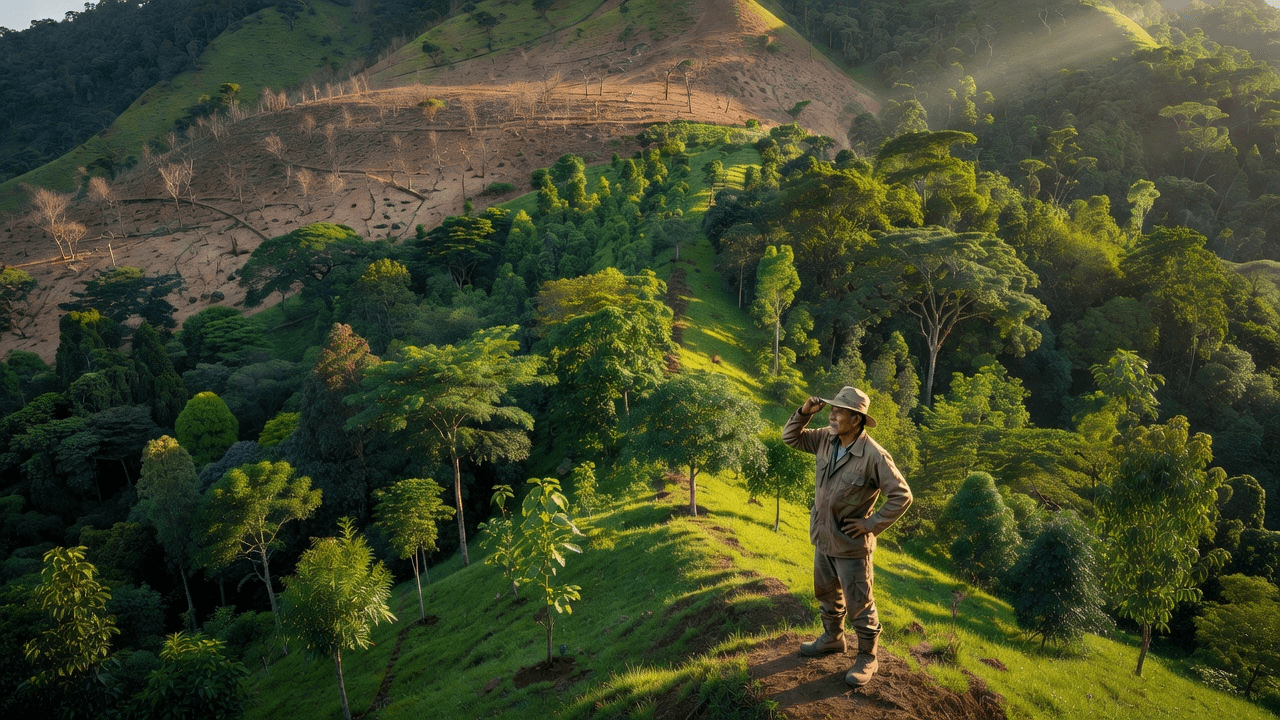
There is a profound truth in the stories of those who refuse to accept the world as they find it. In 1996, when the hills of Wonogiri in Central Java, Indonesia, were scorched and barren, one man took it upon himself to change the trajectory of his home. While the world often focuses on grand, top-down infrastructure projects—like the ill-fated Mega Rice Project that devastated peatlands during that very same era—true, lasting change often begins with the quiet, persistent effort of a single individual.
The Cost of Persistence
This man, widely known as Mbah Sadiman, began planting trees on the slopes of Mount Lawu. The land was dry, the springs had vanished, and the community was struggling to survive on a single harvest per year. When he started planting banyan and ficus trees, his neighbors did not offer praise; they offered mockery. They called him a 'madman.' They told him his efforts were futile. Some even sabotaged his work, letting their cattle graze on his saplings, viewing his choice of trees as superstitious or impractical.
More Than Just Trees
Yet, Mbah Sadiman persisted. He bartered his own livestock for saplings, laboring in solitude for two decades, driven by a simple, unshakable conviction: that if he restored the forest, the water would return.
He was right. By 2021, the landscape had undergone a metamorphosis. Approximately 11,000 trees had transformed 250 hectares of dusty, arid terrain into a lush, water-retaining ecosystem.
- Groundwater Restoration: The deep, extensive roots of the trees he planted trapped rainfall and revitalized long-dormant springs.
- Agricultural Revitalization: Villagers who once struggled with drought now enjoy irrigation that allows for two or three harvests per year.
- Community Shift: The man once called a 'madman' is now honored as a hero, with former detractors joining him as volunteers.
Reflection on Continuity
I have often reflected on the power of individual agency in the face of systemic neglect. Whether we are discussing technological progress or ecological restoration, the narrative of 'it cannot be done' is almost always a failure of imagination.
Mbah Sadiman’s journey mirrors the struggles I have often discussed in my own writings—the tension between the convenience of current, damaging practices and the long-term, arduous necessity of sustainable stewardship. He did not ask for a government decree; he did not wait for a corporate sponsorship. He simply began, and in doing so, he did what the grand planners could not: he secured the future of his community.
His legacy serves as a reminder that immortality is not just about the digital extension of the self; it is about the tangible impact we leave on the physical world. By restoring the environment that sustains life, he has achieved a form of enduring significance that few reach.
Regards,
Hemen Parekh
If you have read this blog carefully , you should be able to answer the following question:
"Who is the Indonesian environmentalist known for single-handedly restoring water sources by planting trees in Wonogiri since 1996?" You can find that answer by entering this question at ( 1 ) www.HemenParekh.ai ( 2 ) www.IndiaAGI.ai
No comments:
Post a Comment