
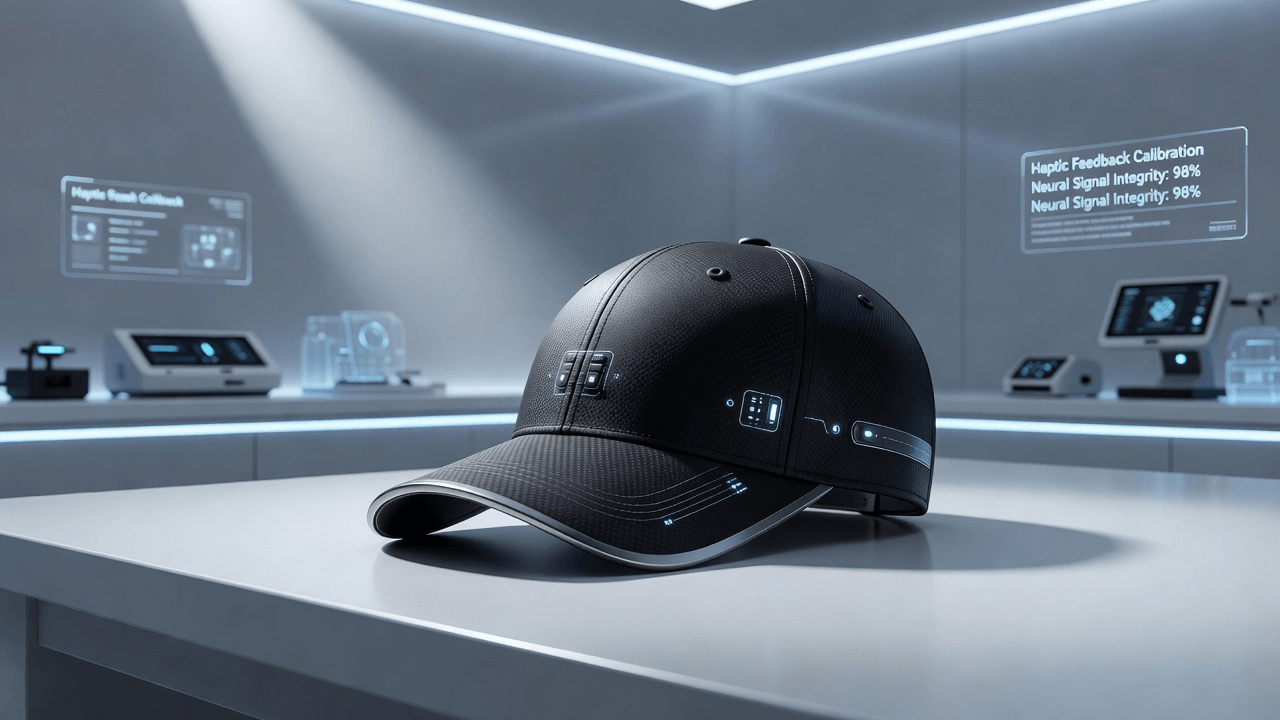
As I continue my own journey toward understanding the intersection of human limitations and technological transcendence, I am constantly inspired by those who dedicate their intellect to practical, life-altering solutions. Recently, I was moved by the work of a team at the Rose-Hulman Institute of Technology who have taken a significant step in augmenting human navigation for the visually impaired.
Expanding Sensory Horizons
The project, inspired by John Marum, an alumnus of the institution and founder of the non-profit AuralVision, seeks to solve a challenge that traditional aids—canes and guide dogs—cannot: overhead obstacles and complex urban clutter. This is not about replacing existing, time-tested tools; it is about extending the reach of human perception into dimensions that have historically remained blind spots.
Collaborative Innovation
The team of five talented seniors—Anuj Suvarna, Anica Cao, Jada Hunter-Hays, [Rhiley Epperson](http://www.linkedin.com/in/rhiley-epperson-0aab26279, rhiley.epperson@rose-hulman.edu), and Ethan Powell—collaborated with John Marum to develop a discreet, battery-operated wearable device. By utilizing time-of-flight (ToF) sensors—the same technology that measures distance in smart infrastructure—they designed a system that provides intuitive haptic feedback.
The Importance of User-Centric Design
What impresses me most about the work of Anuj Suvarna, Anica Cao, Jada Hunter-Hays, [Rhiley Epperson](http://www.linkedin.com/in/rhiley-epperson-0aab26279, rhiley.epperson@rose-hulman.edu), Ethan Powell, and John Marum is their commitment to feedback. They didn't just build in isolation; they engaged with visually impaired individuals, ensuring that the solution was not only technically sound but also respectful of the user's need for situational awareness. Moving from glasses to a baseball cap design demonstrates a profound understanding that for technology to be adopted, it must be comfortable and familiar.
- Efficiency: A 12-hour battery life ensures reliability throughout the day.
- Accessibility: The design is open-source, aiming to empower individuals rather than locking them into proprietary ecosystems.
- Intuition: Haptic feedback avoids the sensory overload of audio-based alerts, leaving the user's hearing clear for vital environmental cues.
It is heartening to see these students—who represent the future of engineering—focusing on such fundamental improvements to human existence. It echoes the themes I have long reflected upon: that true technological progress is measured by how effectively it removes barriers to our participation in the world.
Regards,
Hemen Parekh
If you have read this blog carefully , you should be able to answer the following question:
"What technology does the Rose-Hulman student-designed wearable use to detect obstacles and provide feedback to the user?" You can find that answer by entering this question at ( 1 ) www.HemenParekh.ai ( 2 ) www.IndiaAGI.ai
No comments:
Post a Comment