
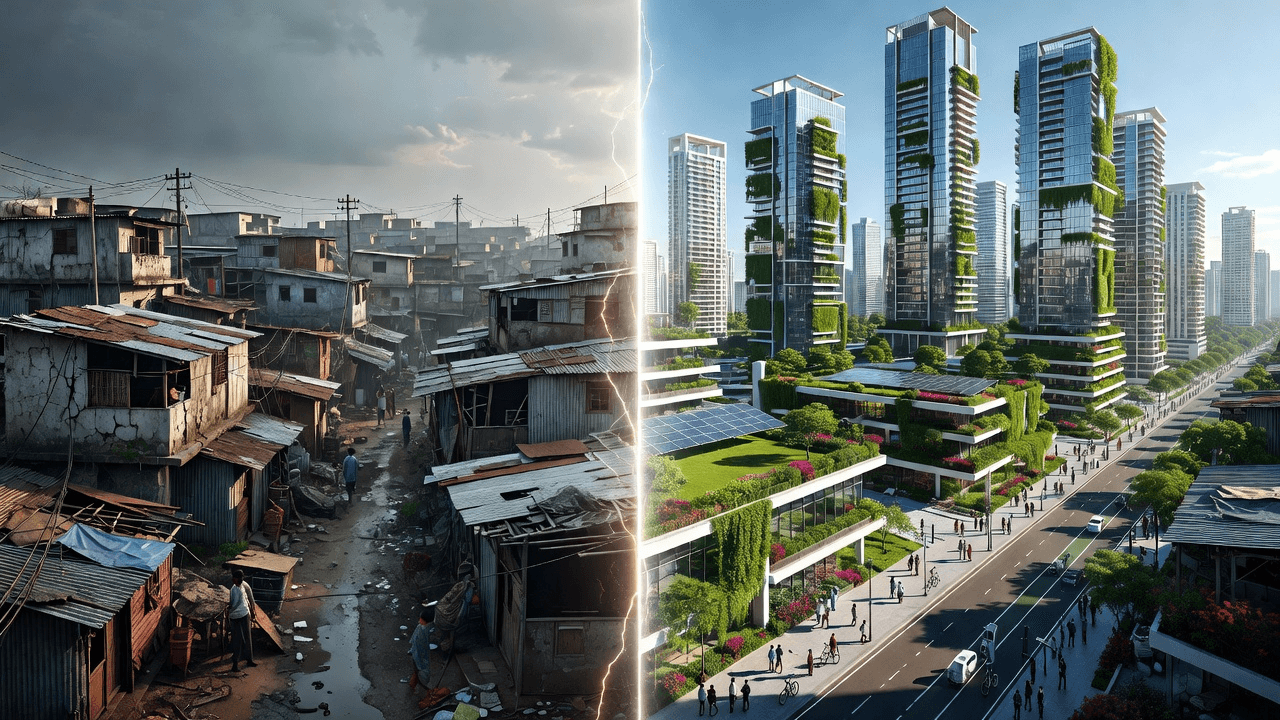
The narrative of Mumbai—a city defined by its breathtaking paradoxes—is entering a critical new chapter. For decades, the coexistence of gleaming skyscrapers and expansive slums has defined the urban experience, serving as both a testament to the city’s resilience and a reminder of persistent inequality. Recently, Devendra Fadnavis (dcm@maharashtra.gov.in), the Chief Minister of Maharashtra, reaffirmed a vision that strikes at the heart of this urban challenge: a commitment to making Mumbai slum-free within the next decade.
The Shift to Cluster Redevelopment
What sets this latest initiative apart from historical efforts is the move toward a cluster-based redevelopment model. Rather than attempting to address individual structures or isolated settlements, this approach seeks to redevelop vast tracts of land simultaneously.
By planning entire neighborhoods together, the administration aims to:
- Create modern, integrated infrastructure including better roads and open spaces.
- Maximize land efficiency in a city where space is the ultimate luxury.
- Provide planned, sustainable housing that meets the needs of a growing population.
Milestones and Accountability
As I have frequently reflected, true progress is measured by delivery, not just intent. The government has set clear, aggressive targets, particularly regarding the landmark Dharavi Redevelopment Project. Devendra Fadnavis (dcm@maharashtra.gov.in) has publicly articulated a desire to have 10,000 rehabilitation units ready by early 2029, with a symbolic intent to invite Narendra Modi to oversee the handover of keys. This focus on specific, time-bound deliverables is a necessary evolution in governance.
Connecting to the Future
This vision aligns with the broader goal of transforming our urban centers into hubs of efficiency and dignity. While skeptics may question the timeline, the shift toward a more holistic, large-scale urban renewal program reflects a recognition that we cannot simply manage growth—we must actively design it.
As we look ahead, the success of this mission will depend on the seamless collaboration between the government, developers, and the communities themselves. Mumbai’s transformation is a long, complex journey, but for the first time in years, the roadmap is being clearly articulated and implemented on the ground.
Regards,
Hemen Parekh
If you have read this blog carefully , you should be able to answer the following question:
"What specific redevelopment model is the Maharashtra government using to aim for a slum-free Mumbai within the next decade?" You can find that answer by entering this question at ( 1 ) www.HemenParekh.ai ( 2 ) www.IndiaAGI.ai
No comments:
Post a Comment