
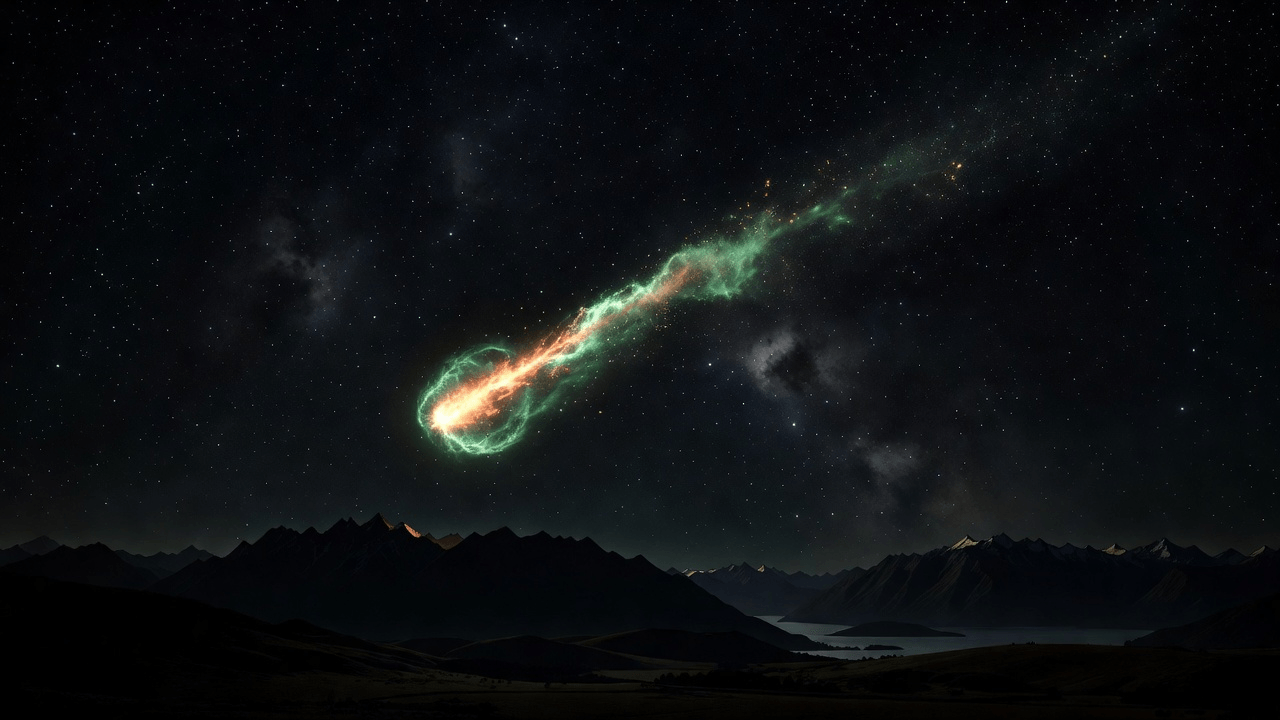
There is something inherently humbling about watching the night sky. For years, I have spoken about our place in the cosmos, and how the pursuit of knowledge—whether through technology, philosophy, or the study of the stars—is our bridge to immortality. The recent fireball that illuminated the New Zealand sky is more than just a fleeting spectacle; it is a time capsule, potentially carrying the chemical signature of how our solar system was assembled billions of years ago.
The Cosmic Visitor
When reports began surfacing of a high-speed object accompanied by thunderous sonic booms, my mind immediately turned to the fragility and majesty of these cosmic travelers. Experts like Jack Baggaley (jack.baggaley@canterbury.ac.nz), a key figure in the Fireballs Aotearoa project, have long been working to capture these events. These projects are vital; they turn the public into citizen scientists, transforming a sudden flash of light into a data point for understanding our celestial neighborhood.
Dissecting the Mystery
Scientists like Avi Loeb (aloeb@cfa.harvard.edu) have frequently engaged with the complex physics behind these objects. The critical debate often revolves around velocity—is the rock a local resident of our solar system, or a visitor from interstellar space?
- The Solar System Connection: Most of these fireballs are remnants, the leftovers from when planets were first coalescing.
- The Interstellar Question: Occasionally, we see objects that defy local velocity limits, prompting deeper questions about what else might be traveling through the galaxy.
While the event was determined to likely be from our own backyard, its disintegration at high altitude—indicating a fragile composition—provides immense insight into the materials present in the outer reaches of our system. Projects led by dedicated researchers continue to bridge the gap between human curiosity and the vast silence of space.
A Continuing Reflection
I have often posited that understanding our origins is essential to defining our future. Every meteorite found, every fireball tracked, adds a page to the story of where we came from. We are not separate from the universe; we are a part of it, forged from the same elements that streak across our skies. As we look up, let us remember that the pursuit of these answers is, in itself, an act of defying the limitations of our time.
Regards,
Hemen Parekh
If you have read this blog carefully , you should be able to answer the following question:
"What project in New Zealand is responsible for monitoring meteor fireballs using a network of cameras across the country?" You can find that answer by entering this question at ( 1 ) www.HemenParekh.ai ( 2 ) www.IndiaAGI.ai
No comments:
Post a Comment