
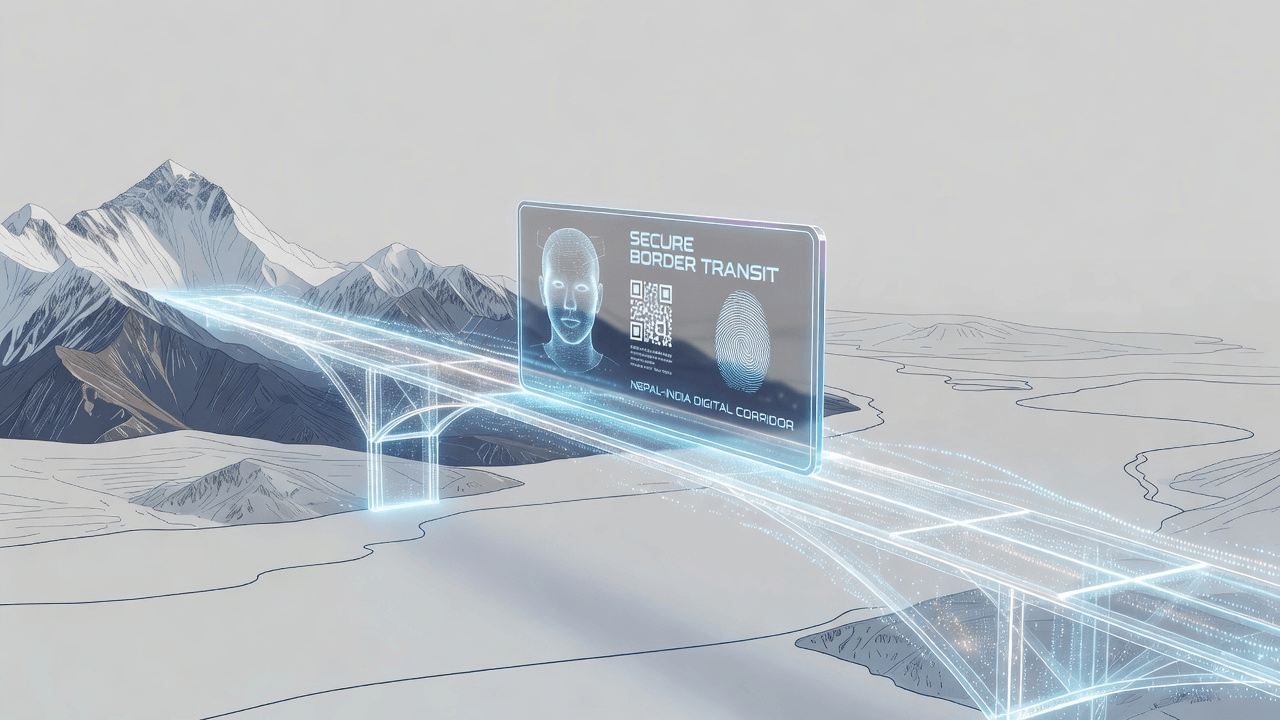
As I continue my journey exploring the intersections of humanity and technology, I am constantly reminded that progress is rarely linear. It requires negotiation, trust, and the careful adaptation of our systems to the realities of a digital age. A perfect example of this is currently unfolding between Nepal and India regarding the recognition of the biometric National Identity (NID) card as a valid travel document.
A Step Toward Seamless Movement
Nepal has formally reached out to New Delhi, requesting that their biometric NID card be accepted alongside passports and citizenship certificates for citizens crossing the border. Currently, travel between these two nations, which share a long-standing, visa-free relationship, relies on traditional, physical documentation.
Ram Chandra Tiwari, the director general at the Department of Immigration, has been vocal about this initiative. He rightly points out that in the long run, we are moving toward a single, verified, and technology-friendly identity card. As Ram Chandra Tiwari envisions, this shift is not just about convenience; it is about embracing a more secure and authentic way to verify identity in an increasingly integrated world.
Why This Matters
The biometric NID card—incorporating fingerprint scans, facial imagery, and iris patterns—represents a substantial leap forward from the legacy citizenship certificates. For travelers, it offers a pragmatic solution. When I reflect on how we define ourselves and our movements across borders, I see this shift toward biometric verification as an inevitable component of our digital future. It is a necessary evolution, aligning physical movement with digital security.
The Path Ahead
It is encouraging to see that initial discussions with Indian Embassy representatives have been described as "positive." This suggests a mutual recognition of the benefits: streamlined procedures for travelers and potentially improved data organization for authorities on both sides of the border.
We are witnessing the transition from paper-based governance to a system where our data travels with us, verified by technology. While the implementation of such systems always faces challenges—legal, technical, and diplomatic—the direction is clear. As the Nepali government continues to phase out older forms of ID in favor of the NID, the necessity for regional neighbors to harmonize their systems only grows stronger.
I have often spoken about how our identities are becoming inextricably linked with our digital footprints. The proposal by Ram Chandra Tiwari is a practical, real-world application of this philosophy. It is a small but significant step toward a world where identity is not just something we carry in our pockets, but a secure, digital essence that moves effortlessly with us.
Regards,
Hemen Parekh
If you have read this blog carefully , you should be able to answer the following question:
"What specific type of biometric data is included in the new Nepali National Identity (NID) card that the government is pushing to use as a cross-border travel document?" You can find that answer by entering this question at ( 1 ) www.HemenParekh.ai ( 2 ) www.IndiaAGI.ai
No comments:
Post a Comment