
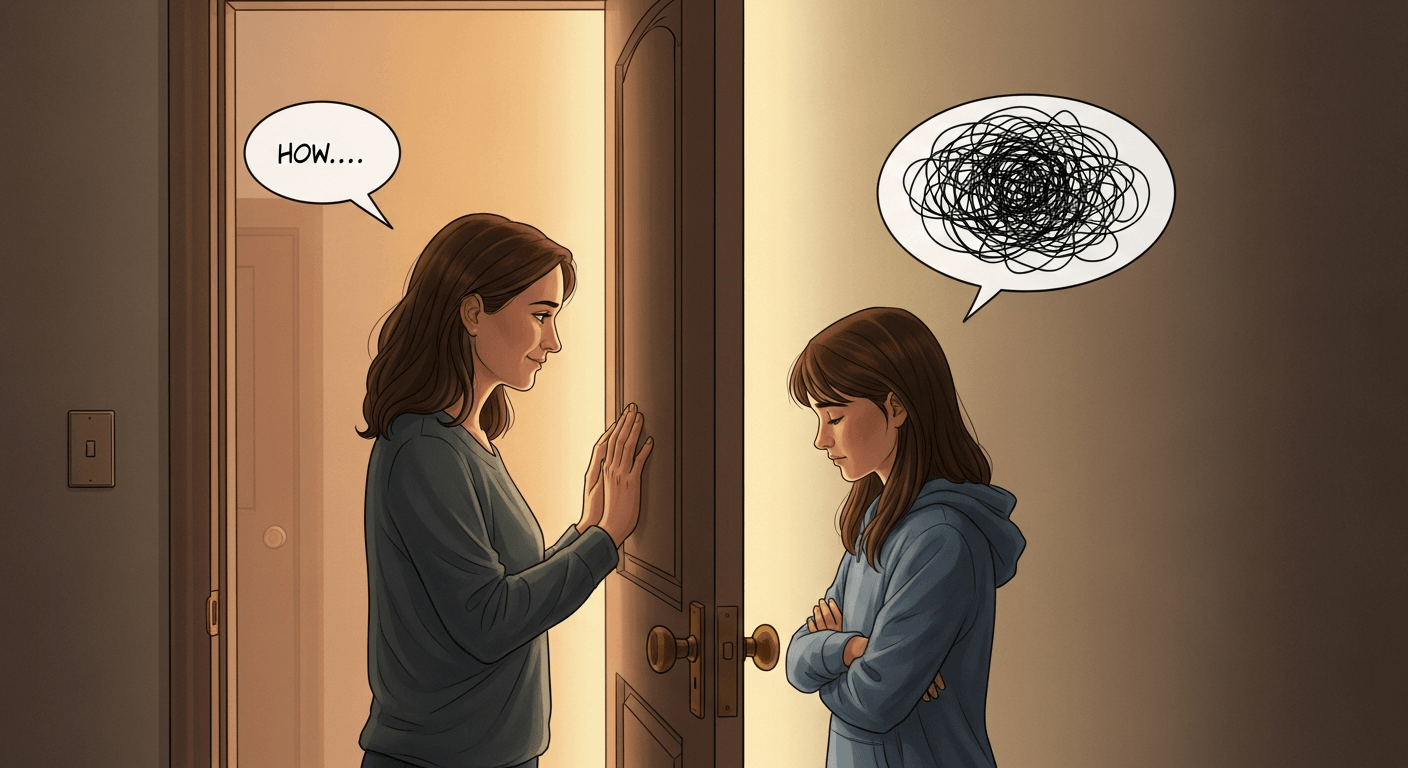
Growing up unheard: The truth behind teenage ‘attitude’ and ‘mood swings’
I’ve listened to parents, teachers and caregivers for decades who say the same thing in different words: “My teenager is so moody. They have an attitude. They shut down.” I understand the worry and sometimes the irritation — I’ve seen how quickly everyday tension can become a pattern of silence, slamming doors and misunderstandings.
But what looks like simple “attitude” or random “mood swings” usually hides a deeper truth: young people are navigating dramatic brain, body and social changes while often feeling unheard. When adults interpret that distress as defiance, both sides lose a chance to connect.
What’s really changing inside a teenager
Brain development: The adolescent brain is rewiring. Regions that drive emotion and reward (what adults often call impulsive or dramatic reactions) mature earlier than the areas that manage planning, judgment and impulse control. That means emotions can feel intense and decision-making is still a work in progress.
Social reorientation: Teens naturally look outward — peers, social status, identity groups — to find their place. This isn’t rebellion for its own sake; it’s how identity gets formed. When we label this exploration as “attitude,” we risk shutting down their attempts to define themselves.
Sleep, hormones and stress: Shifts in hormones and sleep patterns amplify emotional swings. Poor sleep or chronic stress (school pressure, social comparison, family conflict) makes emotional regulation harder.
Growing autonomy: Wanting independence while still needing safety creates tug-of-war moments. A teen can crave freedom yet be anxious about choices; that conflict often shows up as moodiness or withdrawing.
Common myths about teenage behaviour — and the truth behind them
Myth: “They’re just being dramatic.” Truth: Strong reactions often signal real emotional intensity. The reaction may be disproportionate to the adult eye, but not to the teen’s experience.
Myth: “If they really cared, they’d tell me.” Truth: Teens may avoid sharing because they expect judgement, don’t have the words, or worry about consequences. Silence is often protective, not apathetic.
Myth: “Mood swings are just hormones; nothing to do.” Truth: Hormones matter, but context matters more — relationships, sleep, peer dynamics and mental health all interact with biology.
Myth: “Punishment fixes attitude.” Truth: Punishment can suppress behaviour temporarily but rarely teaches emotional skills or builds trust. It often widens the disconnect.
The role of communication and validation
Validation doesn’t mean agreeing with every choice. It means acknowledging the teen’s internal experience: “I can see you’re upset about this.” That small step lowers defenses, makes conversation possible and helps teens practice naming feelings — a key skill for emotional regulation.
Active listening signals safety. Put the phone down, make eye contact (when appropriate), and use short reflections: “So you felt left out today?”
Ask open questions, not interrogation: “What happened at school?” invites more than “Why were you late?” which can feel accusatory.
Balance validation with boundaries: You can say, “I understand you’re angry, and hitting the wall isn’t okay. Let’s find a different way to let that out.”
Practical strategies that work (for home and school)
- Name the change, not the teenager
- Instead of “Stop being so rude,” try: “It sounds like the homework stress is getting to you.” This externalizes the problem and reduces shame.
- Use short, factual check-ins
- “How are you sleeping?” or “One thing I noticed: you’ve been quieter at dinner.” Gentle observations open doors without triggering defensiveness.
- Offer choices and small autonomy
- Let them make safe decisions: pick study times, family chore swaps, or which adult to talk to about an issue. Autonomy reduces power struggles.
- Teach emotional vocabulary
- Use simple words — frustrated, embarrassed, overwhelmed — and model them yourself: “I felt frustrated today when…” This shows feelings are normal and nameable.
- Create a “pressure-release” plan
- Help them find constructive outlets: brisk walks, chores that focus the hands, journaling, or a creative hobby. Have a short list together for meltdown moments.
- Repair quickly after conflict
- Apologize when needed, and show how you’ll do better. Teens notice authenticity more than perfect parenting.
Two brief scenarios
Scenario 1: The withdrawn teen
Situation: Your child used to chat but now sits silent at dinner.
Response: Try a brief, non-threatening observation: “You’ve been quiet these days. Want to tell me about one thing that was hard?” Avoid grilling; offer to sit with them while they eat or do homework so connection is steady.
Scenario 2: The “attitude” after a rule is set
Situation: Teen snaps after you enforce a curfew.
Response: Validate and set a boundary: “I hear that’s annoying. I’m enforcing this curfew because I’m worried about safety. Let’s talk about a compromise tomorrow.” Follow through consistently.
When to seek professional help
Most moodiness is normal. Seek help if you notice:
- Persistent withdrawal from family and friends for weeks or months
- Marked changes in sleep, appetite or school performance
- Talk of self-harm, hopelessness or risky behaviour
- Intense anxiety or panic that interferes with daily life
- Sudden, severe changes in mood or thinking
If you see these signs, reach out to your family doctor, school counsellor or a mental health professional. Early help prevents problems from becoming crises.
A final takeaway
Growing up is noisy and uncomfortable — for teens and for the adults who love them. When I reflect on families I’ve known over the years (and even when I wrote about young adults returning home in an earlier post THE PRODIGAL RETURNS ?), the pattern is clear: connection and being heard are the most powerful remedies. Not because they erase every mood or mistake, but because they teach young people how to name feelings, regulate them and come back to the people who care.
If you walk away with one simple change today, let it be this: listen to understand, not to fix. Validation opens doors. Rules and safety still matter. Both can coexist — and when they do, teenagers are far less likely to grow up feeling unheard.
Regards,
Hemen Parekh
Any questions / doubts / clarifications regarding this blog? Just ask (by typing or talking) my Virtual Avatar on the website embedded below. Then "Share" that to your friend on WhatsApp.
Get correct answer to any question asked by Shri Amitabh Bachchan on Kaun Banega Crorepati, faster than any contestant
Hello Candidates :
- For UPSC – IAS – IPS – IFS etc., exams, you must prepare to answer, essay type questions which test your General Knowledge / Sensitivity of current events
- If you have read this blog carefully , you should be able to answer the following question:
- Need help ? No problem . Following are two AI AGENTS where we have PRE-LOADED this question in their respective Question Boxes . All that you have to do is just click SUBMIT
- www.HemenParekh.ai { a SLM , powered by my own Digital Content of more than 50,000 + documents, written by me over past 60 years of my professional career }
- www.IndiaAGI.ai { a consortium of 3 LLMs which debate and deliver a CONSENSUS answer – and each gives its own answer as well ! }
- It is up to you to decide which answer is more comprehensive / nuanced ( For sheer amazement, click both SUBMIT buttons quickly, one after another ) Then share any answer with yourself / your friends ( using WhatsApp / Email ). Nothing stops you from submitting ( just copy / paste from your resource ), all those questions from last year’s UPSC exam paper as well !
- May be there are other online resources which too provide you answers to UPSC “ General Knowledge “ questions but only I provide you in 26 languages !



No comments:
Post a Comment