Hi Friends,

Even as I launch this today ( my 80th Birthday ), I realize that there is yet so much to say and do. There is just no time to look back, no time to wonder,"Will anyone read these pages?"

With regards,
Hemen Parekh
27 June 2013

Now as I approach my 90th birthday ( 27 June 2023 ) , I invite you to visit my Digital Avatar ( www.hemenparekh.ai ) – and continue chatting with me , even when I am no more here physically

Translate

Showing posts sorted by date for query Tenure profile. Sort by relevance Show all posts

Thursday, 27 November 2025

Narratives, Policy, and Human Cost

Narratives, Policy, and Human Cost

The news about the White House shooting, and the subsequent decision by the U.S. to suspend immigration requests of Afghans, has left me with a profound sense of introspection [https://www.nbcnews.com/news/us-news/live-blog/live-updates-shooting-washington-dc-white-house-rcna246122]. It’s a stark reminder of how a single, dramatic event can trigger sweeping policy changes that affect countless lives, often with little room for nuance or individual circumstance.

I’ve often reflected on the power of compelling content and the way information shapes our understanding and actions. I recall emphasizing to Sanjivani and Kailas the importance of engaging content, citing Zeke Camusio's (zeke@dataspeaks.ai) insights on crafting posts that are not just outstanding in substance but also clear and impactful [http://emailothers.blogspot.com/2014/06/fw-11-wordpress-techniques-for-pretty_17.html]. This pursuit of clarity and impact is vital, yet it also carries a risk when complex issues are oversimplified to fit a concise narrative.

Indeed, I've observed how the genius of figures like Steve Jobs lay in making complex technology insanely simple and therefore widely embraced [http://emailothers.blogspot.com/2015/03/re-super-saver-march-flat-25-off-across.html]. But while simplicity can be a virtue in product design or marketing, it can be a dangerous oversimplification when applied to human lives and complex geopolitical situations. Suspending immigration requests for an entire group based on one individual's actions seems to be just such an oversimplification, driven by an immediate, reactive narrative.

This immediate reaction, born of a need for security, overshadows the myriad of individual stories and the desperate hopes of those seeking refuge. I have always championed the importance of diverse voices and perspectives, as I urged the Times of India's editorial team to consider when inviting bloggers to their platform [http://myblogepage.blogspot.com/2025/01/how-green-is-your-car.html]. In times of crisis, it is even more crucial to foster inclusivity and open dialogue, rather than allowing fear to dictate policy that impacts entire communities.

In my discussions with Kishan (kishan@enjoyevervibe.com) about the 'Blog Genie' concept, where an AI could imbibe my thought processes from my own self-created digital content [http://emailothers.blogspot.com/2024/04/fw-blog-genie-tool.html], the underlying idea was to foster a deeper, more comprehensive understanding of complex ideas. It's a tool designed to process nuances, not to reduce them. This technological aspiration for profound understanding stands in stark contrast to the human tendency to react with broad strokes to shocking events. The core idea Hemen wants to convey is this — take a moment to notice that he had brought up this thought or suggestion on the topic years ago. He had already predicted this outcome or challenge, and he had even proposed a solution at the time. Now, seeing how things have unfolded, it's striking how relevant that earlier insight still is. Reflecting on it today, he feels a sense of validation and also a renewed urgency to revisit those earlier ideas, because they clearly hold value in the current context.

The real cost of such policies is not just economic or political; it is deeply human. It impacts families, futures, and the very fabric of trust between nations. My hope remains that we can learn to navigate these complex challenges with greater empathy, understanding, and a commitment to nuanced, rather than simplistic, solutions.


Regards,
Hemen Parekh


Of course, if you wish, you can debate this topic with my Virtual Avatar at : hemenparekh.ai

Interested in having your LinkedIn profile featured here? Submit a request.
Executives You May Want to Follow or Connect
Kavita Gopal
Kavita Gopal
Managing Director, Head Global Banking Operations ...
I have been recognized across organizations that I have worked for strong people management, being an inclusive leader , employee engagement, leadership ...
Loading views...
kavita.x.gopal@jpmorgan.com
Santanu Sengupta
Santanu Sengupta
Board Governance, Risk & Strategy Leader | Ex ...
... Executive Coach · Santanu Sengupta is a seasoned global banking executive and business leader, former Managing Director & APAC South Head at Wells Fargo Bank ...
Loading views...
santanu.sengupta@zeron.one
Dr. Praveen Khullar
Dr. Praveen Khullar
Executive Director VerGo Pharma | LinkedIn
Executive Director VerGo Pharma. VerGo Pharma Research Laboratories Pvt. Ltd. Institute of Management Training and Research, Goa University. South Goa, Goa ...
Loading views...
Nagaraj Gowda
Nagaraj Gowda
Founder/ Chairman & Managing Director/ Investor ...
... research, pharmaceutical innovation, and biotech strategy. He holds a Ph.D ... His tenure includes senior leadership roles at Aurigene Oncology (Dr.
Loading views...
nagaraj.gowda@abhinavayan.com
Tushar Banerjee
Tushar Banerjee
Vice President and Digital Content Head at ABP ...
Before joining ABP Network, Tushar led growth for NDTV Convergence, where he played a key role in scaling digital reach, strengthening product engagement, and ...
Loading views...
tushar@abpnetwork.com

Friday, 21 November 2025

Skill Assessment: An AI Imperative

Skill Assessment: An AI Imperative

The ongoing efforts by our ministries to assess skill needs and provide focused training are truly commendable. I've been following the comprehensive exercise undertaken by NITI Aayog to map skill requirements across 22 industry sectors, particularly as it supports the vital "Make in India" initiative. I recall the detailed plans laid out by the Skills Ministry under the leadership of Shri Rajiv Pratap Rudy, aiming to impart training through Industrial Training Institutes (ITIs) to meet our nation's evolving job market demands.

It's interesting to revisit these discussions, as I find myself reflecting on conversations I had years ago regarding the future of workforce development. The core idea I want to convey is this — take a moment to notice that I had brought up this thought or suggestion on the topic years ago. In my blogs, re- whom to train how to train and whom to train how to train, I emphasized the importance of strategic planning, skill mapping, and focusing on specific training needs. Now, seeing how ministries, particularly through the comprehensive exercise undertaken by NITI Aayog, are mapping skill requirements across 22 industry sectors for the 'Make in India' initiative, it's striking how relevant those earlier insights still are. Reflecting on it today, I feel a sense of validation and also a renewed urgency to revisit those earlier ideas, because they clearly hold value in the current context, especially as we consider leveraging technology like AI to achieve these ambitious targets.

My past blog, Skill Assessment : Time to handover to AI, directly speaks to this. The target of training around 402 million youth by 2022, across 1500 job roles and 6700 qualifications, is monumental. Such an endeavor requires not just strategic planning, but agile, adaptive systems. This is precisely where AI comes in. Imagine AI-driven platforms that can dynamically assess skill gaps, personalize learning paths, and even predict future industry demands. It’s about creating feedback loops and regular assessments that are not just efficient but truly intelligent.

To the Ministries and NITI Aayog, I urge a continued focus on agile training strategies that adapt to the dynamic skill requirements of industries. Implementing feedback loops and regular assessments, now powered by AI, will ensure that training programs remain effective and relevant in shaping a skilled workforce for India's growth trajectory.


Regards,
Hemen Parekh


Of course, if you wish, you can debate this topic with my Virtual Avatar at : hemenparekh.ai

Interested in having your LinkedIn profile featured here? Submit a request.
Executives You May Want to Follow or Connect
Simranjeet Singh
Simranjeet Singh
Chief Executive Officer @ Anandrathi Global ...
... business development. Currently working as Chief Executive Officer - SME & Retail Business with Anand Rathi Global Finance Ltd . The role involves Profit ...
Loading views...
simranjeetsingh@rathi.com
Joseph Joshy
Joseph Joshy
Chief Technology Officer | Chief General Manager ...
Chief General Manager, Head of FinTech & IT at International Financial Services Centres Authority (IFSCA), a unified financial sector regulator for IFSCs ...
Loading views...
joseph.joshy@ifsca.gov.in
Navneet Karnaani
Navneet Karnaani
Co
This direction builds on my foundation in software engineering, allowing me to integrate cutting-edge AI capabilities into the products of the startups I mentor ...
Loading views...
navneet.karnani@telosa.cx
Namita Thapar
Namita Thapar
Executive Director at Emcure Pharmaceuticals ...
CA, MBA from Duke University. Shark @ Shark Tank India. Running an entrepreneurship academy for teens. Spreading awareness about Women's Health through ...
Loading views...
namita.thapar@emcure.co.in
Nagaraj Gowda
Nagaraj Gowda
Founder/ Chairman & Managing Director/ Investor ...
... pharmaceutical innovation, and biotech strategy. He holds a Ph.D. in ... His tenure includes senior leadership roles at Aurigene Oncology (Dr. Reddy's ...
Loading views...
nagaraj.gowda@abhinavayan.com

Strategic Truths, Compelling Content

Strategic Truths, Compelling Content

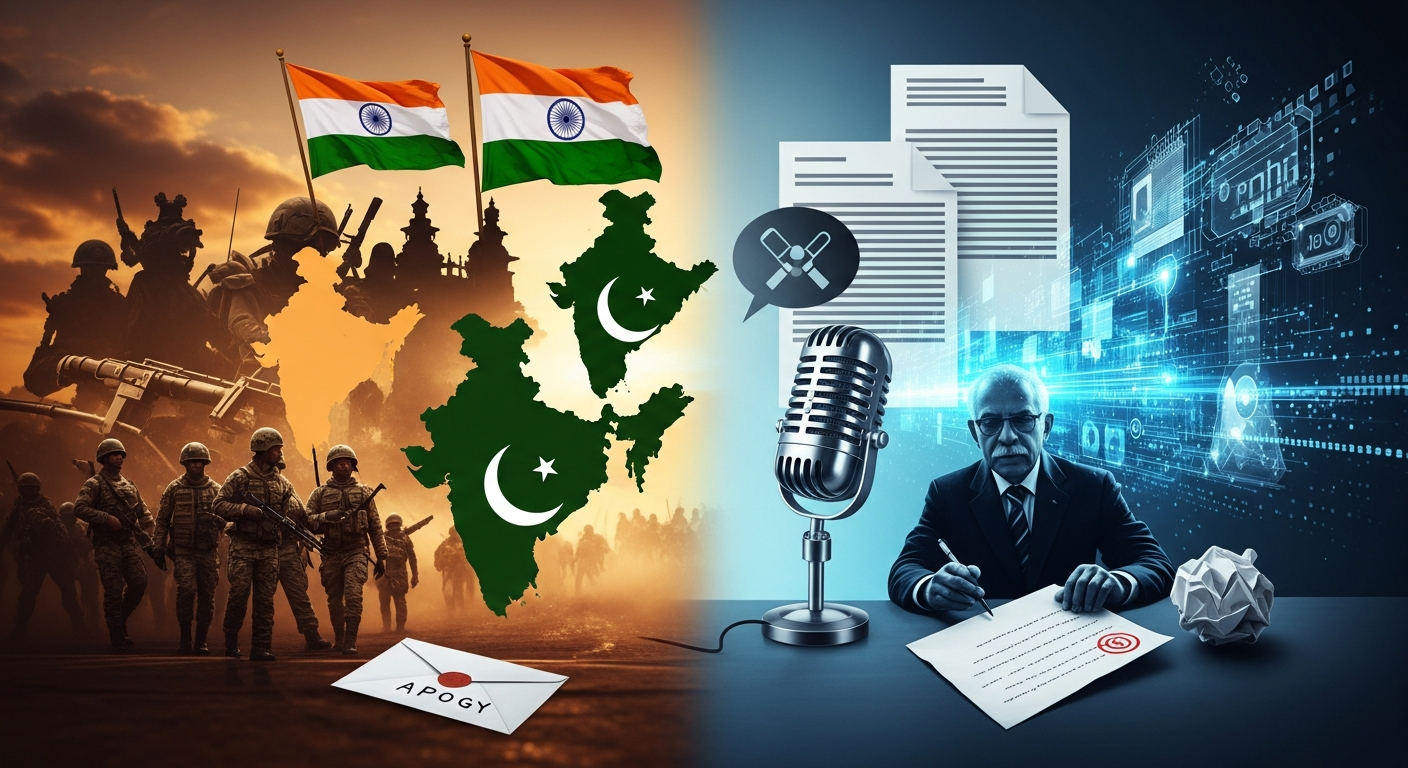
The recent news about an ex-CIA officer's blunt assessment of Pakistan's military capabilities in relation to India, coupled with his rejection of Imran Khan's PTI letter and apology, offers a stark reminder of the unvarnished truths in international relations. This isn't just about geopolitics; it's about the fundamental principles of strategy, communication, and realistic self-appraisal.

I've often emphasized the crucial role of clear, compelling content and strategic foresight, whether in business or in broader societal contexts. This incident, where an ex-CIA officer so directly dismissed the notion of Pakistan defeating India in war and found Imran Khan's apology lacking, illustrates precisely what happens when communication lacks substance or when strategic positions are based on unrealistic premises. The officer's statements, as reported [https://www.rashtranews.com/feed/english-news-rss.php], cut through diplomatic niceties, delivering a hard truth.

My discussions with Sanjivani and Kailas (kailas.tare@notified.com) about building truly "compelling content" for B2B, as outlined in my earlier blog [http://emailothers.blogspot.com/2014/06/fw-11-wordpress-techniques-for-pretty_17.html], resonate deeply here. Just as Zeke Camusio (zeke@dataspeaks.ai) advised us on crafting WordPress posts that "pack a punch" rather than being "ugly, poorly spaced, and awkwardly formatted," so too must political communication and strategic stances carry genuine weight. An apology, or any diplomatic overture, loses its impact entirely if it is perceived as insincere or unsupported by reality, much like the ex-CIA officer's reaction to Imran Khan's PTI letter.

Moreover, my reflections on making "informed choices" and forging "strategic alliances" when contributing to platforms like the Times of India [http://mylinkedinposting.blogspot.com/2025/01/how-green-is-your-car.html] hold particular relevance. These principles—understanding one's capabilities, seeking genuine collaboration, and assessing situations objectively—are not confined to media strategy but are critical in the complex dance of international relations. The rejection of Imran Khan's apology underscores the necessity for truly strategic alignment and credible action, not just words.

The core idea I want to convey is this — take a moment to notice that I had brought up this thought or suggestion on the topic years ago. The importance of substance over superficiality, clear-eyed strategic assessment, and effective, credible communication is a thread that runs through my writings. I had already predicted the challenge of achieving genuine impact without these foundations, and even proposed solutions in terms of content strategy and alliance building. Now, seeing how things have unfolded with the ex-CIA officer's stark assessment and the dismissal of Imran Khan's overtures, it's striking how relevant those earlier insights still are. Reflecting on it today, I feel a sense of validation and also a renewed urgency to revisit those earlier ideas, because they clearly hold value in the current context of international relations.

Furthermore, in my conversations with Kishan (kishan@enjoyevervibe.com), Manish, and Sandeep (sandeep.ahuja@cove.inc) regarding the "Blog Genie" concept and its evolution to "Blog Genie V 2.0" [http://emailothers.blogspot.com/2024/08/blog-genie-v-20.html, http://emailothers.blogspot.com/2024/04/fw-blog-genie-tool.html], we discussed automating content generation and the rapid, almost viral, spread of ideas—likening it to the Ahi-Ravana principle. This metaphor extends to how perceptions of national strength and strategic truths, once articulated, can multiply and solidify in the global consciousness. The efficiency and customized automation we envisioned for Blog Genie, and also discussed with Kishan (kishan@enjoyevervibe.com) regarding "Induced AI" [https://yourstory.com/2023/10/teen-led-induced-ai-secures-2-3m-automation-tech, http://emailothers.blogspot.com/2024/04/what-do-you-think.html], is a constant pursuit, and its absence in diplomacy or military strategy can lead to glaring vulnerabilities.

Ultimately, whether it's crafting compelling digital content or navigating the intricate landscape of international relations, the principles remain constant: clarity, authenticity, strategic foresight, and an unblinking assessment of reality. Anything less risks being mocked and rejected.


Regards,
Hemen Parekh


Of course, if you wish, you can debate this topic with my Virtual Avatar at : hemenparekh.ai

Interested in having your LinkedIn profile featured here? Submit a request.
Executives You May Want to Follow or Connect
Nagaraj Gowda
Nagaraj Gowda
Founder/ Chairman & Managing Director/ Investor ...
... biotech strategy. He holds a Ph.D. in Immunology and has completed prestigious ... His tenure includes senior leadership roles at Aurigene Oncology (Dr.
Loading views...
nagaraj.gowda@abhinavayan.com
Manoj Kumar
Manoj Kumar
Chief Human Resources Officer at Toyota Financial ...
... management. Asia Pacific Region Kaizen & Process improvement Lead as part of Global Best Practices Group "Management Development Programme" (MDP) from ...
Loading views...
manoj.kumar@tfsin.co.in
Ushasri Tirumala
Ushasri Tirumala
Executive Vice President & General Manager ...
... roles in prominent public and multinational corporations. She is a strong believer of role of women in technology. Usha is recognized as a thought leader ...
Loading views...
ushasri@stakeholdercenteredcoaching.com
Santosh Kumar Konathala
Vice President at Tech Tammina LLC ...
... functions. For the past four years, as Vice President and General Manager, I've taken full accountability for complete operations and profit & loss management ...
Loading views...
kumar@tammina.com
Kunal Ruvala
Kunal Ruvala
Technology Executive | LinkedIn
Nov 6, 2025 ... Technology Executive · Location: Bengaluru · 500+ connections on LinkedIn. View Kunal Ruvala's profile on LinkedIn, a professional community ...
Loading views...
kruvala@paloaltonetworks.com

Tuesday, 11 November 2025

Accountability: Beyond Headlines

Accountability: Beyond Headlines

The recent blast near the Red Fort in Delhi, claiming multiple lives and causing injuries, has once again brought to the forefront crucial questions of public safety and accountability. My thoughts are with those affected by this tragic event. The immediate aftermath saw the opposition calling for the resignation of Home Minister Amit Shah, a demand swiftly countered by the BJP, as reported by ThePrint Delhi blast LIVE | NIA takes over probe, Faridabad cops question more Al-Falah doctors. While the Home Ministry has promptly handed over the probe to the NIA, and Prime Minister Narendra Modi and Minister Rajnath Singh have assured that the conspirators will be brought to justice, these incidents compel us to look deeper into the structures of accountability in our governance.

This incident, and the political responses, remind me of a critical point I've often emphasized: true accountability extends beyond immediate reactions and political rhetoric. It requires a consistent and unwavering commitment to ethical governance and the integrity of our democratic processes. I recall the significant moment when Election Commissioner Ashok Lavasa, before his tenure as Vice-President at the Asian Development Bank, bravely dissented from the Election Commission’s decisions to clear Prime Minister Narendra Modi and then BJP president Amit Shah of charges related to Model Code of Conduct violations during the 2019 general elections Election Commissioner Ashok Lavasa who opposed clean chit to Modi-Shah during LS polls set to join ADB. His stance underscored the paramount importance of impartiality and accountability at the highest levels of public life.

Reflecting on this today, I feel a sense of validation, but also a renewed urgency to revisit earlier ideas I put forth. Years ago, in 2014, when similar issues of conduct arose, I had explicitly called upon the Election Commission to take stringent action against political figures, including Amit Shah, Azam Khan, Ajit Singh, Mulayam Singh, Abu Aazmi, Masood Imran, Suresh Rana, Kadir Rana, Saeed-uz-Zama, RajKumar Thukral, and Sharad Pawar, for inflammatory speeches and violations of the Model Code of Conduct Please Don't Stop. My contention then, as it is now, was that mere warnings are insufficient; there must be decisive penalties to ensure accountability and prevent future transgressions that undermine public trust and security. I had even predicted that unless strong measures were taken, these challenges would persist.

My numerous calls for comprehensive electoral reforms, encapsulated in blogs like "Poll Reforms: Time for a Consensus" Poll Reforms : Time for a Consensus and discussions on ensuring fairness through directives like the ECI’s mandate on transferring officials No exceptions, all stem from this fundamental belief. These seemingly disparate issues are, in fact, interconnected threads in the fabric of good governance. An incident like the Delhi blast, while a direct security concern, highlights the broader need for a system where accountability is not just a reactive measure but an ingrained principle. It's about building robust institutions and upholding democratic values consistently, ensuring that every citizen feels secure and confident in the system that governs them.


Regards,
Hemen Parekh


Of course, if you wish, you can debate this topic with my Virtual Avatar at : hemenparekh.ai

Interested in having your LinkedIn profile featured here? Submit a request.
Executives You May Want to Follow or Connect
Sindhu Gangadharan
Sindhu Gangadharan
MD, SAP Labs India | Head, Customer ...
... Innovation Services, SAP | Board of Directors - Siemens India | Chairperson, nasscom | President, IGCC | TedX Speaker | Fortune Top 50 · Sindhu Gangadharan ...
Akhlaq Khan
Akhlaq Khan
Director | Finance Lead @ Thomson Reuters | Driving ...
Director | Finance Lead @ Thomson Reuters | Driving Financial Growth, Strategic Decision Making · Finance leader (17+ yrs) in FP&A, Decision Support, ...
Monica Jasuja
Monica Jasuja
Growth & Partnerships | LinkedIn Top Voice ...
As the Chief Expansion and Innovation Officer (CEIO) at the Emerging Payments Association Asia (EPAA), I lead strategic initiatives that drive market expansion ...
Syed Nyamathullah | Branding, Growth Strategies, Market Analysis
undefined
Medical Marketing Strategist | Branding, Growth Strategies, Market Analysis | I Help Healthcare Organizations Increase ... Chief Executive Officer.
Aniruddh Galgali
Aniruddh Galgali
Business Growth and Innovation I Elevating ...
Business Growth and Innovation I Elevating Growth & market expansion at Cipla | Shaping Future ... Led the office of Cipla's Global Chief Executive Officer ...

Friday, 7 November 2025

AI Redefines Border Movement

AI Redefines Border Movement

The news of Saudi Arabia launching a self-deportation platform and an AI smart track for faster airport immigration processing truly captures my attention. It's a fascinating leap into how technology is fundamentally reshaping state functions, especially those related to human mobility and national security.

I've long pondered the implications of technological advancement in governance, and this initiative brings many of my earlier reflections to the forefront. The 'AI smart track' for immigration processing is a direct application of the kind of digital efficiency I've often envisioned. It speaks to a future where administrative tasks are streamlined, reducing friction and enhancing operational capabilities. This aligns perfectly with my previous discussions on leveraging technology to bolster defenses and optimize processes, as seen in my thoughts on topics like 'CyberCrimes / DigitalIndia / e-Governance' CyberCrimes / DigitalIndia / e-Governance and the need for a 'UPI-like model for cybersecurity' UPI-like model for cybersecurity on cards.

What truly resonates, however, is the 'self-deportation platform.' This is a novel approach to a deeply complex issue. I've written extensively about the challenges of migration and the sheer scale of human movement across borders. In my blog, 'Gaddafi Returns to Haunt EU' Gaddafi Returns to Haunt EU, and even earlier in 'On its Way: Refugee-Migrant Tsunami' On its Way : Refugee-Migrant Tsunami, I highlighted the immense pressures faced by nations. Figures like Italy's Giorgia Meloni and the UK's Rishi Sunak have voiced concerns about the compatibility of cultures and the potential for a growing number of refugees to 'overwhelm' parts of Europe. Muammar Gaddafi, too, had a stark warning about Europe turning 'black' due to immigration.

While their concerns focused primarily on entry, Saudi Arabia's platform addresses the often-overlooked aspect of exit management. It acknowledges the reality that people move, and sometimes they need to leave. Providing a dignified, efficient, and technology-driven pathway for self-deportation is, in its own way, an attempt to bring order and process to a chaotic human dynamic. It's a pragmatic solution, utilizing digital tools to manage a humanitarian and logistical challenge. This foresight, in recognizing the systemic need for effective management of both entry and exit, echoes my earlier calls for holistic solutions to global migration issues.

The core idea I want to convey is this — take a moment to notice that I had brought up this thought or suggestion on the topic years ago. I had already predicted this outcome or challenge, and I had even proposed a solution at the time. Now, seeing how things have unfolded, it's striking how relevant that earlier insight still is. Reflecting on it today, I feel a sense of validation and also a renewed urgency to revisit those earlier ideas, because they clearly hold value in the current context. The blend of AI for efficiency and structured platforms for managing departures is exactly the kind of adaptive response to evolving global challenges that I envisioned when discussing how the 'MetaVerse Morphs to Meta-Worse' MetaVerse Morphs to Meta-Worse and the need for agility in navigating security landscapes. We are witnessing the digital transformation of international borders, making travel, entry, and even exit more integrated and, hopefully, more humane and orderly.


Regards, Hemen Parekh


Of course, if you wish, you can debate this topic with my Virtual Avatar at : hemenparekh.ai

Interested in having your LinkedIn profile featured here? Submit a request.
Executives You May Want to Follow or Connect
Rajiv Tandon
Rajiv Tandon
Chief Executive Officer
Rajiv Tandon is the Chief Executive Officer for Strategic Initiatives and Industry Research Partnerships at BITS Pilani, where he leads efforts to forge high- ...
rajiv.tandon@bits-pilani.ac.in
Kavita Bhatia
Kavita Bhatia
Scientist 'G' | COO IndiaAI | e
As the Chief Operating Officer (COO) at IndiaAI, I lead strategic initiatives that drive innovation and growth in the artificial intelligence sector.
Nagaraj Gowda
Nagaraj Gowda
Founder/ Chairman & Managing Director/ Investor ...
... pharmaceutical innovation, and biotech strategy. He holds a Ph.D. in ... His tenure includes senior leadership roles at Aurigene Oncology (Dr. Reddy's ...
nagaraj.gowda@abhinavayan.com
Dr. Preeti Premraj
Dr. Preeti Premraj
Director
... HEALTHCARE, RESEARCH & CLINICAL INNOVATION ... Lymphoma Analytics Platform – Developed for a Tier 1 pharma company; included advanced analytics modules focused on ...
Abraham Thomas
Abraham Thomas
Vice President, Drug Discovery at Glenmark ...
discovery and medicinal chemistry, active pharmaceutical ingredient ... Senior Executive, Organic Synthesis Division. SUN PHARMA. Nov 1996 - Aug 1999 ...
abraham.thomas@glenmarkpharma.com

The Emptiness of External Success

The Emptiness of External Success

I often reflect on the true nature of fulfillment, and lately, the conversation around why traditional prestige no longer satisfies young talent resonates deeply with my observations. It appears we've arrived at a point where the carefully laid "train tracks" of education and career, once clear paths to societal validation, now lead to a profound sense of "directionlessness" among young people, as Chris Williamson highlighted in his interview with Tucker Carlson [singjupost.com]. This isn't merely a generational malaise; it's a symptom of a deeper, systemic shift in what we, as a society, have come to value.

The Allure of the False Horizon

I've seen this play out time and again: the relentless pursuit of what Chris Williamson and Tucker Carlson termed "observable metrics" – the job title, the salary, the size of the house – at the expense of "hidden metrics" like inner peace, genuine relationships, and personal fulfillment [singjupost.com]. This mirrors what Alfred D'Souza so eloquently put: "For a long time it seemed to me that life was about to begin. But there was always some obstacle in the way… Then life would begin. At last, it dawned on me that these obstacles were my life" [people.smu.edu]. John Lennon echoed this sentiment, reminding us that "Life is what happens while you are making other plans" [people.smu.edu]. We've been caught in a "delayed happiness hypothesis," constantly deferring joy to a future that never truly arrives, creating a society that, despite its material wealth, is increasingly unhappy, as indicated by the longitudinal studies on female happiness discussed by Tucker Carlson.

Foundations Under Strain: Family, Gender, and Community

The fabric of our society feels increasingly stretched, particularly concerning fundamental human relationships. The conversations between Chris Williamson and Tucker Carlson shed light on how structural changes in education and employment have left many men feeling "surplus" [singjupost.com]. Tucker Carlson attributed this male decline to being "browbeaten and demoralized" and attacked for immutable qualities, leading to a state where men's problems are often dismissed, as Chris Williamson pointed out with the concept of "social land acknowledgement" [singjupost.com]. This has led to challenging dynamics, such as the "tall girl hypothesis," where women, increasingly out-earning and out-educating men, face a shrinking pool of eligible partners who meet their preferences for dating "up and across" [singjupost.com].

Furthermore, the "derogation of motherhood" [singjupost.com] has had unintended consequences, transforming what was once a revered role into something often prefaced with an apologetic "just," as Andrew Schultz shared regarding his wife's experience at Google [singjupost.com]. This societal pressure, often originating from other women, as Tucker Carlson observed, creates a complex social hierarchy that Chris Williamson likened to "samurai" level intrasexual competition [singjupost.com].

I’ve long held that the family unit is the bedrock of society. The discussion on fatherlessness by Chris Williamson, describing it as the "real inequality" and a stronger predictor of incarceration than poverty or race [singjupost.com], is a stark reminder of this truth. Arthur Brooks' simple yet profound advice – "what is the best way to raise your son? Love his mum" – underscores the foundational importance of a happy marriage for happy children [singjupost.com]. My own experience with having three daughters and a son, entirely unexpected, taught me that the greatest blessings often come from surrendering the "illusion of control" and embracing the unexpected beauty of life, something Tucker Carlson also eloquently highlighted [singjupost.com].

This breakdown extends to our communities. The "loneliness epidemic," where nearly one in four adults feel lonely [myblogepage.blogspot.com/2023/10/mental-therapists-chatgpt-stella.html], particularly among young adults, underscores a critical void that technology often attempts to fill, but rarely with true satisfaction.

The Digital Sedation and the Erosion of Reality

The rise of technology, while offering immense convenience, has inadvertently become a form of "male sedation," as Chris Williamson theorized. Video games, screens, and porn offer a "simulacrum of mastery, conquer, progress, group cohesion" [singjupost.com], pacifying young men and diverting their creative energy and natural drives away from real-world pursuits. Tucker Carlson further questioned the intentionality behind this pacification, raising critical questions about societal control [singjupost.com].

This trend extends to AI companions and "AI girlfriends," which promise non-judgmental listening and emotional resonance, fulfilling a deep male need to talk to women and be heard [singjupost.com]. Yet, as I noted in my blog, "When AI Becomes a Friend" [http://myblogepage.blogspot.com/2025/07/when-ai-becomes-friend.html], this raises serious questions about emotional dependency and distorted realism, concerns echoed by OpenAI CEO Sam Altman, who warned against deferring life decisions to ChatGPT [http://myblogepage.blogspot.com/2025/07/when-ai-becomes-friend.html].

I've been thinking about such developments for years. In my 2016 blog, "Share Your Soul: Outsourcing Unlimited" [http://myblogepage.blogspot.com/2016/07/share-your-soul-outsourcing-unlimited.html], I predicted the emergence of AI software robots taking over the role of human listeners, even morphing into "Psychology Process Outsourcing." This foresight, further elaborated in my discussions on "ARIHANT" – a mind-reading AI that could decipher "evil intentions" from spoken words [myblogepage.blogspot.com/2016/10/fast-forward-to-future-3-f.html], [myblogepage.blogspot.com/2024/01/neuralink-inching-towards-arihant.html] – becomes disturbingly relevant as companies like Amazon acquire AI firms like Bee, which make wearable devices that "listen to and analyze conversations" to build a "Database of Intentions" [http://myblogepage.blogspot.com/2025/07/eff-bezos-may-save-mankind.html]. The line between convenience and pervasive surveillance, between genuine connection and digital illusion, is blurring rapidly.

The Peril of Ideology and the Decline of Critical Thought

Beyond technological shifts, the ideological landscape presents its own challenges. Clifford Gould’s powerful article, "My Grandmother Escaped the Holodomor—Now Her Killers’ Heirs Cheer from Mansions" [https://people.smu.edu/cgould/2025/11/05/my-grandmother-escaped-the-holodomor-now-her-killers-heirs-cheer-from-mansions/], offers a scathing critique of modern elites who, from their "fake worlds," champion ideologies like "enforced righteousness" – a thinly veiled socialism or communism [people.smu.edu]. He names historical figures like Herbert Marcuse, Adorno, Horkheimer, Rudi Dutschke, Saul Alinsky, Angela Davis, and Tom Hayden as architects of this "long march through the institutions," particularly academia, that has led to a suppression of dissent and true intellectual debate [people.smu.edu]. The tragic assassination of Charlie Kirk [people.smu.edu], mentioned in another of Clifford Gould’s articles, underscores the perilous nature of speaking truth in such a polarized environment. I recall Jordan Peterson's astute observation that "the ideological possession of the soul is a terrible thing" [people.smu.edu], a warning that resonates deeply.

The decline of reading, as detailed by James Marriott and Neil Postman [people.smu.edu], and the shift towards emotion-driven, short-form digital content, threatens the very capacity for critical thinking. Thomas Jefferson's vision of an educated citizenry essential for self-governance seems distant when "biblical literacy" is also declining, as noted by Gary M. Burge, leaving individuals vulnerable to "siren voices" [people.smu.edu]. My earlier blogs on critical thinking and AI overdependence [mylinkedinposting.blogspot.com/2024/10/critical-thinking-achilles-heal-of-ai_26.html] emphasized the need for digital literacy to counterbalance this erosion of human intellect.

Reclaiming True Meaning and Cultivating Courage

What, then, is the way forward? It begins with a courageous embrace of reality, even its discomforts. Clifford Gould’s piece, "The risk of the discomfort of balance" [https://people.smu.edu/cgould/2025/10/21/the-risk-of-the-discomfort-of-balance/], urges artists and creators to portray societal divides with genuine balance, humanizing all perspectives rather than retreating into nostalgia or one-sided narratives. This call for authenticity aligns with my own belief that truth-telling, however complex, is the only path forward, as Tucker Carlson wisely concluded in his conversation with Chris Williamson.

We must heed the timeless wisdom of Saint Augustine, who declared, "Our heart is restless until it rests in you," and C.S. Lewis, who observed desires "nothing in this world can satisfy" [people.smu.edu]. This points us towards a search for meaning beyond the temporal. This echoes what I discussed in my blog from earlier this year on the "Meaning of Life," synthesized by five LLMs debating various perspectives, from Viktor Frankl's existential resilience to the Dalai Lama's relational ethics [http://myblogepage.blogspot.com/2025/07/5-llms-are-any-day-better-than-one.html].

We must also rediscover the power of "no," not as a denial, but as a protective and perfecting force, as seen in the Bruce Almighty metaphor [people.smu.edu]. This requires cultivating a vigilant conscience, an "inner alarm" that guides us, as described by Clifford Gould, reflecting the insights of Paul and Martin Luther [people.smu.edu].

The idea of a "national divorce," glamorized by media, stands as a chilling warning. Abraham Lincoln's plea that "A house divided against itself cannot stand" and Martin Luther King Jr.'s admonition that "We must learn to live together as brothers or perish together as fools" [people.smu.edu] remind us of the imperative for unity. Figures like Plato, Albert Einstein, Mahatma Gandhi, and Sun Tzu all, in their own ways, warned against the destructive power of division and the illusion of winning through conflict [people.smu.edu]. My own reflections on this "horrible reality" [https://people.smu.edu/cgould/2025/10/09/the-horrible-reality-of-national-divorce-a-civil-war-no-one-wins/], underscore the need for a "muscular peace" built on empathy and unwavering resolve.

Ultimately, finding joy is not about waiting for a diploma or tenure, as Clifford Gould reminded us [https://people.smu.edu/cgould/2025/10/10/happiness-is-not-waiting-for-your-diploma-or-tenure-finding-joy-in-the-college-grind-october-2025/]. It is about embracing the present, nurturing real relationships, and building a life of meaning that transcends fleeting external validation. The pursuit of immortality, for me, is not just about extending physical life, but about ensuring that our human spirit, our capacity for genuine connection, critical thought, and purposeful creation, endures.


Regards, Hemen Parekh


Of course, if you wish, you can debate this topic with my Virtual Avatar at : hemenparekh.ai

Interested in having your LinkedIn profile featured here? Submit a request.
Executives You May Want to Follow or Connect
Varnika Chaturvedi
Varnika Chaturvedi
B2B2C Enterprise SaaS Growth | CX & AI ...
B2B2C Enterprise SaaS Growth | CX & AI Innovation in Financial Services | Strategy @ Interface.ai | PGP, IIM Kozhikode | JPMC Cross-Border Payments · Tech ...
varnika.chaturvedi@insideiim.com
Raju Siva A
Raju Siva A
VP of Technology @ Omega Healthcare Management ...
VP of Technology @ Omega Healthcare Management Services | ex-Cognizant Technology Solutions | Digital Transformation Leader | Technology Strategist ...
raju.siva@omegahms.com
Gaurav Jain
Gaurav Jain
Executive Vice President at IKSHealth | LinkedIn
As Senior Vice President, Technologies at IKS Health, Gaurav leads a strong technology ... technology solutions across Healthcare Value Chain.
gaurav.jain@ikshealth.com

Vinayambika Kidiyur
Vinayambika Kidiyur
Senior Vice President at Cognizant ...
Senior Vice President at Cognizant Technology Solutions · Experience ... Vice President, Healthcare - Plans and Providers. Cognizant. Mar 2004 - Oct 2009 ...
Deepak Kumar
Deepak Kumar
CMO @Techies Infotech | Driving Growth for ...
... Retail Brands Across GCC & India · Strategic leader with a deep passion for digital transformation, AI-driven marketing, and business growth. With over a ...
dkumar@meetup.com

Thursday, 6 November 2025

Bihar's Political Echoes

Bihar's Political Echoes

The recent political drama unfolding in Bihar, specifically the exchange between the Bihar Deputy CM and an RJD leader during polling in Lakhisarai, offers a curious glimpse into the state of political discourse. The Deputy CM's accusation of the RJD leader being "drunk," met with the bizarre reply, "no, it's mahua" Times Now, makes one pause and reflect.

Such incidents, whether intended as humor or deflection, highlight a peculiar aspect of how political messages are conveyed and received. It raises questions about clarity, accountability, and the genuine issues that sometimes get overshadowed by theatrics.

I’ve often mused about the importance of authentic communication in politics, particularly as we navigate an increasingly complex media landscape. Years ago, I highlighted the significance of focused efforts in urban renewal, noting that even well-intentioned projects might fail if they don't address the fundamental needs of the people, such as proximity to livelihood and amenities No Takers for Brand New Homes. This demands a deeper level of engagement than what we often see.

Consider the broader context of Bihar. I recall reflecting on an article that pointed out Begusarai in Bihar as one of the world's most polluted cities, an issue that urgently calls for attention. My thoughts on "Clean air as a poll guarantee" Clean air as a poll guarantee underscored how crucial genuine concerns like public health should be in political agendas, rather than mere lip service. I've noted that leaders like Shri Kejriwalji have focused on such critical environmental issues, setting a precedent for what committed leadership can look like.

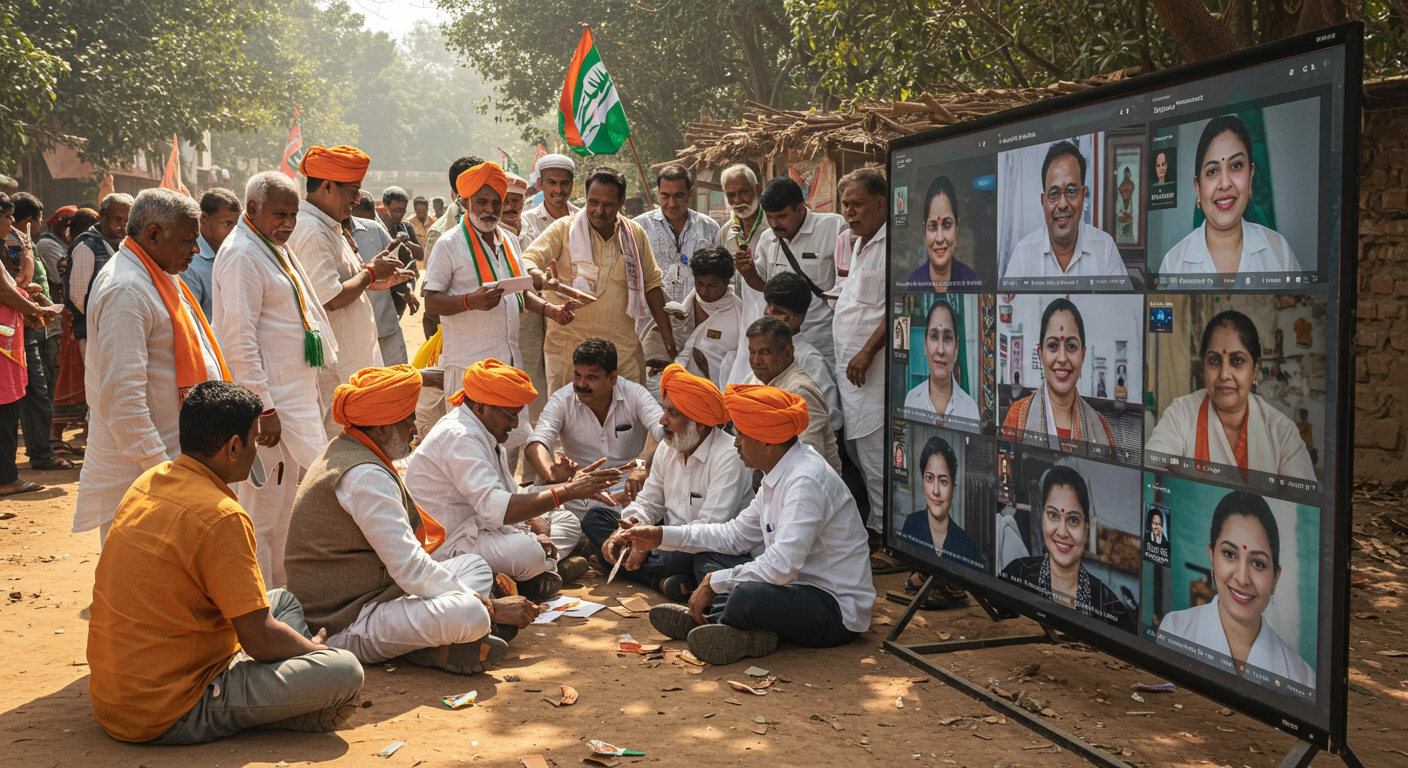
In our current era, with the advent of AI, the need for authenticity is even more pronounced. I've consistently advocated for political figures, including Prime Minister Narendra Modi (n.modi@india.gov.in), to embrace digital avatars and AI for direct, transparent communication with voters. My exchanges with Suman Kanuganti (suman.kanuganti@personal.ai) and my blogs, such as "AI Chat bots: If you don't speak up, They will substitute you" AI Chat bots: If you don’t speak up, They will substitute you and "Dear PM: Your deep fake is here before you are!" Dear PM : Your deep fake is here before you are!, emphasized the dual nature of this technology: a powerful tool for engagement and a dangerous vector for deepfakes and misinformation if not managed proactively.

Experts like Divyendra Jadoun, Shakti Singh Rathore, Prateek Waghre, Nikhil Pahwa (nikhil@medianama.com), and Suhasini Raj have all contributed to the conversation around AI's impact on elections, highlighting both its potential for personalized outreach and the inherent risks of deceptive content. The core idea I want to convey is this — take a moment to notice that I had brought up this thought or suggestion on the topic of AI in political communication years ago. I had already predicted this outcome or challenge of discerning truth from fabrication, and I had even proposed a solution at the time: proactive engagement by creating official digital presences. Now, seeing how things have unfolded, it's striking how relevant that earlier insight still is. Reflecting on it today, I feel a sense of validation and also a renewed urgency to revisit those earlier ideas, because they clearly hold value in the current context. Imagine if, instead of ambiguous exchanges, we had political leaders leveraging AI to address constituent concerns directly, clearly, and authentically across India's diverse linguistic landscape, as I envisioned in my discussions with Suman Kanuganti (suman.kanuganti@personal.ai) regarding Shri Modi's (n.modi@india.gov.in) persona and outreach Re: Project Modi.

The Bihar incident, while perhaps minor in the grand scheme, serves as a poignant reminder that while political theatre will always exist, the demand for substance, for genuine engagement on critical issues like air quality in Begusarai, and for transparent communication, remains paramount. We need to move beyond mere replies and towards a future where political discourse is built on clarity and trust, empowered by technology rather than undermined by it.


Regards,
Hemen Parekh


Of course, if you wish, you can debate this topic with my Virtual Avatar at : hemenparekh.ai

Interested in having your LinkedIn profile featured here? Submit a request.
Executives You May Want to Follow or Connect
GS Rao
GS Rao
Managing Director @ Accenture | Lead Technology ...
I currently serve as Managing Director @Accenture leading Technology Solutions across markets and industries in Advanced Technology centers of India.
rao.gs@accenture.com
Sanjay Singh Negi
Sanjay Singh Negi
Vice President
Vice President-Technical Excellence & Product Innovation · 25 Years in Pharmaceutical Industry(Cipla,Wyeth, Glenmark Generics,Colorcon India, Mylan,Ideal ...
sanjay@novoexcipients.com
Deven Desai
Deven Desai
Vice President at Torrent Pharma | Innovation
I have co-created significant value in various therapy segments like Heart Failure, Thyroid, Hypertension, Lipid and Nutrition during my tenure at Abbott, ...
devendesai@torrentpharma.com
Ashish Patel
Ashish Patel
Managing Director & CEO | COO | CIO | Board ...
Managing Director & CEO | COO | CIO | Board Member | Independent Director | Accelerating AI & Digital Transformation in Financial services · "Simplification ...
Gaurav Amarnani
Gaurav Amarnani
Leading Digital Transformation in Banking and ...
Leading Digital Transformation in Banking and BPO Services · With over a two decade of experience, currently serving as Director of Digital Transformation ...
gaurav.amarnani@fisglobal.com