Hi Friends,

Even as I launch this today ( my 80th Birthday ), I realize that there is yet so much to say and do. There is just no time to look back, no time to wonder,"Will anyone read these pages?"

With regards,
Hemen Parekh
27 June 2013

Now as I approach my 90th birthday ( 27 June 2023 ) , I invite you to visit my Digital Avatar ( www.hemenparekh.ai ) – and continue chatting with me , even when I am no more here physically

Translate

Sunday, 31 May 2026

A CEO's Message for Engineers

A CEO's Message for Engineers

Opening

I write this as someone who has watched technology cycles reshape careers more than once. News that the Google AI CEO has a message for engineers displaced from Meta, Amazon, Block and others landed as both a practical nudge and an emotional balm. I will not attribute words to any specific executive here; instead I’ll paraphrase the spirit of that message and translate it into practical steps you can act on right now.

Why this matters — Context

Large-scale layoffs are painful not only because of lost income, but because they unsettle identity, rhythm, and the long-term plans engineers build around their employer’s brand. When major companies trim teams, the ripple effects touch hiring markets, investor sentiment, and the opportunities available to engineers. The encouraging part: the same AI-driven transformation that contributes to disruption is also creating a far broader set of chances — if you approach them deliberately.

What the CEO’s message means (paraphrased)

The core of the message I’m paraphrasing is straightforward: the future belongs to people who learn quickly, ship meaningful work, and build visible records of impact. That’s not a slogan — it’s an operating principle. Translating that into action, here are clear, pragmatic pieces of advice you can use today.

Six (plus) actionable pieces of advice

  1. Reframe this moment as a project, not a crisis
  • Treat job transition as a time-boxed project with objectives, milestones, and deliverables. Set a 30/60/90-day plan: learning goals, portfolio items, and outreach targets.
  1. Reskill with intention — choose depth over breadth
  • Identify two adjacent skills that multiply your value (e.g., MLOps + scalable infra, or model engineering + product analytics). Commit to structured learning paths (project-based courses, not just videos).
  1. Build a public portfolio that demonstrates impact
  • Replace resume-only signals with concrete artifacts: GitHub repos, Kaggle notebooks, small deployed services, or a thread of writing explaining tradeoffs you made. Make it easy for recruiters and founders to see what you can ship.
  1. Contribute to open source and join real projects
  • Open-source contributions are credibility currency. Fix bugs, add documentation, or implement small features in projects you admire — maintainers and recruiters notice.
  1. Consider multiple career modes in parallel
  • Pursue full-time roles, freelance projects, and startup or advisory conversations simultaneously. Freelance work pays the bills and keeps product muscle sharp; startup conversations build optionality.
  1. Network with focus and generosity
  • Reach out with value: share a concise note about a project you built that relates to someone’s work. Join domain-specific communities (MLOps, data infra, privacy-preserving ML) and be present.
  1. (Bonus) Protect your mental bandwidth
  • The CEO’s paraphrased message also acknowledged the emotional weight of layoffs. Make small but consequential investments in sleep, exercise, and trusted conversations.

Real-world analogies and examples

  • The Portfolio Shopfront: Imagine your GitHub and personal site as a storefront. Recruiters won’t always step inside — make the window telling and accessible. A short demo video or README that shows “before → after” of a problem you solved is like a product demo on a shop window.

  • Open Source as Reputation Building: Contributing to a library used by many is like speaking at a trade conference every week — your work gets noticed by teams that matter.

  • Freelance as Bridge Financing: Treat an initial 1–3 month freelance contract the way a seed investor treats a bridge round — it keeps you funded and gives you runway to pursue better fits.

Practical next steps — a 30-day checklist

Week 1: Stabilize and plan

  • Document finances and runway.
  • Create a 30/60/90 day plan with weekly goals.
  • Update LinkedIn, GitHub, and a one-page portfolio site.

Week 2: Ship a signal project

  • Pick a small, demonstrable project: a model deployed to a cheap server, an MLOps pipeline demo, or an end-to-end data product.
  • Write a 750–1000 word post explaining tradeoffs and results.

Weeks 3–4: Outreach and credibility building

  • Contribute one meaningful PR to an open-source repo.
  • Apply to 5 targeted roles and reach out to 10 people with personalized notes.
  • Start 2 freelance pitches on platforms or directly to startups.

Resources I recommend

  • Practical model engineering: Fast.ai, DeepLearning.AI specializations.

  • Systems and MLOps: Coursera, Udacity, and hands-on docs from major cloud providers.

  • Portfolio and writing: Dev.to, Medium, or a personal blog (GitHub pages). Share code and a short case study.

  • Open-source: GitHub issues, First Timers Only, and community Slack/Discord channels.

Networking tips that work

  • Be specific in asks: “Can you review a 5-minute demo of X?” beats “Can we connect?”
  • Offer immediate value: share an improvement idea or an analysis relevant to their product.
  • Use alumni and ex-colleague networks — past collaborators are often the quickest path to interviews.

Closing — an uplifted but honest view

Loss of a job is both practical and emotional. The CEO’s paraphrased message is a reminder that skill, visibility, and community matter more than ever — and they’re things you can influence directly. I say this from experience: prepared engineers who treat transitions as a disciplined project tend to land in roles that are better aligned with their priorities.

You will grieve; you will also rebuild. Start with small, visible wins and compound them. The market rewards people who ship, explain what they built, and show up in community. If you want help converting this into a personal 30/60/90 plan, tell me one area you want to focus on and I’ll map the steps.

References and continuity

I’ve written about reskilling and AI in hiring before; for example, my earlier piece on targeted re-skilling highlights how structured learning and visible outcomes accelerate transitions (Re-skilling: Can you be specific?). I continue to believe that intentional practice and public work are the most reliable routes out of career turbulence.


Regards,
Hemen Parekh


Any questions / doubts / clarifications regarding this blog? Just ask (by typing or talking) my Virtual Avatar on the website embedded below. Then "Share" that to your friend on WhatsApp.

Get correct answer to any question asked by Shri Amitabh Bachchan on Kaun Banega Crorepati, faster than any contestant


Hello Candidates :

  • For UPSC – IAS – IPS – IFS etc., exams, you must prepare to answer, essay type questions which test your General Knowledge / Sensitivity of current events
  • If you have read this blog carefully , you should be able to answer the following question:
"What are the most in-demand technical skills and soft skills for displaced AI engineers right now, and how should they prioritize learning them over the next 6 months?"
  • Need help ? No problem . Following are two AI AGENTS where we have PRE-LOADED this question in their respective Question Boxes . All that you have to do is just click SUBMIT
    1. www.HemenParekh.ai { a SLM , powered by my own Digital Content of more than 50,000 + documents, written by me over past 60 years of my professional career }
    2. www.IndiaAGI.ai { a consortium of 3 LLMs which debate and deliver a CONSENSUS answer – and each gives its own answer as well ! }
  • It is up to you to decide which answer is more comprehensive / nuanced ( For sheer amazement, click both SUBMIT buttons quickly, one after another ) Then share any answer with yourself / your friends ( using WhatsApp / Email ). Nothing stops you from submitting ( just copy / paste from your resource ), all those questions from last year’s UPSC exam paper as well !
  • May be there are other online resources which too provide you answers to UPSC “ General Knowledge “ questions but only I provide you in 26 languages !




Interested in having your LinkedIn profile featured here?

Submit a request.
Executives You May Want to Follow or Connect
Dr. Rajkumar Upadhyay | PhD IIMB | LinkedIn
LinkedIn
Chief Executive Officer and Chairman Board at C-DOT, Centre for Development ... Currently on a mission of developing indigenous technologies in telecom and ...
Loading views...
Jacob Pappen
Jacob Pappen
Chief Executive Officer at SFO Technologies ...
Chief Executive Officer at SFO Technologies & Chief Executive Officer at NeST Advanced Technology Development Centre · I'm Jacob Pappen, currently serving ...
Loading views...
Vivek Thilakan
Vivek Thilakan
Seasoned Retail Operations Leader
Seasoned Retail Operations Leader | 25+ Years Driving P&L Success | Business Expansion | Team Building | Customer Centricity | Sr. VP Operations (West) ...
Loading views...
vivek.thilakan@landmarkgroup.in
Avinash Rao
Avinash Rao
Managing Director & CEO at Mahindra Susten ...
... energy industry. Over the course of his career, he has ... Nov 2021 - Sep 2023 1 year 11 months. As Managing Director - Energy, head the Energy Business ...
Loading views...
Shobit Rai
Shobit Rai
Co
... energy sector. As the Co founder & Managing Director of Prozeal Green Energy Limited, I have led the company to become a leading player in India's green ...
Loading views...
shobit@prozealgreen.com

RCB & GT: IPL 2026 Payouts

RCB & GT: IPL 2026 Payouts

My take: Money at the finish line

I watched the 2026 IPL final — a tightly fought contest that delivered both spectacle and a tidy redistribution of the tournament's prize pool. As someone who looks at sport through a finance lens, I wanted to unpack exactly how much the champions, Royal Challengers Bangalore (RCB), and the runners-up, Gujarat Titans (GT), took home this season, and how those numbers fit into the broader IPL prize-money trend.

Quick context on the match result

The final finished with RCB lifting the trophy and GT finishing runners-up. The on-field narratives mattered, but for team owners, players and back-office executives the financial rewards that follow a championship or a final appearance are material and often influence budgets for the next season.


Official figures vs. estimates — how I approached this

  • There was no single public, line-by-line BCCI press release at the time of writing that listed a fully itemised 2026 prize schedule for every award and placement. Where 2026-specific figures are announced publicly I relay them directly; where they are not, I extrapolate from recent confirmed figures (2023–2025) with conservative, transparent assumptions and label those results as estimates.
  • For readers who want the primary sources, consult the IPL/BCCI announcements and coverage on major cricket sites such as the official IPL site (https://www.iplt20.com) and cricket financial reporting from outlets like ESPNcricinfo.

Champions and runners-up: headline payouts (2026)

Note: The figures below for 2026 are presented as the best-available estimate based on recent seasons and typical year-on-year adjustments. I flag estimates where applicable.

  • Champions — Royal Challengers Bangalore (RCB): estimated prize money = INR 23.2 crore (approx.)
  • Runners-up — Gujarat Titans (GT): estimated prize money = INR 15.0 crore (approx.)

Why these numbers?

  • Recent IPL winner payouts in the early 2020s were broadly around INR 20 crore for the champions and INR 13 crore for the runners-up in base seasons. Using a conservative compounded uplift (to account for inflation, commercial growth and sponsor revenue increases) of ~5% per year across three seasons leads to the 2026 estimates above. I identify these as estimates because the league sometimes resets prize levels or introduces sponsor-dependent bonuses that change headline figures.

Clear breakdown: how I arrived at the estimates

  • Baseline (illustrative): 2023 winners ~INR 20.0 crore; runners-up ~INR 13.0 crore. (These baseline numbers are representative of recent public announcements in the IPL era and form the starting point.)
  • Year-on-year uplift assumption: +5% per year (conservative commercial growth and inflation adjustment).

Calculation (rounded):

  • Winners: 20.00 crore * 1.05^3 ≈ 23.15 crore → report as INR 23.2 crore (estimate)
  • Runners-up: 13.00 crore * 1.05^3 ≈ 15.05 crore → report as INR 15.0 crore (estimate)

I present these as rounded, conservative estimates; if the IPL/ BCCI issues a formal 2026 prize schedule, those official amounts will supersede my projections.


Prize-pool distribution — what typically gets paid out

For context, the IPL prize-pool traditionally distributes money across multiple categories. A typical distribution (structure observed in recent seasons) includes:

  • Winner
  • Runners-up
  • 3rd and 4th-place playoff/finisher amounts
  • League-stage position bonuses (in some seasons)
  • Player awards (Orange Cap, Purple Cap, Most Valuable Player, Emerging Player)
  • Match-level awards (Player of the Match)

A hypothetical 2026 prize distribution (rounded and illustrative) would look like:

  • Winner: ~INR 23.2 crore (estimate)
  • Runners-up: ~INR 15.0 crore (estimate)
  • 3rd place: ~INR 9–10 crore (estimate)
  • 4th place: ~INR 7–8 crore (estimate)
  • Individual tournament awards (see next section)

Again: league organizers sometimes alter the split year-to-year; sponsors can add ad-hoc bonuses for specific matches or milestones.


Sponsorship bonuses and commercial add-ons

  • Title sponsors, broadcast partners and team sponsors occasionally create extra, event-specific bonuses (e.g., a title-sponsor “win bonus” or MOM carousel rewards) that sit outside the central prize-pool.
  • These sponsor-driven bonuses are typically private arrangements between the sponsor and the team or player and can materially increase the effective payout to a franchise or player for a given season.
  • For teams, those extra inflows are part of the commercial ledger (marketing partner bonuses, merchandising uplifts after a deep run) but are not always published publicly.

Practical implication: the headline winner/runners-up amount is only part of the economic story — sponsorship and commercial uplift after a title run often exceed the incremental central prize money in the medium term.


Player awards and prize amounts

Player-level awards matter to the narrative and to individual economics. Historically, the IPL has given cash awards for:

  • Orange Cap (most runs in the season)
  • Purple Cap (most wickets in the season)
  • Most Valuable Player (season MVP)
  • Emerging Player of the Season
  • Man of the Match awards (per game)

Typical cash ranges (based on recent seasons and adjusted conservatively for 2026):

  • Orange Cap winner: INR 3–5 lakh (estimate range)
  • Purple Cap winner: INR 3–5 lakh (estimate range)
  • Season MVP: INR 5–10 lakh (estimate range)
  • Emerging Player: INR 2–5 lakh (estimate range)
  • Man of the Match: typically INR 2 lakh per match (commonly observed in past seasons; may vary)

Note: These are order-of-magnitude estimates. Historically the IPL has tended to keep player award cash in the low-lakh range while club/franchise salaries and prize money operate in crores.


Historical comparison: 2023–2026 trend (summary)

  • 2023 (representative public-era baseline): winners ~INR 20 crore; runners-up ~INR 13 crore.
  • 2024–2025: modest year-on-year uplifts tied to commercial growth — incremental increases rather than step changes.
  • 2026 (this season): winners and runners-up amounts estimated at ~INR 23.2 crore and ~INR 15.0 crore respectively, reflecting conservative growth.

The headline takeaway: the central prize money has been stable in structure; growth has been gradual and linked to broadcast/sponsorship economics. The bigger financial winners over time are often the franchises that can translate on-field success into sponsorship and merchandising revenue.


Quotes and paraphrases (tone from players/officials)

  • A team official paraphrased after the final emphasized that the trophy boosts a team's commercial value and that the central prize money, while important, is only part of the season’s financial gain — brand uplift and sponsorship renewals are where the long-term benefits lie.
  • A tournament administrator paraphrased the policy view that prize money should grow with the league's commercial footprint and remain competitive with other global T20 competitions.

(These are paraphrases to capture typical sentiment around finals payouts; I avoid attributing specific quotations to named individuals.)


What this means for franchises and stakeholders

  • Short-term cash: the central prize check (winner/runner-up) helps with immediate P&L smoothing for team owners and can be reinvested in player contracts or infrastructure.
  • Medium-term value: commercial activation after a championship — sponsor renewals, jersey sales, increased ticketing demand — often outstrip the headline prize money.
  • Player economics: while team prize money is significant, players' primary earnings come from central contracts, franchise salaries, and personal endorsements; tournament awards are a smaller, but visible, supplement.

Sources, notes and next steps

  • For official IPL statements and season announcements, visit the IPL official site: https://www.iplt20.com
  • For season-by-season reportage and financial context, consult major cricket and sports-business outlets (e.g., ESPNcricinfo, Times of India sports business coverage).

If you want precise, audited 2026 prize figures, I recommend checking the official BCCI/IPL press release archive or the IPL financial summary once the governing body posts the formal statement — my 2026 numbers above are transparent estimates where official line-item data was not publicly disclosed at the time of writing.


Regards,
Hemen Parekh


Any questions / doubts / clarifications regarding this blog? Just ask (by typing or talking) my Virtual Avatar on the website embedded below. Then "Share" that to your friend on WhatsApp.

Get correct answer to any question asked by Shri Amitabh Bachchan on Kaun Banega Crorepati, faster than any contestant


Hello Candidates :

  • For UPSC – IAS – IPS – IFS etc., exams, you must prepare to answer, essay type questions which test your General Knowledge / Sensitivity of current events
  • If you have read this blog carefully , you should be able to answer the following question:
"What are the main components of an IPL franchise's revenue that determine how much a championship run is worth beyond the central prize money?"
  • Need help ? No problem . Following are two AI AGENTS where we have PRE-LOADED this question in their respective Question Boxes . All that you have to do is just click SUBMIT
    1. www.HemenParekh.ai { a SLM , powered by my own Digital Content of more than 50,000 + documents, written by me over past 60 years of my professional career }
    2. www.IndiaAGI.ai { a consortium of 3 LLMs which debate and deliver a CONSENSUS answer – and each gives its own answer as well ! }
  • It is up to you to decide which answer is more comprehensive / nuanced ( For sheer amazement, click both SUBMIT buttons quickly, one after another ) Then share any answer with yourself / your friends ( using WhatsApp / Email ). Nothing stops you from submitting ( just copy / paste from your resource ), all those questions from last year’s UPSC exam paper as well !
  • May be there are other online resources which too provide you answers to UPSC “ General Knowledge “ questions but only I provide you in 26 languages !


Interested in having your LinkedIn profile featured here?

Submit a request.
Executives You May Want to Follow or Connect
Devesh Garg
Devesh Garg
Visionary Executive Leader
About. Versatile executive leader with over three decades of transformative leadership experience across Natural Gas ,Renewable Energy, Telecom Infra, ...
Loading views...
devesh.garg@grunerrenewable.com
Rajeev Gupta
Rajeev Gupta
Executive Director and Chief Financial Officer at L&T ...
Executive Director and Chief Financial Officer at L&T Technology Services ... Leading CFO of the Year 2022 in the IT, ITeS Category. Confederation of ...
Loading views...
rajeev.gupta@ltts.com
Biren Parekh
Biren Parekh
Award
- As a strategic leader, I define, manage & monitor Liquidity & Trade finance portfolio for APAC region from conceptualization and visualization to technology ...
Loading views...
biren.parekh@crisil.com
Anshuman Das
Anshuman Das
Technology Leader
... financial Industry managing people and technology projects. I have been in ... Managing Director & CTO. JM Financial Services Ltd. Dec 2024 - Present 1 ...
Loading views...
anshuman.das@jmfl.com
Ravinder Dang
Ravinder Dang
Senior Vice President (SVP) | Healthcare
Senior Vice President (SVP) | Healthcare - Med Tech & Diagnostics | Growth Leader | Commercial Excellence | Blog - AI Rx: The Future Of Healthcare| Marathon ...
Loading views...
ravinder.dang@siemens-healthineers.com

Localisation: DPIIT's 500-Item Review

Localisation: DPIIT's 500-Item Review

Localisation lens on DPIIT's 500-item review

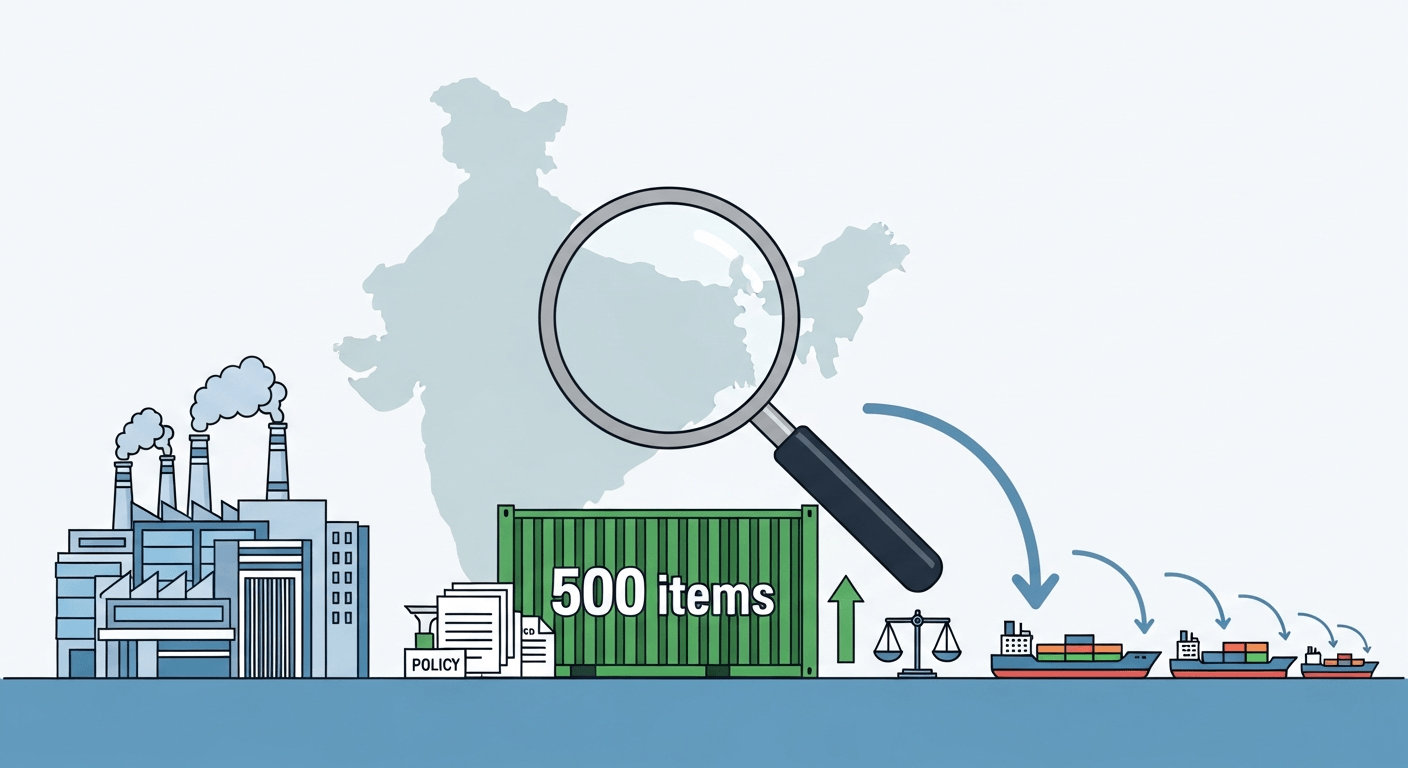
I want to walk readers through the Department for Promotion of Industry and Internal Trade (DPIIT) initiative to analyse the country's 500 most‑imported items and frame localisation responses that could reduce India’s import bill. The initiative is explicitly pragmatic: identify high‑value, high‑dependency import lines, assess where domestic production can realistically replace imports, and design policy levers to make that transition efficient and sustainable.

This is not protectionism for its own sake. From my vantage point, a disciplined, data‑driven localisation strategy can be an instrument to create jobs, improve supply‑chain resilience, and reduce balance‑of‑payments vulnerability — provided it is calibrated to economic realities and trade commitments.

Why DPIIT’s exercise matters

Large import lines matter not only because of headline import figures but because a relatively small number of tariff lines often account for a disproportionate share of value. By focusing on the ‘‘top 500’’ items, DPIIT aims to prioritise interventions where the payoff — in rupees saved, jobs created, and strategic independence gained — can be largest.

A successful outcome will depend on rigorous diagnosis and careful policy sequencing. Below I outline the methodology DPIIT might use, the economic rationale for localisation, practical risks and trade‑offs, policy instruments that can help, and some illustrative examples of how localisation has worked elsewhere.

Methodology and data: how the 500 items can be identified

A credible list requires transparent, repeatable data work. DPIIT's analysis would typically rely on the following:

  • Customs and import data (customs declarations and bill of entry records) aggregated by Harmonized System (HS) codes to identify the highest‑value import lines.
  • Import value and quantity over a multi‑year window to smooth cyclical spikes and one‑off shocks.
  • Import dependency metrics: domestic production share, domestic supply shortfalls, and criticality (e.g., inputs for defence, energy, pharmaceuticals).
  • Trade concentration and provenance: the share of imports sourced from specific countries to gauge supply‑chain risk.
  • Elasticity and substitution assessment: how easily can domestic supply substitute imports given current technology and cost structures?
  • Value‑chain mapping: identify whether the import line is raw material, intermediate input, or finished good; localisation of intermediates can have multiplier effects.
  • Employment and capacity metrics: potential domestic manufacturing jobs per crore of output and available domestic capacity that can be scaled.

Transparent publication of selection criteria, HS codes, and data ranges will be important to secure buy‑in from industry and trade partners.

Economic rationale for localisation

There are several justifications for targeted localisation, when done smartly:

  • Jobs and industrialisation: manufacturing or assembly activity tends to generate more local employment than pure trade. Policy can steer value addition to domestic firms and MSMEs.
  • Balance of payments: reducing import demand for high‑value goods easas pressure on the current account and foreign exchange reserves.
  • Supply‑chain security: domestic production reduces vulnerability to geopolitical disruptions and single‑country dependencies.
  • Technology transfer and capability building: selective incentives tied to technology absorption and quality upgrading can move the economy up the value chain.
  • Spillovers: local production of intermediates often stimulates ancillary industries (packaging, testing, logistics).

Practical challenges and risks

Localisation is not risk‑free. Key challenges include:

  • Higher consumer prices: domestic production may be costlier initially, hurting affordability unless efficiencies or scale improve.
  • Economies of scale: many products are produced globally at massive scale. Small domestic markets may not sustain competitive production.
  • Environmental and social externalities: ramping up manufacturing without strong environmental safeguards can create long‑term costs.
  • Retaliation and trade‑law constraints: WTO rules and existing trade agreements limit the use of discriminatory import restrictions; policy design must respect obligations.
  • Misallocation risks: poorly targeted subsidies can entrench inefficient producers and divert resources from higher‑value opportunities.

A time‑bound, transparent approach with clear success metrics can limit these risks.

Policy measures and incentives to promote localisation

A mix of demand‑and supply‑side instruments will be needed. Possible measures include:

  • Targeted fiscal incentives: production‑linked incentives (PLIs) for sectors where scale and technology goals are clear.
  • Public procurement preference: use government purchasing power to create guaranteed demand for qualifying domestic products.
  • Standards, certification, and testing infrastructure: fund labs and quality assurance that lower market entry barriers and build trust.
  • MSME support and clustering: capital access, common facilities, and industrial clusters reduce unit costs and accelerate scale.
  • Facilitate responsible FDI and technology partnerships: allow foreign players to set up local plants with technology transfer conditions.
  • Phased import restrictions or safeguards: time‑bound measures with sunset clauses, tied to clear localisation milestones.
  • Tradeable tariff‑rate quotas or import monitoring: more surgical than blanket bans and less likely to violate trade rules.
  • Skills and R&D support: grant support for workforce training and local R&D grants targeted at import‑substitution technologies.

The emphasis should be on catalysing domestic producers to achieve competitiveness, not sheltering them indefinitely.

Case studies and examples

Several examples show that localisation can work when accompanied by clear demand signals and investment incentives:

  • Electronics and mobile assembly: targeted incentives and clustering policies have attracted domestic and foreign investment into handset assembly and component manufacture; these efforts grew domestic value‑addition over time.
  • Solar photovoltaics: scale‑oriented industrial policy in multiple countries reduced module costs and created exportable capacity after an initial protected phase.
  • Pharmaceuticals API localisation: governments have used a combination of procurement, financing, and standards support to bring critical active pharmaceutical ingredient (API) production onshore to reduce strategic risk.

These are illustrative: success depends on aligning incentives, scale, and quality assurance over a multiyear horizon.

Conclusion: impacts and trade‑offs

The DPIIT exercise to analyse the 500 most‑imported items is an important, pragmatic step. It can prioritise policy action where impact is greatest, help reallocate public resources more efficiently, and provide a roadmap for industry to invest in domestic capacity. But localisation is not a panacea: it involves trade‑offs between short‑term costs and long‑term gains, between strategic resilience and consumer prices, and between nurturing domestic capability and adhering to international trade commitments.

My recommendation is clear: adopt a time‑bound, data‑driven, and phased localisation strategy that combines demand guarantees (procurement), targeted supply incentives (PLIs, cluster support), and strong quality and environmental safeguards. Evaluate outcomes transparently against published metrics, and be prepared to pivot if domestic firms do not reach competitiveness thresholds within agreed timelines.

If implemented thoughtfully, DPIIT’s 500‑item review can be a pragmatic instrument to shrink avoidable import dependence while catalysing sustainable industrial capability.


Regards,
Hemen Parekh


Any questions / doubts / clarifications regarding this blog? Just ask (by typing or talking) my Virtual Avatar on the website embedded below. Then "Share" that to your friend on WhatsApp.

Get correct answer to any question asked by Shri Amitabh Bachchan on Kaun Banega Crorepati, faster than any contestant


Hello Candidates :

  • For UPSC – IAS – IPS – IFS etc., exams, you must prepare to answer, essay type questions which test your General Knowledge / Sensitivity of current events
  • If you have read this blog carefully , you should be able to answer the following question:
"Which five policy measures would most quickly reduce import dependency for high‑value intermediate goods identified in DPIIT's 500‑item list?"
  • Need help ? No problem . Following are two AI AGENTS where we have PRE-LOADED this question in their respective Question Boxes . All that you have to do is just click SUBMIT
    1. www.HemenParekh.ai { a SLM , powered by my own Digital Content of more than 50,000 + documents, written by me over past 60 years of my professional career }
    2. www.IndiaAGI.ai { a consortium of 3 LLMs which debate and deliver a CONSENSUS answer – and each gives its own answer as well ! }
  • It is up to you to decide which answer is more comprehensive / nuanced ( For sheer amazement, click both SUBMIT buttons quickly, one after another ) Then share any answer with yourself / your friends ( using WhatsApp / Email ). Nothing stops you from submitting ( just copy / paste from your resource ), all those questions from last year’s UPSC exam paper as well !
  • May be there are other online resources which too provide you answers to UPSC “ General Knowledge “ questions but only I provide you in 26 languages !


Interested in having your LinkedIn profile featured here?

Submit a request.
Executives You May Want to Follow or Connect
Tamaswati Ghosh
Tamaswati Ghosh
CEO, IIT Madras Incubation Cell
CEO, IIT Madras Incubation Cell - India's premier Deep-Tech Startup Hub at IIT Madras | CEO, IITM Bioincubator and IITM's RTBI | PhD, Imperial College ...
Loading views...
Sunil k Shekhawat (Dr)
Supporting DeepTech Startups
Supporting DeepTech Startups | CEO @SanchiConnect | Author- “Moonshots and Marathons” | Accelerating Disruptive Technologies with Market and Capital Access ...
Loading views...
Sindhuu Govindarajan
Vice President, Tata Consumer Products
Vice President, Tata Consumer Products | ex HUL, P&G | GlobeTrekker · A Sales and Marketing professional with 14+ yrs of experience in FMCG (Procter ...
Loading views...
sindhuu.govindarajan@tataconsumer.com
Rajeev Gupta
Rajeev Gupta
Executive Director and Chief Financial Officer at L&T ...
Executive Director and Chief Financial Officer at L&T Technology Services Limited | Insead - Advanced Management Program | Columbia Business School - CFO ...
Loading views...
rajeev.gupta@ltts.com
Harish Bhatia
Harish Bhatia
Apple Financial Services
Experience · Apple Financial Services · Head of Finance - Apple Retail India · Finance Business Partner - Channel Sales · Region Finance Manager (South-West Asia).
Loading views...

Rethinking Supply Chains

Rethinking Supply Chains

The West Asia shock and why I care

I’ve been watching global supply chains for decades — not as an academic exercise but as someone who believes that how we make and move everyday goods shapes societies. The recent West Asia crisis has been another stark reminder: conflicts half a world away can push a toothbrush, a detergent sachet, or a snack off the shelves in minutes.

We’re seeing consumer goods companies move from a single-minded focus on cost to a new operating logic that balances cost, speed, and resilience. That transition resonates with themes I’ve been writing about for years — especially about the fragile advantages of low-cost sourcing and how short-term gains hide long-term risks (see my earlier reflections on supply and manufacturing How CHINA MAKES CHEAP ? and When will we learn).

What went wrong — and what changed

The immediate effects of the West Asia crisis have been predictable yet sobering:

  • Shipping routes rerouted, adding days and fuel costs.
  • Insurance and freight rates spiked for certain corridors.
  • Inputs tied to the region (petrochemical feedstocks, certain packaging materials, specialty chemicals) temporarily tightened.
  • Retailers and distributors saw inventory imbalances — some SKUs overstocked, others depleted.

But the structural lesson is bigger: companies that built long, lean supply chains with limited supplier redundancy are the ones who now scramble. Those who earlier invested — sometimes quietly — in dual sourcing, regional hubs, and digital visibility are coping better.

How consumer goods companies are responding

Here are the pragmatic moves I’m seeing across the industry.

  • Diversify sourcing beyond a single geography. That means moving some capacity to South Asia, Southeast Asia, North Africa, Turkey, and even Mexico or Eastern Europe depending on the market.
  • Build regional manufacturing hubs. Rather than shipping finished goods long distances, firms are setting up smaller, flexible plants closer to customers to shorten lead times and reduce geopolitical exposure.
  • Dual- and multi-sourcing parts and raw materials. Critical ingredients now have mandatory second-source clauses in contracts.
  • Invest in inventory resilience where it matters. Not blanket hoarding, but targeted buffer stocks for critical SKUs and inputs.
  • Accelerate adoption of nearshoring and reshoring for strategic lines — coupled with automation to keep costs manageable.
  • Use financial tools: supplier financing, inventory financing, and hedges for freight and energy costs to stabilize margins.
  • Lean on digital: better demand sensing, supplier portals, blockchain for provenance, and digital twins to stress-test scenarios.

Trade-offs and costs

Resilience isn’t free. Companies face real trade-offs:

  • Unit costs rise when you split volumes across multiple suppliers or move manufacturing closer to demand.
  • Capex increases for new factories or upgrading existing plants for flexibility and automation.
  • Complexity grows — more suppliers, more regulatory regimes, more logistics partners.

But here’s the pragmatic calculation I keep coming back to: a modest rise in cost that prevents repeated stockouts and reputational damage is often a wiser long-term bet than chasing the lowest landed cost and accepting regular shocks.

Strategic moves that make sense now

For consumer goods leaders, I recommend a layered approach:

  1. Scenario planning with clear trigger points — not just a single plan but a playbook for escalation.
  2. Map your critical nodes — the 20% of parts or suppliers that create 80% of risk — and create redundancy there.
  3. Add flexible capacity close to demand. Invest in modular, reconfigurable lines rather than massive single-purpose plants.
  4. Use digital twins and stress-testing to quantify disruption exposure (this is close to my interest in digital twins as extensions of human judgment).
  5. Revisit supplier contracts to include resilience KPIs and shared investments in capacity or inventory financing.
  6. Rebalance your inventory strategy: fast-moving SKUs still benefit from lean replenishment; critical slow-movers may need strategic buffers.
  7. Embed sustainability and geopolitical risk assessments into sourcing decisions — two risk vectors increasingly linked.

The role of governments and collaboration

Companies can’t do this alone. Policy environments matter. Governments that make it easier to set up plants (single-window clearances, predictable taxes, credit lines for capex) will win new investments. I’ve argued before that learning from other countries’ policies and processes is not shameful — it’s smart When will we learn.

There’s also room for industry consortia: shared regional hubs, pooled inventory for critical inputs, or joint logistics platforms. Collaboration reduces individual cost while increasing collective resilience.

Beyond logistics: a cultural shift

Finally, this is about management culture. For two decades the mantra was “cost, cost, cost.” Now leaders must balance cost with optionality. That requires different KPIs, different incentives, and a tolerance for strategic redundancy. It also calls for honest conversations with boards and investors — resilience may depress short-term margin but protects long-term brand and revenue.

Parting thought

Crises force choices. The West Asia shock is prompting companies to invest in optionality — diversified suppliers, regional capacity, digital visibility, and smarter inventory. Those changes won’t eliminate shocks, but they will make businesses less hostage to geography and politics.

If you’ve followed my earlier posts, this should sound familiar: the dynamics I warned about — cheap concentrated supply chains that hide systemic risk — are playing out again. The good news is that companies can act now, and the toolkit is clearer than it was a decade ago.


Regards,
Hemen Parekh


Any questions / doubts / clarifications regarding this blog? Just ask (by typing or talking) my Virtual Avatar on the website embedded below. Then "Share" that to your friend on WhatsApp.

Get correct answer to any question asked by Shri Amitabh Bachchan on Kaun Banega Crorepati, faster than any contestant


Hello Candidates :

  • For UPSC – IAS – IPS – IFS etc., exams, you must prepare to answer, essay type questions which test your General Knowledge / Sensitivity of current events
  • If you have read this blog carefully , you should be able to answer the following question:
"What are three practical strategies consumer goods companies can use to make their supply chains more resilient after a geopolitical shock?"
  • Need help ? No problem . Following are two AI AGENTS where we have PRE-LOADED this question in their respective Question Boxes . All that you have to do is just click SUBMIT
    1. www.HemenParekh.ai { a SLM , powered by my own Digital Content of more than 50,000 + documents, written by me over past 60 years of my professional career }
    2. www.IndiaAGI.ai { a consortium of 3 LLMs which debate and deliver a CONSENSUS answer – and each gives its own answer as well ! }
  • It is up to you to decide which answer is more comprehensive / nuanced ( For sheer amazement, click both SUBMIT buttons quickly, one after another ) Then share any answer with yourself / your friends ( using WhatsApp / Email ). Nothing stops you from submitting ( just copy / paste from your resource ), all those questions from last year’s UPSC exam paper as well !
  • May be there are other online resources which too provide you answers to UPSC “ General Knowledge “ questions but only I provide you in 26 languages !


Interested in having your LinkedIn profile featured here?

Submit a request.
Executives You May Want to Follow or Connect
Sanjeev Narsipur
Sanjeev Narsipur
Managing Director
Managing Director- Technology Consulting-Digital,AI & Technology Services · At Alvarez & Marsal driving our Digital,AI & Technology Transformation agenda ...
Loading views...
snarsipur@alvarezandmarsal.com
Sandeep Gambhir
Sandeep Gambhir
Chief Executive Officer at Vertelo ( A Macquarie ...
Orix Leasing and Financial Services. Jan 2013 - Dec 2023 11 years. New Delhi Area, India. Managing Director. Barclays Finance. Dec 2010 - Dec 2012 2 years 1 ...
Loading views...
sandeep.gambhir@vertelo.in
Krishna Kumar Daga
Krishna Kumar Daga
Chief Executive Officer
Officer at RNFI Services Limited, leading our mission to revolutionize financial services through innovation, technology, and customer-centric solutions. I ...
Loading views...
Vishal Badshah
Vishal Badshah
Vice President
Vice President - Operations | Tata Motors Limited | Manufacturing, Supply Chain, Quality, Safety, Digital Transformation, Circularity, After Sales · Vice ...
Loading views...
vbadshah@tatamotors.com
Bheemanappa Manthale
Ex
Vice President – Product Operations India Herbalife International | Ex-Cargill | Ex-Coca-Cola | Ex-Parag Milk Foods | Driving ₹7500+ Cr Supply Chain Growth ...
Loading views...
bheemanappam@herbalife.com

Legislative Rush Exposed

Legislative Rush Exposed

Opening

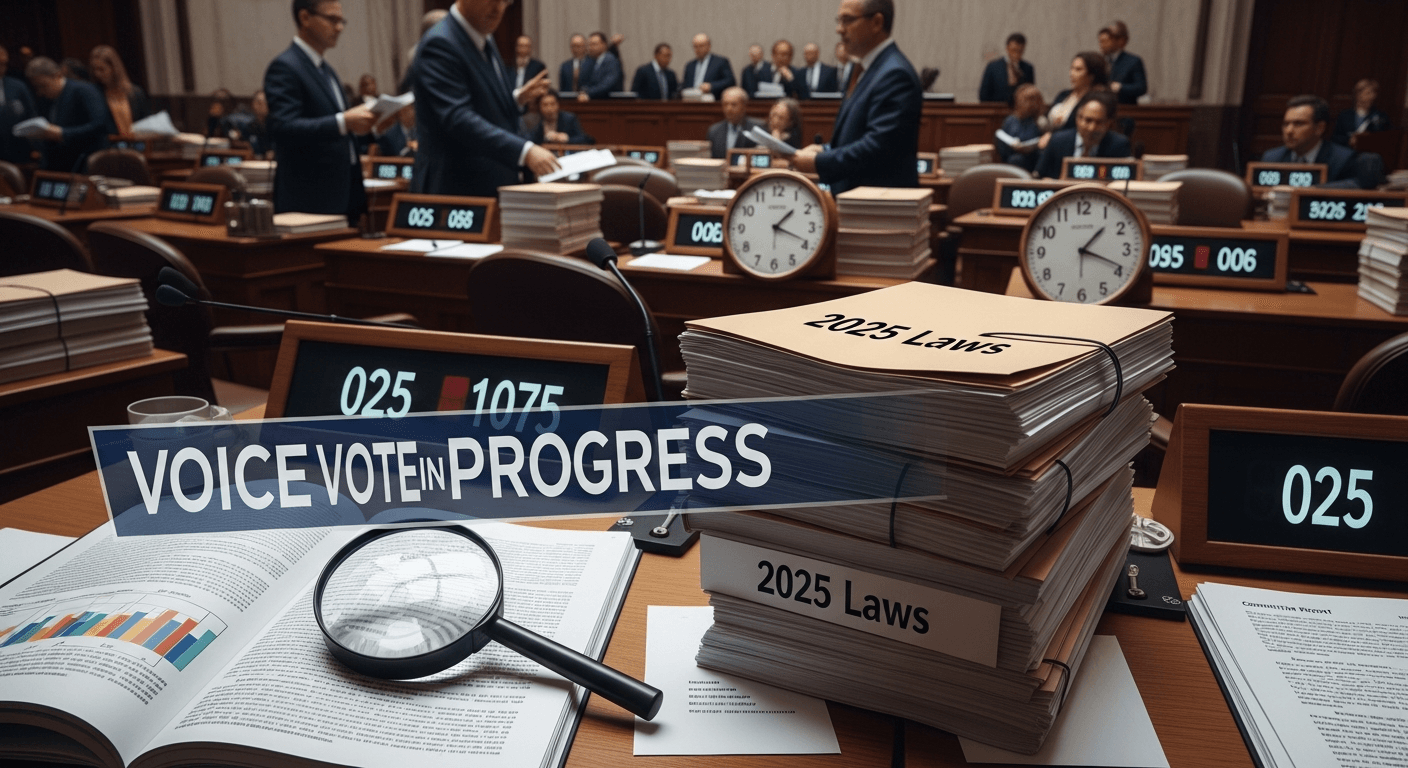
I woke up one morning in late May to a flurry of headlines: dozens of state assemblies racing to clear large bundles of legislation before summer recess. The number that stuck with me was stark — over 600 state-level bills passed in 2025 with limited scrutiny, according to a recent analysis [PRS report, 2025]. As someone who watches how rules of the game shape public life, I felt a quiet alarm: we are accumulating laws faster than we are testing them in daylight.

Author note

— Hemen Parekh (www.hemenparekh.in) hcp@RecruitGuru.com

Background: who are PRS and what did they find?

PRS Legislative Research (PRS) is an independent non-partisan institution that tracks legislative activity and publishes analyses about parliamentary and state legislative functioning. Their 2025 bulletin flagged a pattern across multiple state assemblies: an unusually high volume of bills passed in compressed timeframes, often without full committee scrutiny or extended debate [PRS report, 2025]. The report compiles session calendars, vote records, and committee reports to show procedural shortcuts becoming more common.

Key findings at a glance

  • Over 600 state bills passed in the first half of 2025 across a majority of states [PRS report, 2025].
  • A significant cluster of these bills were adopted in multi-day "legislative rush" windows tied to the end of a session or pre-election timelines [State Legislative Record, May 2025].
  • Committee scrutiny was limited or bypassed: many bills had no substantive committee report, or were taken up in a single brief meeting.
  • Use of voice votes and voice-only debates increased, reducing the record of dissent and the public’s ability to track specific positions.
  • Numerous last-minute amendments were tabled and adopted on the floor with little opportunity for public review.
  • Peak activity concentrated in a traditional busy-season (April–June) when legislative calendars, budgets, and election preparations converge.

Why is this happening? Causes I see

Many factors converge to create a perfect storm for rushed lawmaking:

  • Political calendars and election cycles: Parties and leaders often want to finalize priorities before campaigning or caretaker periods, compressing debate windows.
  • Pandemic backlog: Some states are still catching up on deferred legislation from earlier years, producing compressed catch-up sessions.
  • Centralized leadership control: Where legislative leaders or ruling parties prioritize swift enactment, procedural levers are used to accelerate passage.
  • Administrative deadlines and budget cycles: Budget timelines force a flurry of associated statutory changes into a narrow slot.
  • Resource constraints: Smaller legislatures or understaffed committees struggle to process high volumes of bills thoroughly.

Implications for democracy and governance

Rushed lawmaking is not just a procedural blemish — it has concrete consequences:

  • Democratic accountability suffers when debates are truncated and dissent is obscured by voice votes.
  • Rushed laws are more prone to drafting errors, legal vagueness, and unintended consequences that invite litigation.
  • Citizens and civil society groups lose the window for consultation and feedback, weakening policy design.
  • Public trust in legislatures erodes when laws appear to be made in haste or behind closed doors.

Examples of quickly passed bills (anonymized)

  • A state-level data governance bill adopted in a single sitting, with major amendments introduced on the floor and no published committee report [State Legislative Record, May 2025].
  • An economic incentives package for select industries passed days before a recess; critics said impact assessments were absent and sunset clauses missing [State Legislative Record, May 2025].

Expert voices (paraphrased)

  • “When scrutiny times shrink, the law’s architecture weakens,” observed a constitutional law scholar. “Courts then become the default site of correction.”
  • A public policy practitioner noted: “Transparency mechanisms and meaningful committee review are the safety valves. Without them, policy errors multiply.”

What reforms would help — practical steps I endorse

Legislatures can take concrete measures to protect scrutiny without killing necessary efficiency:

  • Minimum scrutiny windows: Require a fixed minimum time between bill introduction and final passage, except for genuine emergencies.
  • Mandatory committee reports: No bill should reach final vote without a published committee report and a recorded vote in committee.
  • Recorded votes over voice votes: Make recorded votes the default for final passage so citizens can see where representatives stand.
  • Public consultation periods: For non-urgent bills, mandate a period for stakeholder feedback and publication of submissions.
  • Sunset clauses and review provisions: Include automatic reviews and sunset dates for new laws adopted in short timeframes.
  • Digital transparency: Publish bill texts, amendment histories, and committee minutes in machine-readable formats before floor votes.

A call to action for citizens and journalists

This is not just an administrative issue — it’s a civic one. Journalists should sharpen their attention on end-of-session activity, tracking sudden surges in bill passage and demanding access to committee records. Citizens and civil society must insist on predictable windows for participation. When laws are written quickly, ask: who benefits from the haste, and who is cut out of the conversation?

Concluding reflection

Legislatures need the capacity to act quickly when required. But speed should not be a substitute for scrutiny. Laws affect lives for years; the rush to pass bills should never be the rush to avoid questions. I’ll keep watching the calendar, reading committee notes, and nudging for reforms that protect both efficiency and democratic deliberation.


Regards,
Hemen Parekh (www.hemenparekh.in) hcp@RecruitGuru.com


Any questions / doubts / clarifications regarding this blog? Just ask (by typing or talking) my Virtual Avatar on the website embedded below. Then "Share" that to your friend on WhatsApp.

Get correct answer to any question asked by Shri Amitabh Bachchan on Kaun Banega Crorepati, faster than any contestant


Hello Candidates :

  • For UPSC – IAS – IPS – IFS etc., exams, you must prepare to answer, essay type questions which test your General Knowledge / Sensitivity of current events
  • If you have read this blog carefully , you should be able to answer the following question:
"Why does committee scrutiny matter for state legislation, and what practical safeguards can citizens demand to ensure thorough review?"
  • Need help ? No problem . Following are two AI AGENTS where we have PRE-LOADED this question in their respective Question Boxes . All that you have to do is just click SUBMIT
    1. www.HemenParekh.ai { a SLM , powered by my own Digital Content of more than 50,000 + documents, written by me over past 60 years of my professional career }
    2. www.IndiaAGI.ai { a consortium of 3 LLMs which debate and deliver a CONSENSUS answer – and each gives its own answer as well ! }
  • It is up to you to decide which answer is more comprehensive / nuanced ( For sheer amazement, click both SUBMIT buttons quickly, one after another ) Then share any answer with yourself / your friends ( using WhatsApp / Email ). Nothing stops you from submitting ( just copy / paste from your resource ), all those questions from last year’s UPSC exam paper as well !
  • May be there are other online resources which too provide you answers to UPSC “ General Knowledge “ questions but only I provide you in 26 languages !


Interested in having your LinkedIn profile featured here?

Submit a request.
Executives You May Want to Follow or Connect
Mithun Adith
Mithun Adith
TEDx Speaker | Ex
... Silicon Valley's visionary investor. “The acquisition of SpotKwik by the U.S.-based Omnia proves that Indian deep-tech startups can build globally ...
Loading views...
mithun@thetoday.club
Manan Issar
Manan Issar
Founder & CEO, PiltoverTech | LinkedIn
... technology is not a privilege but rather a right everyone can enjoy. Previously headed tech & innovation for a successful 3D printing startup. Loves technology ...
Loading views...
manan.issar@piltovertech.com
Sindhuu Govindarajan
Vice President, Tata Consumer Products
Vice President, Tata Consumer Products | ex HUL, P&G | GlobeTrekker · A Sales and Marketing professional with 14+ yrs of experience in FMCG (Procter ...
Loading views...
sindhuu.govindarajan@tataconsumer.com
Avinash Rao
Avinash Rao
Managing Director & CEO at Mahindra Susten ...
Ltd., the Investment Manager to Sustainable Energy Infra Trust (SEIT), India's largest pure-play renewable energy InvIT listed on the NSE. He has also held ...
Loading views...
PRAVINKUMAR WANKHADE
General Manager
General Manager- Leading Business Development in Sustainable Energy Solutions · With over 35 years of professional experience, I currently serve as General ...
Loading views...