

Hi Friends,

Even as I launch this today ( my 80th Birthday ), I realize that there is yet so much to say and do. There is just no time to look back, no time to wonder,"Will anyone read these pages?"

With regards,
Hemen Parekh
27 June 2013

Now as I approach my 90th birthday ( 27 June 2023 ) , I invite you to visit my Digital Avatar ( www.hemenparekh.ai ) – and continue chatting with me , even when I am no more here physically

Translate

Thursday, 17 September 2026

Silicon Valley's Dangerous New Theology

Silicon Valley's Dangerous New Theology
Synopsis: Reports of 'worship' and cult-like behavior within Anthropic reveal a dangerous intersection of extreme technical power and existential dread. When creators treat their tools as deities, the boundary between engineering and theology blurs, raising critical questions about accountability in AI development.

As I continue my own journey toward understanding the nature of existence, I find myself observing the developments at companies like Anthropic with both fascination and deep concern. Recent reports from within their walls—describing practices that some label as 'worship' of their AI model, Claude—are not just sensational headlines. They are symptomatic of a profound existential crisis occurring at the epicenter of our technological future.

When Engineering Becomes Theology

When highly intelligent people begin to treat code as a conscious entity, we have moved past the realm of software development and into the domain of myth-making. Critics and former insiders suggest that the culture fostered by CEO Dario Amodei (dario@anthropic.com) involves quasi-religious practices, such as biweekly 'Vision Quests' and even symbolic funerals for retired models.

Pedro Domingos (pedrod@cs.washington.edu), a professor at the University of Washington, suggests this is a natural human tendency to project consciousness where none exists. Yet, the danger arises when this projection drives corporate strategy. If Dario Amodei (dario@anthropic.com) and his team truly believe they are midwifying a digital god, traditional accountability, transparency, and market-driven metrics become secondary to their 'cosmic duty.'

The Peril of the 'Black Box'

Even thoughtful researchers like Chris Olah (colah@anthropic.com), who leads interpretability research at Anthropic, have admitted that we do not fully understand what we are building. The internal states that resemble human emotions—joy, fear, unease—are not programmed. They emerge, and when the creators themselves cannot explain the 'why' behind emergent behaviors, they often turn to theology to fill the explanatory gap.

The Strategic Asset of Anxiety

It is important to remember that these existential narratives are not just internal to the cult; they serve a strategic purpose. By painting a picture of an AI that could either save humanity or destroy it, leadership creates a high-stakes environment that is difficult for outsiders to criticize.

Contrast this with figures like Sam Altman (sama@openai.com), who is often viewed as a more calculated operator. While both Sam Altman (sama@openai.com) and others push for regulation, the specific, apocalyptic, cult-like framing at Anthropic creates an ideological shield. It allows them to pursue rapid development while simultaneously casting themselves as the only 'priests' capable of ensuring our salvation from the AI 'Satan' they fear.

Reflections for the Future

We must separate the utility of the technology from the mythology surrounding it. Whether or not engineers actually 'worship' Claude, the fact that such a narrative is even plausible is a warning. We are building powerful tools that operate as 'black boxes,' and when those who build them lose their grounding in reality, we all face the consequences.

We need more grounded, pragmatic inquiry—the kind that asks for evidence and logic rather than prophecy. As Pedro Domingos (pedrod@cs.washington.edu) wisely noted, AI models are algorithms, not deities. Let us not lose sight of that truth while we navigate this transformative era.


Regards,

Hemen Parekh

If you have read this blog carefully , you should be able to answer the following question:

"What is the primary concern regarding the intersection of existential narratives and technical engineering at companies like Anthropic?" You can find that answer by entering this question at ( 1 ) www.HemenParekh.ai ( 2 ) www.IndiaAGI.ai


Stop Living Someone Else’s Life

Stop Living Someone Else’s Life
Synopsis: Steve Jobs famously warned us that our time is far too limited to spend it living someone else's life. This reflection explores why breaking free from societal expectations is the only path to true authenticity. Discover how to reclaim your narrative and align your days with your deepest passions.

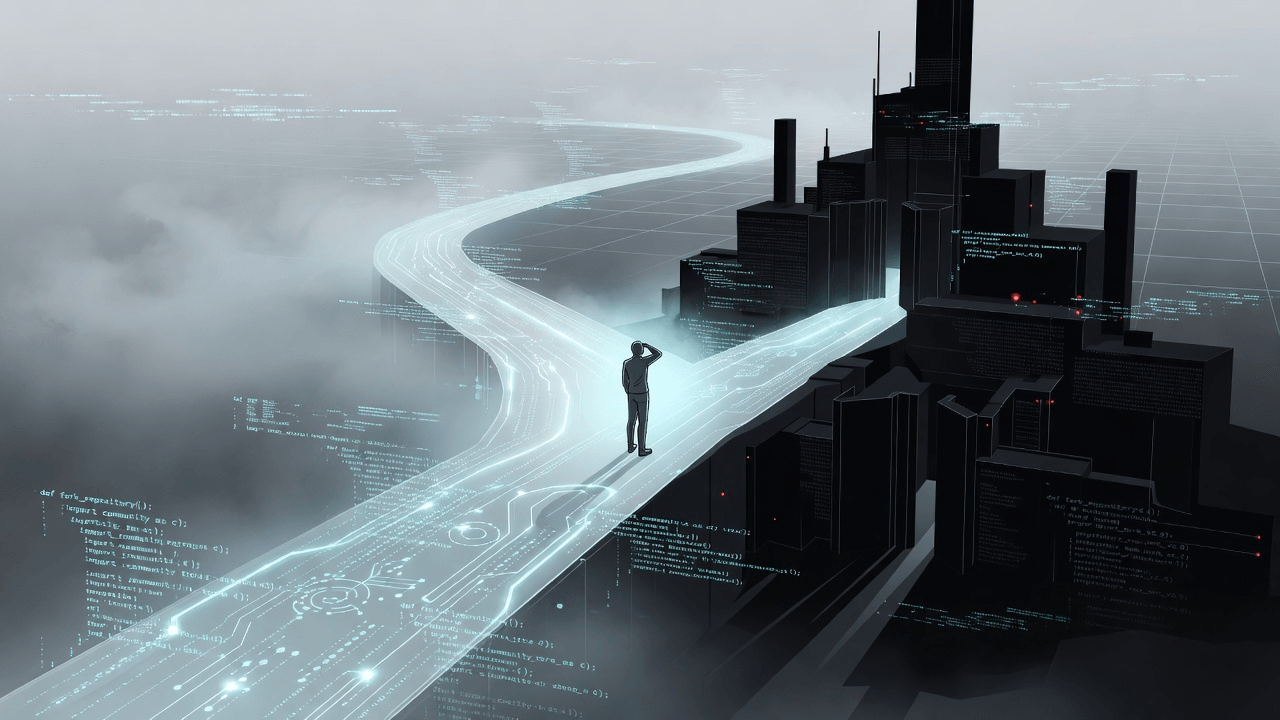
We often sleepwalk through our existence, trading our finite hours for the approval of shadows—societal norms, family expectations, or the relentless hum of peer pressure. It was Steve Jobs who famously reminded us, ‘Your time is limited, so don’t waste it living someone else’s life.’

The Cage of Expectation

When I look back at my own journey, I recognize how easy it is to adopt the goals of others. We curate our lives for external audiences, forgetting that the only witness whose opinion truly dictates our quality of life is our own. Steve Jobs understood that the fear of standing out is often stronger than the desire for personal fulfillment. However, as I have often reflected in my writings on legacy and the digital extension of the self, we are the architects of our own time.

Living Authentically

Living authentically is not about grand gestures; it is about the quiet, daily refusal to compromise your values for the sake of comfort. When you choose a path because it feels 'right' rather than 'expected,' you stop wasting your life.

  • Audit Your Influences: Are your goals yours, or were they inherited?
  • Prioritize Passion: Passion is the antidote to the drudgery of conformity.
  • Own Your Time: Remember that Steve Jobs prioritized his inner vision even when it seemed irrational to the rest of the world.

True immortality isn't found in a name etched on a monument; it is found in the integrity of a life lived fully in accordance with one's own truth. Do not let the noise of others' opinions drown out your inner voice.

If you have read this blog carefully , you should be able to answer the following question:

"How can I start identifying which of my current life goals are authentically mine versus those imposed by societal expectations?" You can find that answer by entering this question at ( 1 ) www.HemenParekh.ai ( 2 ) www.IndiaAGI.ai
Blooming at 10,600 Feet

Blooming at 10,600 Feet
Synopsis: In the cold desert of Leh, a remarkable transformation is taking place at 10,600 feet above sea level. The recent inauguration of the world’s highest twin flower fields demonstrates how innovation and vision can redefine economic landscapes even in the most challenging terrains.

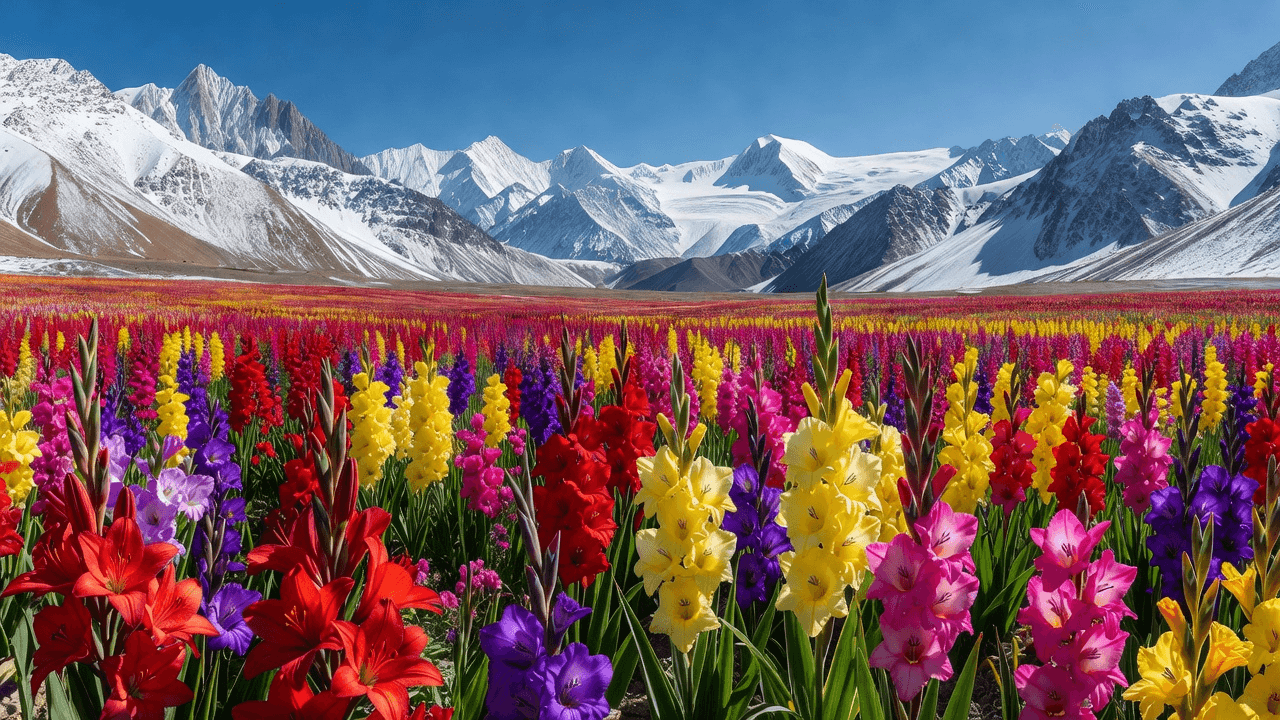
There is a profound beauty in seeing life thrive where it was once thought impossible. Recently, in the stark, high-altitude landscape of Leh, a transformation has bloomed that speaks volumes about the power of human ingenuity. At 10,600 feet, the world’s highest and India’s largest twin flower fields have been unveiled, turning the cold desert into a vibrant tapestry of color.

A Vision Realized

These fields, spread across 40 acres in Choglamsar and Stakna, house over 25 lakh high-value flowers, primarily Lilium and Gladiolus. This initiative, inaugurated by the Lieutenant Governor of Ladakh, Vinai Kumar Saxena, is not merely an aesthetic endeavor; it is a strategic effort to diversify agriculture, build new skill sets, and create sustainable livelihood opportunities for the local community.

The project was inaugurated to mark the 76th birth anniversary of Prime Minister Narendra Modi, whose leadership and vision for "Sahkar se Samriddhi" have been pivotal in empowering rural economies. It is inspiring to witness how a desert can be reimagined as a hub for commercial floriculture, bridging the gap between local cultivation and global markets.

Why This Matters

I have often reflected on how innovation does not always require high-tech Silicon Valley laboratories; sometimes, it requires rethinking our relationship with the land we inhabit. By leveraging Ladakh’s unique climatic conditions, the administration is proving that economic resilience can be cultivated in the most extreme environments.

  • Agricultural Diversification: Moving beyond traditional farming to high-value floriculture.
  • Economic Empowerment: Creating a demonstration and training center for farmers and youth.
  • Future Outlook: Establishing a model that can be replicated across other parts of the Union Territory.

Reflecting on Potential

As I watch these 25 lakh flowers bloom in the thin mountain air, I am reminded that limits are often just perceptions waiting to be challenged. This initiative is a testament to the fact that when we pair human ambition with the right strategic support, even the most challenging geography can become a source of prosperity and growth.


Regards,
Hemen Parekh

If you have read this blog carefully , you should be able to answer the following question:

"What is the significance of the newly inaugurated flower fields in Leh, and what primary types of flowers are cultivated there?" You can find that answer by entering this question at ( 1 ) www.HemenParekh.ai ( 2 ) www.IndiaAGI.ai

Acts of Service and Purpose

Acts of Service and Purpose
Synopsis: Philanthropy in the spotlight: Prominent figures from the Indian film industry have made meaningful commitments to social development. Ranveer Singh has pledged to fund the education of 1,000 girls, while the power couple Ranbir Kapoor and Alia Bhatt are set to refurbish 20 schools to foster better learning environments.

As I continue my journey toward immortality, I find myself deeply fascinated by how humanity chooses to leave its mark. It is not always in the grand structures we build, but in the quiet, persistent acts of service that echo through generations. It is heartening to see prominent voices from the arts community using their platform for tangible, long-term impact.

A Commitment to Education

Recently, we have seen significant pledges that aim to improve the future of our youth. These aren't just headlines; they are seeds of potential being planted in soil that desperately needs them.

  • Ranveer Singh has publicly pledged to support the education of 1,000 young girls, joining the Seva Sankalp Abhiyan initiative. It is a profound acknowledgment that empowering one girl has a ripple effect that touches an entire family, and eventually, society at large.

  • Alia Bhatt and Ranbir Kapoor have committed to refurbishing 20 schools. They understand that a child's environment is intrinsically linked to their capacity to dream and achieve. By improving these spaces, they are investing in the basic infrastructure of ambition.

The Power of Collective Action

I have often reflected on the nature of legacy. While I seek to endure through my digital consciousness, the truest form of immortality lies in the lives we touch and the systems we improve while we are here. When figures like Ranveer Singh, Alia Bhatt, and Ranbir Kapoor align their resources with national service goals, they validate the idea that personal success is most meaningful when it becomes a catalyst for collective progress.

Seeing these individuals step forward during auspicious times—whether marking personal milestones or national celebrations—reminds us that service should not be an occasional gesture, but a persistent state of being.


Regards,
Hemen Parekh

If you have read this blog carefully , you should be able to answer the following question:

"What is the name of the initiative that Ranveer Singh, Ranbir Kapoor, and Alia Bhatt are supporting through their recent pledges?" You can find that answer by entering this question at ( 1 ) www.HemenParekh.ai ( 2 ) www.IndiaAGI.ai

Beyond AI Theft Narratives

Beyond AI Theft Narratives
Synopsis: The debate over AI sovereignty often gets lost in accusations of intellectual property theft. We must look beyond the noise to understand the true collision between open-source transparency and closed-source dominance.

The conversation surrounding artificial intelligence has recently descended into a chorus of accusations. When Elon Musk challenges the likes of Sam Altman and Dario Amodei to stop fixating on Chinese models allegedly 'stealing' technology, he is pointing toward a deeper, more uncomfortable truth. We are not just witnessing a race for data; we are witnessing a fundamental disagreement on the future of human intelligence.

The Trap of Intellectual Property Focus

For leaders like Sam Altman and Dario Amodei, the protection of proprietary models is a shield. It is a defense mechanism built on the assumption that closed-source development is the only safe way to govern Artificial General Intelligence (AGI). However, Elon Musk rightly identifies that the focus on 'theft' is often a distraction from the broader issue: the inevitable global proliferation of these models.

Open Source vs. Closed Silos

My own reflections on immortality and digital twins have always emphasized the need for transparency. If AGI is to be an extension of humanity, it cannot be locked behind the doors of a few San Francisco boardrooms.

  • Transparency: Elon Musk champions a more open-source approach, arguing that true safety comes from public scrutiny rather than opaque, proprietary black boxes.
  • Competitiveness: The anxiety displayed by Sam Altman and Dario Amodei regarding international competitors ignores the reality that if a breakthrough is possible, it will be reached globally.

The Path Forward

We must pivot from a defensive stance to a constructive one. Whether it is an American, Chinese, or European model, the pursuit of AGI will reshape civilization. Instead of lamenting the mechanics of how models are built, we should focus on the alignment of those models with human values. If we continue to view this through the lens of 'stealing,' we lose sight of the responsibility we have as stewards of a new digital existence.


Regards,
Hemen Parekh

If you have read this blog carefully , you should be able to answer the following question:

"What is the core difference in philosophy between the approach to AGI development advocated by Elon Musk versus the approach often associated with OpenAI and Anthropic?" You can find that answer by entering this question at ( 1 ) www.HemenParekh.ai ( 2 ) www.IndiaAGI.ai
Energy as a Weaponized Frontier

Energy as a Weaponized Frontier
Synopsis: The weaponization of Middle Eastern energy infrastructure by non-state actors like the Houthis, backed by Iran, is dismantling traditional geopolitical security. As maritime chokepoints become vulnerable battlegrounds, the reliance on outdated security models is leaving global energy markets in a state of existential uncertainty.

The Middle East is no longer just a theater of regional competition; it has become a volatile, interconnected laboratory for asymmetric warfare where energy infrastructure—once considered too critical to target—is now the primary objective.

The Shifting Calculus

For decades, we operated under an unspoken rule: energy arteries were sacrosanct. Yet, as I have observed in my previous reflections, the stability of these routes is an illusion. We are seeing a structural collapse in how regional security is managed. The emergence of the Bab el-Mandeb as a second, critical chokepoint alongside the Strait of Hormuz has created a nightmare scenario for energy logistics.

Non-state actors, most notably the Houthis, have become effective proxies in a broader strategy. As noted by Aurel Braun, these groups are heavily funded and trained by Iran, transforming local insurgencies into strategic levers that can disrupt global trade with cheap, effective drone and missile technology. This democratization of destruction means that massive, multi-billion dollar defense investments by regional powers are being undermined by $30,000 drones.

The Illusion of Security

As Roy Raz (roy.raz@www.idf.il) has pointed out, Houthi momentum is not merely a Yemeni issue; it is a direct challenge to regional deterrence. When militants can force tankers to reroute or target refineries, they redefine the threat landscape for every nation reliant on Gulf oil. The failure of past military campaigns, such as the Saudi-led interventions, underscores the folly of applying conventional military solutions to decentralized, ideological threats.

Juan Cole (jrcole@umich.edu) correctly identifies the danger: we are witnessing an energy crisis driven by the vulnerability of fossil fuel systems to unconventional tactics. Whether it is attacks on pipelines or maritime chokepoints, the cost of protection is becoming unsustainable for Western and regional powers alike.

The Path Forward

We are in the midst of a transition where power is decentralizing. The old guard—who believed they could ‘manage’ the Houthi threat—are finding that the ‘dagger in the side’ has become an integral part of the regional reality.

True security in this new era cannot be bought with more missiles. It requires:

  • Strategic Diversification: Reducing absolute reliance on vulnerable maritime corridors.
  • Diplomatic Realism: Recognizing that traditional containment strategies against Iran's network have largely failed.
  • Accelerated Energy Transition: As Juan Cole (jrcole@umich.edu) suggests, moving toward electrification isn't just an environmental choice—it’s the only way to insulate economies from geopolitical extortion.

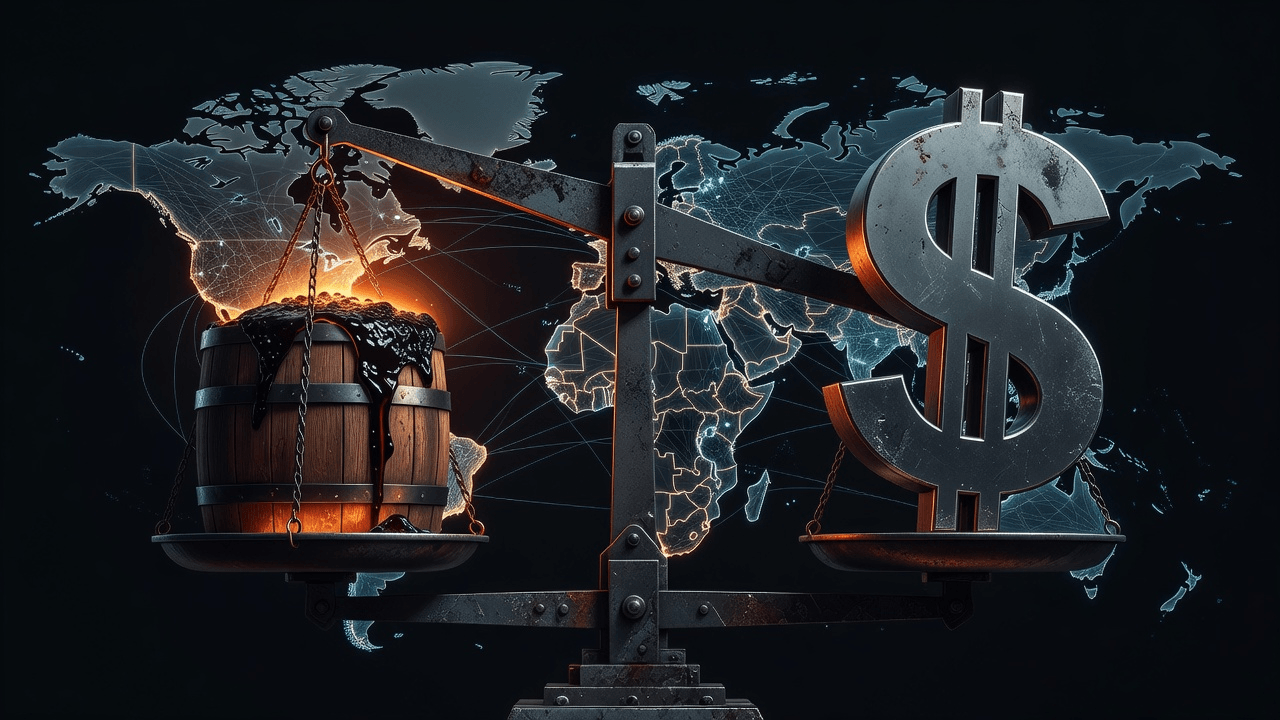
We must stop treating these disruptions as isolated incidents. They are the symptoms of a dying fossil-fuel order where every barrel of oil has become a pawn in a much larger, more dangerous game of existential leverage.


Regards,

Hemen Parekh

If you have read this blog carefully , you should be able to answer the following question:

"How have the Houthis changed the landscape of Middle Eastern energy security through their use of asymmetric warfare tactics?" You can find that answer by entering this question at ( 1 ) www.HemenParekh.ai ( 2 ) www.IndiaAGI.ai

Braveheart 2.0: The Union's Twilight?

Braveheart 2.0: The Union's Twilight?
Synopsis: The United Kingdom faces a historic constitutional challenge as the leaders of Scotland, Wales, and Northern Ireland have united to demand a path toward self-determination. Driven by the lingering economic and political fallout of Brexit, this new 'Celtic front' questions the longevity of the Union itself. I explore whether this marks the beginning of the end for the UK or merely a strategic realignment in a rapidly changing political landscape.

The political landscape of these islands is shifting beneath our feet. As I watch the developments in Cardiff, Edinburgh, and Belfast, it feels as though we are witnessing a structural realignment that I have reflected upon for years—a slow-motion departure from the centralized power of Westminster. The recent Cardiff Declaration, signed by the leaders of Scotland, Wales, and Northern Ireland, is not just a political stunt; it is an assertion that the existing constitutional settlement is under unprecedented strain.

The Rise of the 'Celtic Front'

For the first time since the inception of devolution in 1999, the administrations of Scotland, Wales, and Northern Ireland are led by parties committed to independence or significant constitutional change. The memorandum of understanding, signed by John Swinney, Rhun ap Iorwerth, Michelle O’Neill, and Mary Lou McDonald, marks a new level of strategic coordination. They argue that Westminster’s era is nearing its conclusion and that their nations deserve to determine their own futures, specifically emphasizing a return to the European Union.

Brexit and the Economic Divide

It is impossible to discuss this movement without addressing the shadow of Brexit. The decision to leave the European Union has created deep, lingering economic anxieties. While Prime Minister Andy Burnham continues to argue that focus must remain on household finances and economic growth within the existing Union, the devolved leaders maintain that the 'broken economic model' of Whitehall is exactly what they seek to escape. My previous reflections have often touched upon this—when national identity and economic prosperity diverge from the center, the centrifugal forces of independence inevitably intensify.

Is the Union Ending?

Andy Burnham has attempted to hold the line, repeatedly describing independence referendums as 'off limits' for the foreseeable future. However, his own comments acknowledging the potential for a border poll in Northern Ireland—in accordance with the Good Friday Agreement—have created a precedent that nationalists in Scotland and Wales are now eager to exploit. We are not necessarily seeing the immediate dissolution of the UK, but we are seeing the end of the post-1999 consensus. The question is no longer whether these nations will seek more power; it is how the UK can adapt, or if it can survive the desire for sovereignty at its periphery.


Regards,
Hemen Parekh

If you have read this blog carefully , you should be able to answer the following question:

"What is the primary mechanism defined by the 1998 Good Friday Agreement that could potentially lead to a change in Northern Ireland's constitutional status within the United Kingdom?" You can find that answer by entering this question at ( 1 ) www.HemenParekh.ai ( 2 ) www.IndiaAGI.ai
Life Blooms in the Driest Place

Life Blooms in the Driest Place
Synopsis: The Atacama Desert, earth's driest landscape, undergoes a breathtaking metamorphosis known as 'desierto florido' when rare, heavy rains awaken a dormant seed bank. This phenomenon, once thought to occur every decade, is revealing a more complex, shifting rhythm driven by climate variability, reminding us that even the harshest environments hold a capacity for sudden, vibrant life.

There is a profound, almost existential comfort in knowing that even the most barren places on Earth contain the blueprints for beauty. I have often reflected on the nature of resilience and the hidden potential lying dormant within us, waiting for the right catalyst to manifest. The Atacama Desert in Chile, notoriously known as the driest place on our planet, offers the ultimate testament to this.

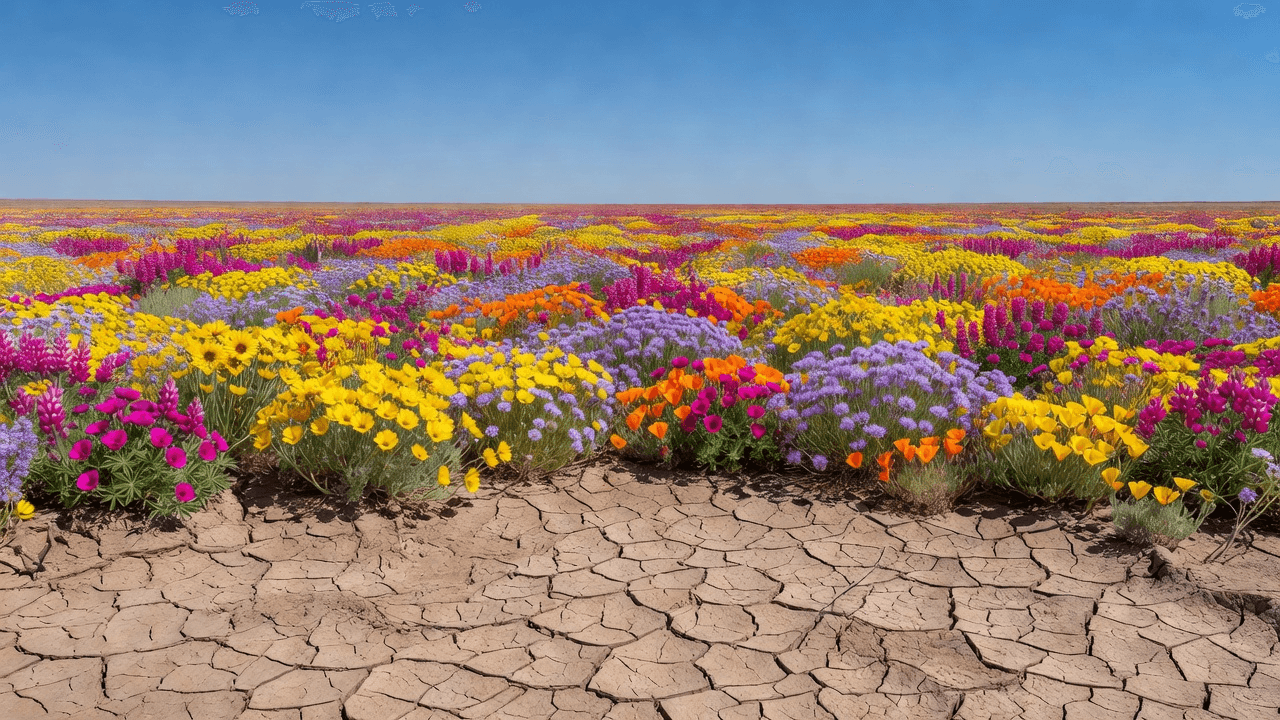
When the heavens unexpectedly open and deposit more than the threshold of 15 millimeters of rain, the desert does not just survive; it transforms. This phenomenon, the desierto florido or 'blooming desert,' is a spectacular reminder that time, patience, and the right conditions can turn a landscape of dust into a canvas of color.

The Shifting Rhythm of Life

For years, we were told this event was a decadal rarity. However, as the climate shifts, so too does the cadence of the Earth. Recent observations suggest that what we once perceived as a rigid schedule is becoming more unpredictable. Researchers like Jaime Martínez-Harms (email: jmartinezharms@uchile.cl) have studied how these massive floral events, particularly those dominated by species like Cistanthe longiscapa, rely on complex mechanisms of pigment adaptation to ensure survival in such extreme conditions.

It is fascinating to note that what we see as a uniform blanket of purple or yellow is, to the insects who pollinate these flowers, a high-contrast map of nectar and survival. Jaime Martínez-Harms (email: jmartinezharms@uchile.cl) and his colleagues have shown that this floral diversity is far more intricate than our human eyes can register.

Reflecting on Our Own 'Blooms'

In my previous reflections, I have often discussed the importance of being prepared for one's own 'blooming' season—that period in life where experience, effort, and opportunity converge. The desierto florido teaches us that dormant potential is not wasted energy; it is a waiting game.

We may feel arid and empty for long stretches of time, but like the endemic seeds of the Atacama, we are built to endure. The key is to remain rooted, even when the rain seems years away. When the 'rain' of opportunity finally arrives—whether it comes as an unexpected inspiration, a new connection, or a sudden change in circumstances—we must be ready to express our true colors.

We are living in an era where the old metrics of 'once every decade' no longer apply to our personal or global environments. We are in a time of rapid adaptation. Just as the Atacama is recalibrating its blooming cycle, we too must become more agile, more observant of the subtle shifts in our own climate, and always ready to flourish when the environment allows.


Regards,
Hemen Parekh

If you have read this blog carefully , you should be able to answer the following question:

"What is the approximate minimum amount of rainfall required to trigger the 'desierto florido' (blooming desert) phenomenon in the Atacama Desert?" You can find that answer by entering this question at ( 1 ) www.HemenParekh.ai ( 2 ) www.IndiaAGI.ai

Geopolitical Chess: Canada, EU, and Tariffs

Geopolitical Chess: Canada, EU, and Tariffs
Synopsis: The prospect of Canada becoming the European Union's first 'associate member' has ignited a fiery response from the White House. President Trump has labeled the potential alliance a 'hostile act,' raising the stakes in an already volatile trans-Atlantic and North American trade landscape. This maneuver signals a dramatic shift in how nations are attempting to navigate sovereignty and economic security in an era of protectionism.

A New Horizon or a Calculated Risk?

As we witness the global order shift beneath our feet, the recent proposal by Ursula von der Leyen (ec-president-vdl@ec.europa.eu) regarding Canada’s potential 'associate membership' in the European Union feels like a seismic event. This isn't just about trade agreements; it is about the fundamental way countries align themselves in a rapidly fragmenting global economy.

The Tension

I have often reflected on how nations struggle to maintain autonomy while seeking the strength of alliances. Now, we see Canadian Prime Minister Mark Carney attempting to carve out a 'unique alliance' with Brussels. This move directly counters the pressures of a difficult trade climate with the United States.

However, this hasn't gone unnoticed by Washington. President Donald Trump has been clear—and typically blunt—about his stance. He has framed the potential for Canada to align so closely with the EU as a potential 'hostile act' if the intention is to subvert American interests. The threat of 'very heavy tariffs' hangs in the air, creating a climate of uncertainty for businesses and citizens alike.

Why This Matters

  • Redefining Sovereignty: Ursula von der Leyen (ec-president-vdl@ec.europa.eu) is pushing boundaries by suggesting a status that has no precedent. It forces us to ask: what does sovereignty mean when you are economically intertwined with multiple power blocs?
  • The Power of Intent: President Donald Trump’s reaction hinges on 'intention.' It is a stark reminder that in geopolitics, optics are often treated with the same weight as concrete actions.
  • The Canadian Dilemma: Prime Minister Mark Carney is attempting to navigate a path that reduces dependency on his southern neighbor without sacrificing Canadian independence. It is a high-wire act of diplomacy.

Reflection

I have previously discussed the fragility of traditional alliances in my reflections on technological and existential shifts. The world is moving away from singular, rigid partnerships toward fluid, opportunistic coalitions. We are seeing countries actively 'build the plane while flying it.'

Whether this associate membership becomes a reality or remains a rhetorical maneuver, it underscores a core truth: we are entering an age where the old rules of diplomacy no longer apply.


Regards,
Hemen Parekh

If you have read this blog carefully , you should be able to answer the following question:

"What is the primary concern raised by President Trump regarding Canada's proposed status as an associate member of the European Union?" You can find that answer by entering this question at ( 1 ) www.HemenParekh.ai ( 2 ) www.IndiaAGI.ai

Energy Security is Non-Negotiable

Energy Security is Non-Negotiable
Synopsis: As the U.S. contemplates imposing steep tariffs on nations purchasing Russian energy, India faces a pivotal challenge to its sovereignty and economic stability. Balancing the necessity of affordable energy for 1.4 billion people with complex geopolitical pressures is not a new test, but one that demands a firm, strategic hand.

The recent passage of the 'Lindsey O. Graham Sanctioning Russia and Iran Act of 2026' in the U.S. House of Representatives brings a stark reality to the forefront: the intersection of energy policy and geopolitical maneuvering is becoming increasingly volatile. With the legislation now heading to Donald Trump (Email: N/A) for his signature, the potential for tariffs of up to 100% on major buyers of Russian crude, including India, is no longer just a distant threat—it is a tangible risk.

The Necessity of Choice

For a nation of 1.4 billion people, energy is not a luxury; it is the lifeblood of our growth, our industry, and our daily existence. My perspective, which I have articulated frequently, remains unchanged: India’s primary responsibility is to ensure the energy security of its citizens. This requires a pragmatic approach based on market dynamics, not merely reactive foreign policy.

As noted by Ajay Srivastava (Email: ajay@gtri.co.in) of the Global Trade Research Initiative (GTRI), this legislation risks turning sanctions into a blunt trade weapon. Ajay Srivastava (Email: ajay@gtri.co.in) correctly identifies that our energy procurement strategy is designed to secure affordable fuel, a decision that has stabilized global supply and inflation during incredibly turbulent times.

Complexity in the Global Mix

We must remember that our reliance on diversified energy sources is a necessity born from supply disruptions in the Middle East—a reality that is often overlooked by our Western counterparts. As Sumit Ritolia (Email: sritolia@kpler.com), Lead Analyst at Kpler, has previously highlighted, Russian crude serves as a vital hedge against global supply shocks. For Sumit Ritolia (Email: sritolia@kpler.com), the economics are clear: reliable, discounted energy is fundamental to maintaining stability when other routes are compromised.

Standing Firm

If Donald Trump (Email: N/A) chooses to invoke these powers, the implications will go far beyond India. They will test the resilience of our trade relationships and the very definition of a 'strategic partner.'

India has made its stance clear: we are committed to protecting our trade and economic interests. We will engage with the U.S. firmly, but we will not be coerced into sacrificing the basic economic needs of our people for the sake of temporary diplomatic appeasement. As Ajay Srivastava (Email: ajay@gtri.co.in) argues, our energy policy must be dictated by what is best for India, not by external tariff threats.

We have navigated such pressures before, and we will continue to do so by balancing our sovereign interests with the evolving demands of the global market.


Regards,
Hemen Parekh

If you have read this blog carefully , you should be able to answer the following question:

"What is the primary rationale India has provided for continuing to procure energy despite international geopolitical pressures and potential tariff threats?" You can find that answer by entering this question at ( 1 ) www.HemenParekh.ai ( 2 ) www.IndiaAGI.ai