
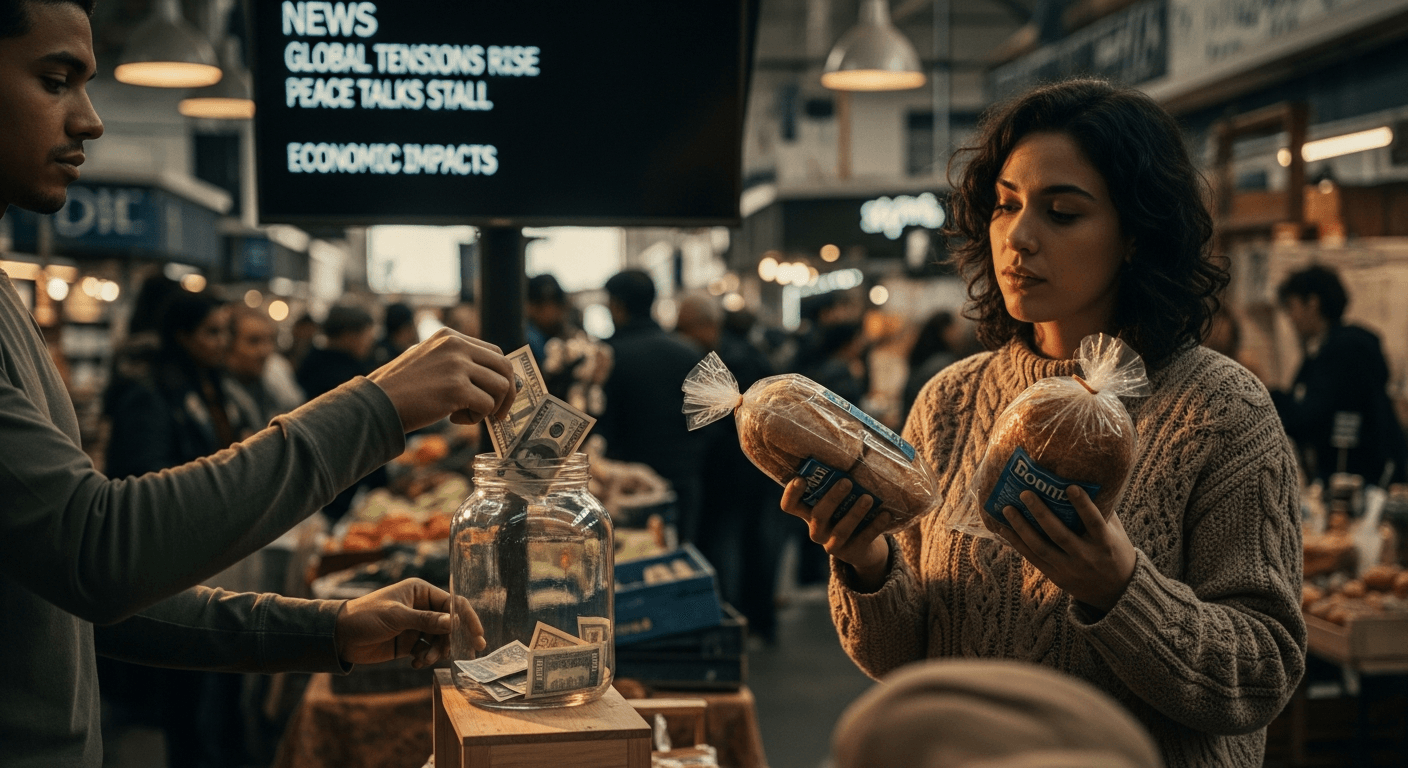
I keep returning to a simple question: when uncertainty rises, what do people do with money? The newest round of research answers that with more nuance than the headline numbers — consumers are prioritising savings and essentials while becoming highly selective about discretionary purchases.
What the report shows
Across markets and surveys, a few consistent patterns emerge:
- The report shows a clear tilt toward precaution. In one study of Indian consumers, only 48% expect the economy to improve in 2026 and concerns about layoffs rose to 41% between January and May; nearly two-thirds say they are very likely to increase savings for themselves and their families (Kantar State of the Nation).
- The report shows shrinking discretionary intent. PwC’s consumer sentiment pulse records a sharp quarterly decline in confidence and finds almost 80% of consumers planning short-term spending cutbacks, with eating out and retail among the categories most at risk (PwC Consumer Sentiment Survey).
- The report shows fragile buffers. U.S. macro data covered by PYMNTS highlights that the personal savings rate fell to around 2.6% in April — a low that suggests many households are drawing down cushions even as spending persists (PYMNTS coverage of BEA data).
- The report shows pockets of resilience. Ipsos’ Global Consumer Confidence Index recorded a modest bounce in May, reminding us that confidence isn’t collapsing everywhere at once; instead it’s re-shaping where and how people spend (Ipsos Global Consumer Confidence).
Put together, these findings describe a consumer who is neither panicking nor carefree. They are conservative with liquidity, deliberate with everyday choices, and still willing to spend on experiences or goods that deliver clear value.
How consumers are changing behaviour
This isn’t a uniform retrenchment. The report shows several tactical shifts:
- Savings first: a notable share of respondents say saving and building a financial buffer is their priority. That changes the timing of purchases and increases demand for flexible payment options and value guarantees.
- Selective protection of experiences: many people still prioritise travel, wellbeing, or one-off experiences they consider investments in quality of life — these are defended even when groceries or utilities tighten.
- Trading across categories: shoppers trade down in commodity categories, but keep premium choices in categories where sensory or emotional payoff matters.
- Tactical delay: delaying big-ticket purchases until sales events, hunting discounts, and cutting subscriptions are common coping moves.
These are not isolated coping tricks; they are the new operating system for households making tradeoffs under geopolitical and price-driven uncertainty.
What this means for brands and policymakers
If the consumer is now selective rather than uniformly retrenched, the responses must be surgical:
- For brands: demonstrate tangible value, reduce friction in the purchase decision, and make the choice obvious. Curation, guarantees, and clear ROI on discretionary buys will matter more than ever.
- For retailers: sharpen assortment decisions; broadening SKUs for the sake of choice can backfire when consumers want clarity and confidence in value.
- For policymakers: the risk is distributional. Rising essentials prices and energy shocks hit lower-income households hardest, while precautionary saving behaviour among wealthier cohorts can damp growth. Targeted support for vulnerable groups and policies that stabilise food and energy costs will do more to protect consumption than blanket measures.
My take — a practical frame
I read these reports and I see three short plays for decision-makers:
- Protect liquidity — make payment options and warranties predictable. Help consumers feel they can defer risk.
- Prove value — every discretionary message should answer: why now, and why this? Brands that do will convert selective spend into loyalty.
- Segment by intent — identify who is cutting entirely, who is being selective, and who is preserving experiences. One-size marketing will underperform.
Geopolitical shocks and inflation aren’t ephemeral line-items in a spreadsheet. They change patterns of attention and trust. The consumer I see in the data is pragmatic: they will save more, scrutinise more, and spend on fewer things that carry meaning.
Regards,
Hemen Parekh
Any questions / doubts / clarifications regarding this blog? Just ask (by typing or talking) my Virtual Avatar on the website embedded below. Then "Share" that to your friend on WhatsApp.
Get correct answer to any question asked by Shri Amitabh Bachchan on Kaun Banega Crorepati, faster than any contestant
Hello Candidates :
- For UPSC – IAS – IPS – IFS etc., exams, you must prepare to answer, essay type questions which test your General Knowledge / Sensitivity of current events
- If you have read this blog carefully , you should be able to answer the following question:
- Need help ? No problem . Following are two AI AGENTS where we have PRE-LOADED this question in their respective Question Boxes . All that you have to do is just click SUBMIT
- www.HemenParekh.ai { a SLM , powered by my own Digital Content of more than 50,000 + documents, written by me over past 60 years of my professional career }
- www.IndiaAGI.ai { a consortium of 3 LLMs which debate and deliver a CONSENSUS answer – and each gives its own answer as well ! }
- It is up to you to decide which answer is more comprehensive / nuanced ( For sheer amazement, click both SUBMIT buttons quickly, one after another ) Then share any answer with yourself / your friends ( using WhatsApp / Email ). Nothing stops you from submitting ( just copy / paste from your resource ), all those questions from last year’s UPSC exam paper as well !
- May be there are other online resources which too provide you answers to UPSC “ General Knowledge “ questions but only I provide you in 26 languages !




No comments:
Post a Comment