
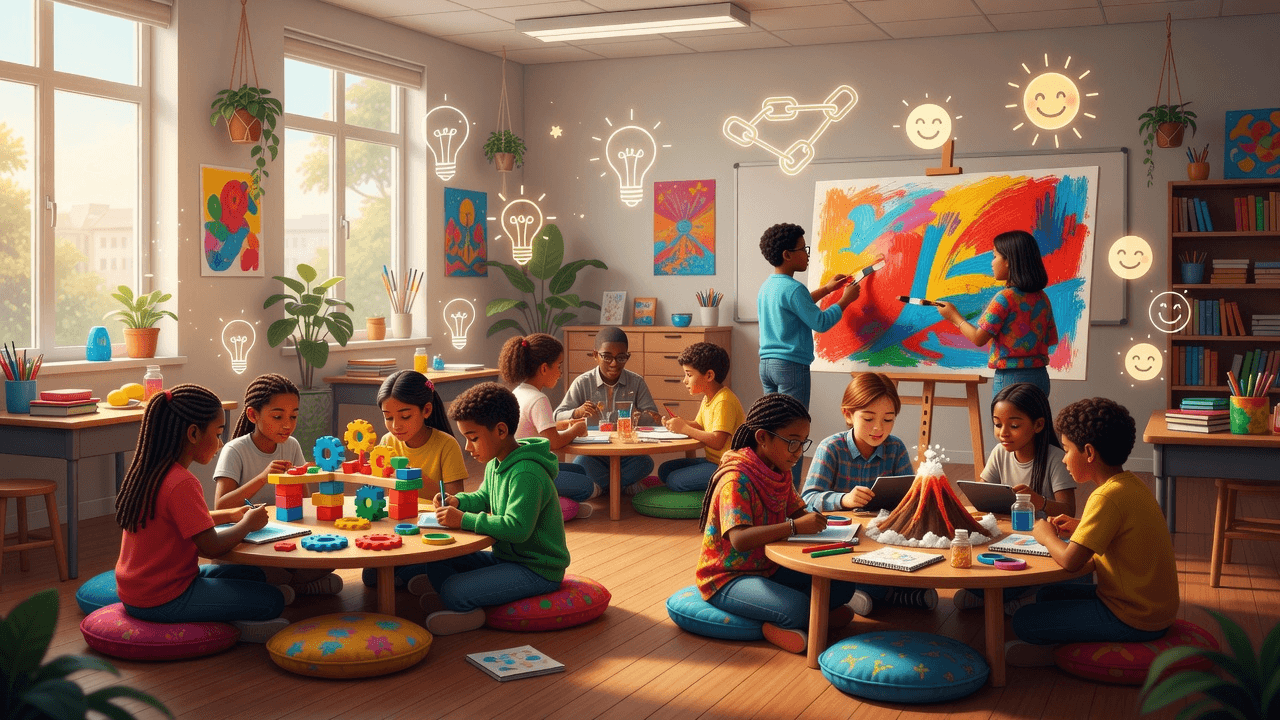
For years, many of us were conditioned to believe that education required silence, seriousness, and rigid compliance. We equated a quiet classroom with an attentive one, and a smiling student with someone who was 'off-task.' However, as I have reflected on before, the reality of the human brain is quite different. Education is not an examination hall; it is a dynamic space for exploration, connection, and growth. When a classroom feels fun, it isn't a sign that learning has stopped—it is a sign that it has finally landed.
The Science of Joyful Learning
When students experience genuine joy during learning, their brains are not just active; they are more receptive to new information. This is biological, not just pedagogical. Positive emotions trigger the release of dopamine, a neurotransmitter that directly stimulates memory centers and enhances focused attention. As I have emphasized, when we strip joy and comfort from the classroom, we distance our students from effective processing and long-term storage, often replacing engagement with anxiety or boredom.
6 Ways to Boost Engagement Without Gimmicks
True fun in the classroom is not about superficial games or rewards; it is about intentional, student-centered design. Here are six effective strategies that shift the environment from passive compliance to active discovery:
- Cultivate Agency: Give students real choices. Whether it is choosing how to present a project or which problems to tackle first, a sense of control boosts intrinsic motivation and satisfaction.
- Create Meaningful Challenges: Learning should be difficult but manageable. When a task perfectly matches a student’s capacity, it fosters a 'flow' state where they lose track of time and find deep satisfaction in their own progress.
- Prioritize Peer Interaction: Education is a social journey. Collaborative tasks allow students to teach one another, building trust and a sense of belonging that makes learning feel communal rather than competitive.
- Infuse Purposeful Humor: A well-placed joke or a relatable, funny example can signal safety. When students feel safe, their amygdala cools down, allowing information to bypass the 'affective filter' that otherwise shuts down cognition during stressful moments.
- Use Diverse Learning Approaches: Move beyond traditional lectures. Incorporate storytelling, visual exploration, or physical movement. Novelty acts as a stimulant that wakes the brain up, while ritual provides the consistency needed to carry students through the middle of a unit.
- Embrace a Low-Stress Climate: The most effective classrooms are those where it is safe to think out loud. By lowering the cost of being wrong, we encourage risk-taking, which is where the fastest learning happens.
Moving Beyond Gamification
It is important to note that 'fun' should be a by-product of engagement, not the primary target. We must be careful not to conflate gamification—points and leaderboards—with true joyful pedagogy. As research suggests, gamified practice can be useful, but it should never replace the fundamental human need for agency, competence, and relatedness.
Ultimately, joyful learning is about building a space where curiosity can thrive. When we design for these moments, we aren't just teaching a subject; we are fostering a lifelong relationship with learning. We are teaching students to be thinkers, to be resilient, and to carry their curiosity with them far beyond the walls of the classroom.
If you have read this blog carefully , you should be able to answer the following question:
"How does integrating joyful elements into a classroom environment specifically affect brain chemistry and long-term learning outcomes for students?" You can find that answer by entering this question at ( 1 ) www.HemenParekh.ai ( 2 ) www.IndiaAGI.ai
No comments:
Post a Comment