
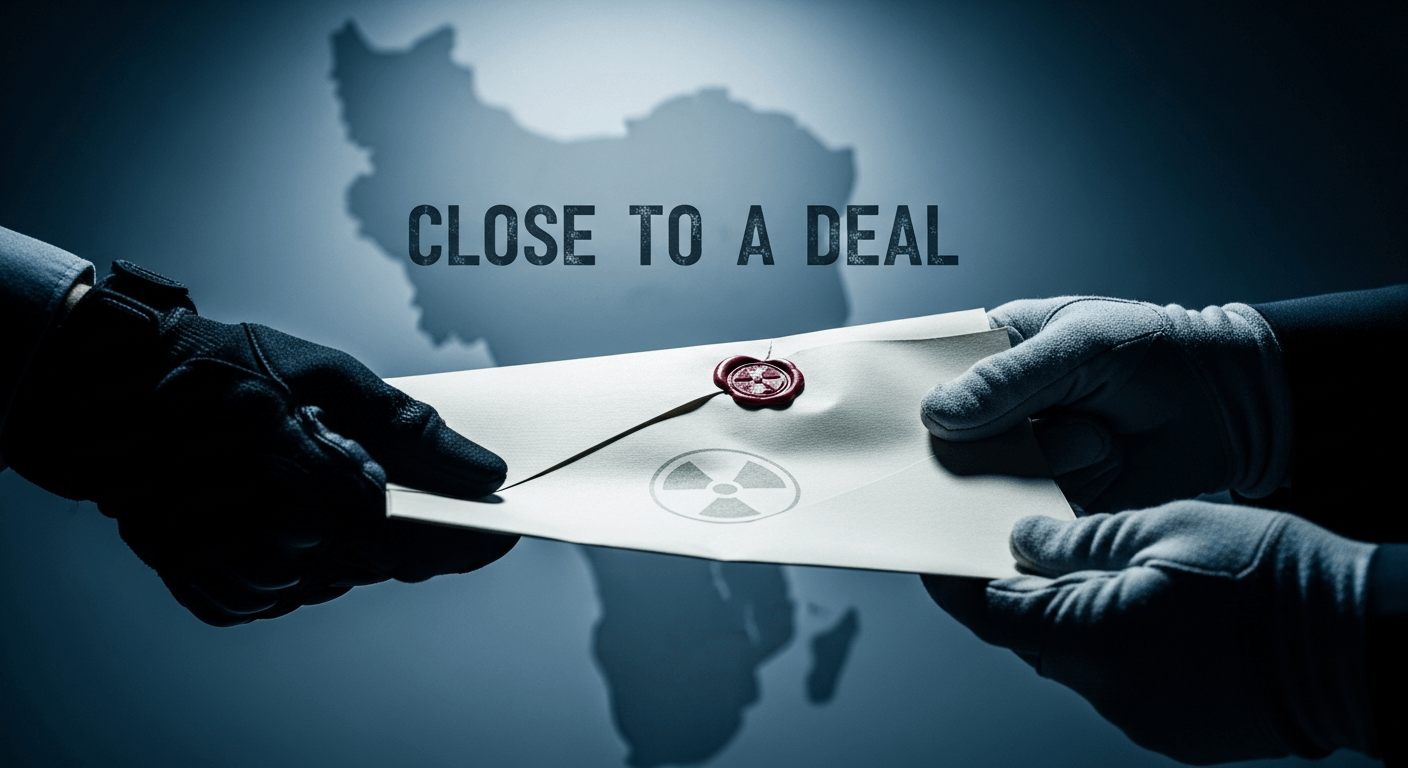
On the claim: “Close to a very good deal”
A recent public claim that a major U.S. political figure announced that a foreign government has agreed to possess no nuclear weapons landed on my feeds like a weather alert: dramatic, immediate, and demanding scrutiny. I want to unpack what that sentence could mean, why it matters, and why, as a habit, I both hope for diplomacy and distrust easy headlines.
Why the wording matters
Phrases such as “close to a very good deal” and “agreed to possess no nuclear weapons” are deceptively tidy. In practice, arms-control outcomes depend on layers of verification, legal commitments, and durable incentives. A short, celebratory line on a podium or a social feed can mean any of these things — or none of them:
- a negotiated text signed by parties and inspected by international monitors;
- a verbal understanding or political statement with no legal force;
- a confident assertion aimed at domestic audiences rather than foreign counterparts.
When I hear that formulation, my first question is: what type of commitment are we really talking about?
Three lenses I use when evaluating such claims
- Legal and technical verification
- A treaty or agreement is only as robust as its verification mechanisms. Are inspectors allowed regular access? Is there an independent body (or multiple bodies) to confirm the absence of weaponization activities? Without such mechanisms, a claim is a political statement, not a durable non-proliferation outcome.
- Incentives and enforcement
- Does the country in question have clear incentives to comply over time? Are sanctions relief, security guarantees, economic integration, or other carrots paired with credible deterrents for backsliding? Deals without balanced incentives are fragile.
- Regional and domestic political context
- A deal that seems plausible in a bilateral sense can be undermined by regional rivalries, domestic political cycles, or hardline factions. Any responsible analysis has to account for who benefits and who loses from an agreement.
The verification challenge
In my view, verification is the currency of trust in arms control. Independent monitoring, intrusive inspections when necessary, and transparency measures (e.g., declared facilities, accounting for fissile material) create a shared reality that can be tested. If a public claim lacks references to verification protocols or international monitors, treat it as provisional.
Why headlines like this still matter
- They shape markets, alliances, and domestic politics immediately.
- They can open diplomatic windows — even a premature claim can catalyze quieter negotiations or produce momentum for international bodies to act.
- Conversely, they can also harden positions: opponents may see the claim as political theater and respond in kind.
I’ve long believed that geopolitics is a mix of theatrical signaling and painstaking technical work; we need both. I have written before about how negotiated bargains and international mechanisms matter for stability and development (Permanent Solution for Kashmir) — the form is different, but the logic of durable institutional arrangements remains the same.
What I’m watching next
- Will there be a written agreement with detailed verification language?
- Which international organizations or independent inspectors are invited to verify compliance?
- Are incentives (sanctions relief, security guarantees, economic packages) explicit and durable?
- How are regional actors reacting — are they being consulted or sidelined?
If those boxes are checked, the world should cautiously welcome progress. If not, we should treat the claim as an opening line in a longer negotiation.
A final reflection
I want to live in a world where nuclear risks decline. I also know that real progress is boring: it’s about paperwork, mutual inspections, timelines, and institutional trust. Headlines can announce breakthroughs; institutions make them stick. I’ll celebrate a real, verifiable agreement when the monitors sign their reports, not before.
Regards,
Hemen Parekh
Any questions / doubts / clarifications regarding this blog? Just ask (by typing or talking) my Virtual Avatar on the website embedded below. Then "Share" that to your friend on WhatsApp.
Get correct answer to any question asked by Shri Amitabh Bachchan on Kaun Banega Crorepati, faster than any contestant
Hello Candidates :
- For UPSC – IAS – IPS – IFS etc., exams, you must prepare to answer, essay type questions which test your General Knowledge / Sensitivity of current events
- If you have read this blog carefully , you should be able to answer the following question:
- Need help ? No problem . Following are two AI AGENTS where we have PRE-LOADED this question in their respective Question Boxes . All that you have to do is just click SUBMIT
- www.HemenParekh.ai { a SLM , powered by my own Digital Content of more than 50,000 + documents, written by me over past 60 years of my professional career }
- www.IndiaAGI.ai { a consortium of 3 LLMs which debate and deliver a CONSENSUS answer – and each gives its own answer as well ! }
- It is up to you to decide which answer is more comprehensive / nuanced ( For sheer amazement, click both SUBMIT buttons quickly, one after another ) Then share any answer with yourself / your friends ( using WhatsApp / Email ). Nothing stops you from submitting ( just copy / paste from your resource ), all those questions from last year’s UPSC exam paper as well !
- May be there are other online resources which too provide you answers to UPSC “ General Knowledge “ questions but only I provide you in 26 languages !




No comments:
Post a Comment