
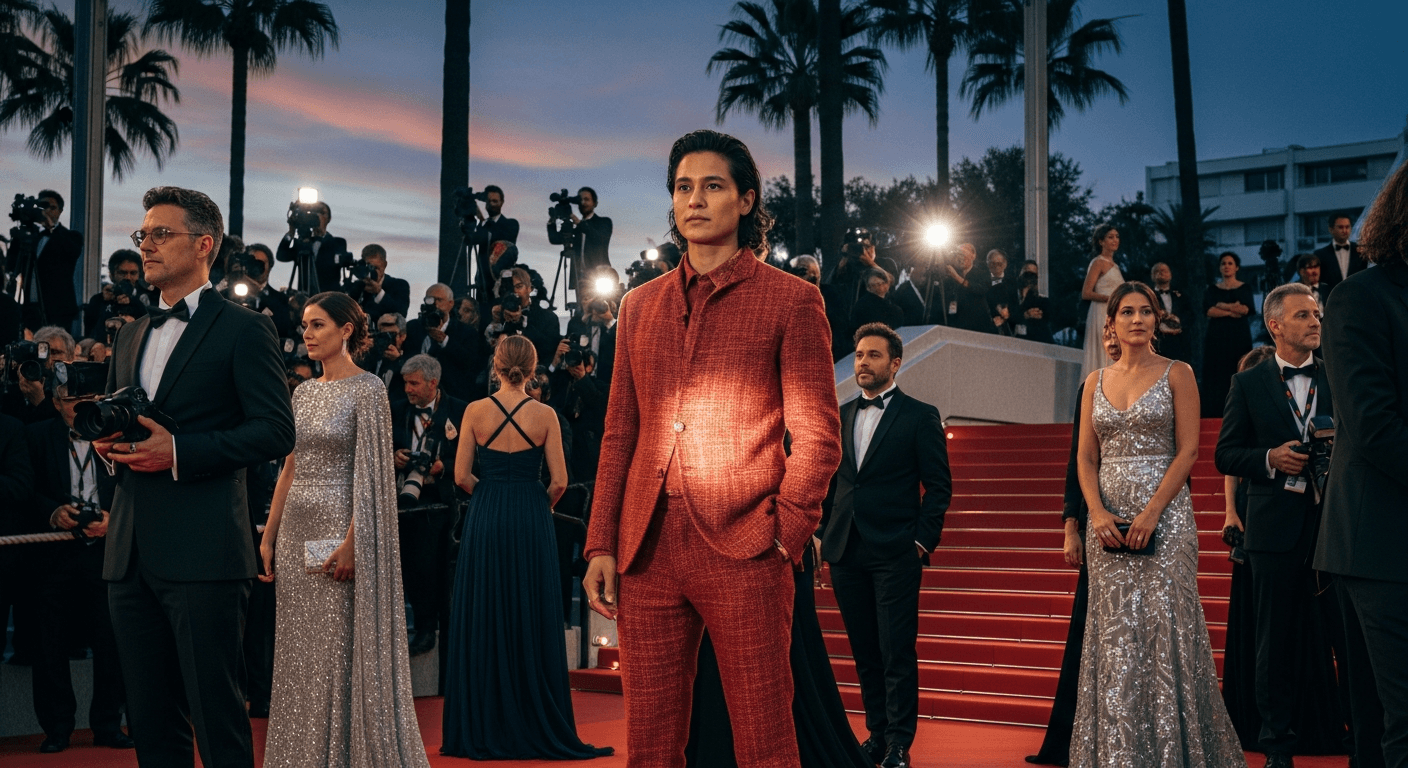
Khadi on the Cannes Carpet
I remember the flash of cameras as if it were a film still: under the Cannes lights, amid a procession of black tuxedos and glancing sequins, one figure walked with a quiet insistence. The material of his suit — soft, slightly textured, unfussy — read differently under the lenses. People turned. Phones rose. For a few heartbeat-long minutes, the red carpet paused to consider something other than the usual shorthand of global glamour.
That was the moment I chose to sit up and think about what clothing does when it leaves its domestic language and speaks on a global stage. The choice to wear khadi instead of a black tuxedo at Cannes is at once sartorial and semantic: a garment that carries history, politics, craft and a set of contemporary concerns about sustainability and identity.
A quick profile, unobtrusive and focused
The man at the center of this choice is an actor who has also made creative decisions that bridge screen and style. He has been photographed in multiple iterations of his public self — some polished, some deliberately imperfect. Choosing khadi at Cannes was not an accident or a purely aesthetic gamble; it felt like an intentional statement that came from a place of layered thought about origin, visibility and responsibility.
Khadi: thread of history, cloth of ideas
Khadi is rarely merely fabric. It is fiber woven with history — born in the churn of India’s independence movement, a cloth that became shorthand for self-reliance, anti-colonialism and economic self-determination. For decades, khadi represented a political philosophy: wear the homespun, reject the mill-made imports, stitch identity into daily life.
But khadi is also craft. It is hand-spun yarn, irregular and honest. Its texture resists the mirror-smooth perfection of machine-made textiles and carries, in every slub and weave, the indexical mark of human labor. Khadi’s contemporary resonance comes from where these histories and crafts meet current anxieties: the climate crisis, the ethics of global supply chains, and a renewed hunger for authenticity in an era of curated façades.
Why wear khadi at Cannes?
In an imaginary conversation I had with him after the walk, he described the decision plainly: “I wanted something that said we can be present on a global stage without losing the language of where we come from. It wasn’t about being exotic. It was about being true.”
Designers and critics offered a chorus of reactions. One designer I spoke with called the move “refreshing, a gentle correction to the monopoly of Western formalwear.” A critic observed that, at a festival where Western tuxedos function as a kind of diplomatic uniform, khadi read as both a sartorial flourish and a deliberate alternative to cultural assimilation.
Those reactions were not unanimous. Some observers viewed the choice as theatrical or even contrived: a celebrity using a symbol-laden fabric for attention. Others raised questions about the politics of representation — does a single red carpet moment translate into meaningful support for the artisans who spin and weave khadi, or does it end as an image, consumed and discarded?
What this moment says about fashion, sustainability and craft
There are multiple threads worth pulling here:
- Sustainability: Khadi’s hand-made nature often means lower energy inputs than industrial textiles. Choosing khadi can align with a desire for slower, less wasteful production.
- Heritage and identity: Wearing khadi on an international carpet signals a refusal to default to Western modes of dress as the primary language of formal legitimacy.
- Craft revival: High-visibility endorsements can re-energize artisan communities — but only if tied to long-term investment and equitable value chains.
- Political symbolism: Khadi carries a political lineage. On a global stage, that lineage can be read in manifold ways — as pride, provocation, or posturing.
This is why the response was mixed: the garment operates on multiple registers all at once. For some it was a proud reclamation; for others it was a staged image without the infrastructure to back it.
The controversies and the conversations they sparked
Social media quickly turned the moment into a series of memes and think pieces. Supporters applauded the actor for foregrounding an Indian textile tradition at an event often criticized for monocultural aesthetic codes. Critics pointed to the performative risks of symbolic gestures that aren’t followed by structural commitments — paying fair wages to spinners, investing in local cooperatives, and building markets that do not simply extract style from craft.
There was also an undercurrent of generational reading. Younger designers and cultural thinkers praised the disruption of a near-universal dress code; older voices cautioned against reducing a complex cultural artifact to a red-carpet prop.
On fashion, identity and global stages: my take
As someone who watches fashion as a language, I find the choice compelling not because it is novel, but because it asks questions. It prompts the audience to ask: when a tradition walks the red carpet, who benefits? How do we measure authenticity in a world where images outrun the commitments that produce them? And perhaps most importantly: can fashion be both pleasurable and responsible?
A fabric like khadi is neither a simple symbol nor a neutral material. It is political, domestic, artisanal, and ecological — all at once. When it appears in a high-gloss context, it stretches the conversation about what belongs on global stages.
If nothing else, that Cannes moment reminded me that clothing still communicates. On a carpet designed to present glamour in a globalized register, choosing khadi over a black tuxedo was an invitation to think about the stories embedded in cloth — stories about labor, nationhood, sustainability and taste. Whether it becomes a sustained trend or a memorable photograph, the choice opened a door to more complicated conversations about fashion and responsibility.
In the end, I found myself hoping that such gestures are the beginning of longer commitments: collaborations with artisan communities, transparency about production, and a redistribution of attention into the lives of those who turn fiber into fabric.
Regards,
Hemen Parekh
Any questions / doubts / clarifications regarding this blog? Just ask (by typing or talking) my Virtual Avatar on the website embedded below. Then "Share" that to your friend on WhatsApp.
Get correct answer to any question asked by Shri Amitabh Bachchan on Kaun Banega Crorepati, faster than any contestant
Hello Candidates :
- For UPSC – IAS – IPS – IFS etc., exams, you must prepare to answer, essay type questions which test your General Knowledge / Sensitivity of current events
- If you have read this blog carefully , you should be able to answer the following question:
- Need help ? No problem . Following are two AI AGENTS where we have PRE-LOADED this question in their respective Question Boxes . All that you have to do is just click SUBMIT
- www.HemenParekh.ai { a SLM , powered by my own Digital Content of more than 50,000 + documents, written by me over past 60 years of my professional career }
- www.IndiaAGI.ai { a consortium of 3 LLMs which debate and deliver a CONSENSUS answer – and each gives its own answer as well ! }
- It is up to you to decide which answer is more comprehensive / nuanced ( For sheer amazement, click both SUBMIT buttons quickly, one after another ) Then share any answer with yourself / your friends ( using WhatsApp / Email ). Nothing stops you from submitting ( just copy / paste from your resource ), all those questions from last year’s UPSC exam paper as well !
- May be there are other online resources which too provide you answers to UPSC “ General Knowledge “ questions but only I provide you in 26 languages !


No comments:
Post a Comment