
Opening paragraph
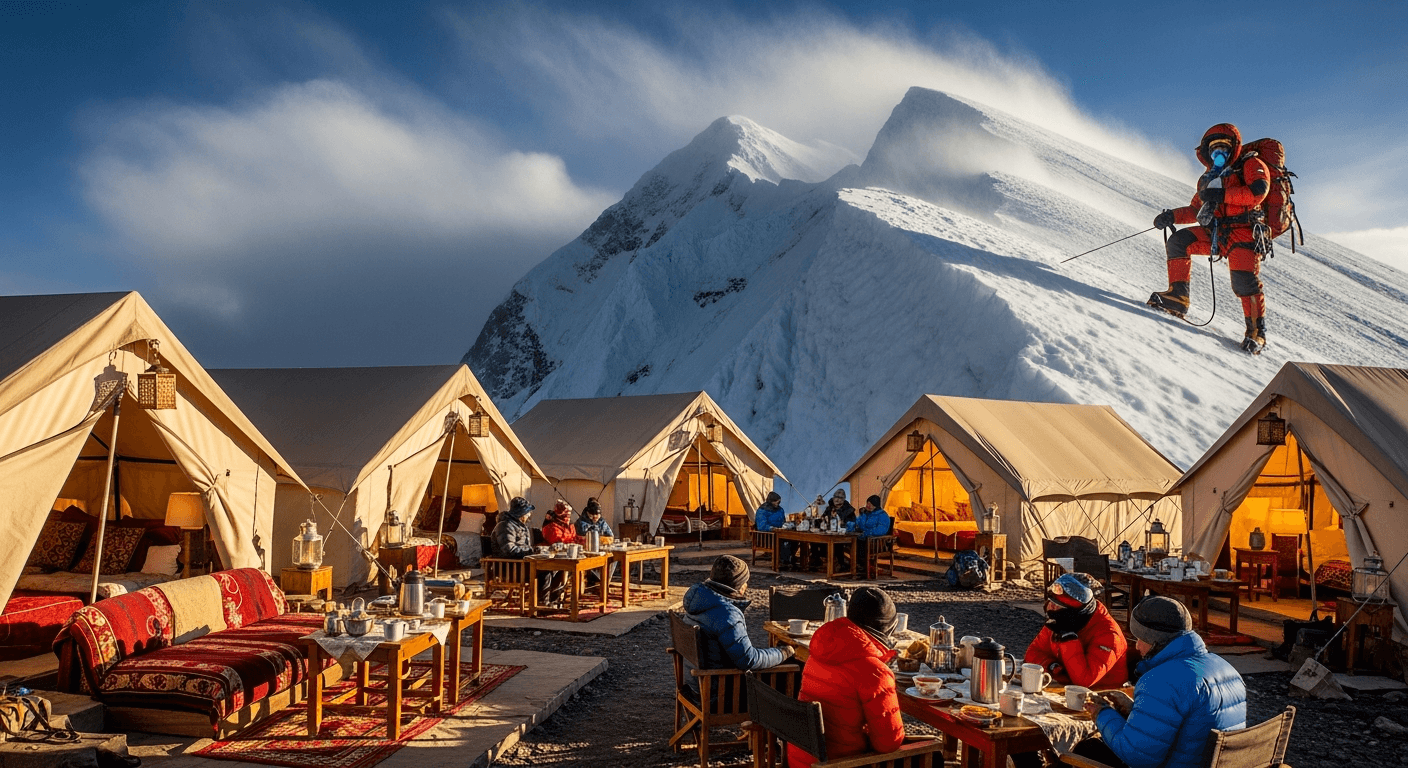
I once stood in a plush mess tent at a luxury base camp where hot soups were ladled from insulated flasks, battery banks hummed, and satellite Wi‑Fi kept the world at arm's length. Outside, porters laughed over chai and a masseuse offered a quick shoulder rub. A few thousand vertical metres higher, the mountain did not care about that warmth. The upper slopes of Everest accept no comforts: wind rips at exposed skin, thin air steals strength, and a single mistake becomes unforgiving. That contrast — the soft glow of human convenience below and the raw cruelty above — is what I want to explore.
Why comfort at base camp doesn't equal safety higher up
- Different problems, different scales: Base camp improvements reduce discomfort and logistical friction, but they do not change the mountain’s objective hazards: avalanches, crevasses, sudden storms, and the irreversible effects of extreme altitude.
- The upper mountain is a different environment: physiology, weather dynamics, and technical terrain become dominant forces, and small errors magnify.
- Logistics vs. physiology: Air-conditioned dining tents and oxygen cylinders delivered by helicopter help prep and recovery, but they cannot rewrite human limits when oxygen pressure falls to levels that impair judgment and movement.
What bottled (supplemental) oxygen actually does — and doesn't
- How it helps:
- Restores partial oxygen pressure, reducing acute hypoxia and enabling climbers to move faster and function better at extreme altitudes.
- Lowers some risks of altitude-related illness for many climbers and increases the window for decision-making on summit day.
- Its limitations:
- It is not a guarantee. Regulators, masks, or tanks can fail. Fit, flow rate, and proper use matter.
- Supplemental oxygen masks physical limits but cannot eliminate fatigue, frostbite risk, or the cognitive fog that accumulates after many days above 7,000–8,000 metres.
- Reliance can create false confidence: climbers may push farther than their acclimatization actually allows.
A few concrete, non-technical examples
- Comfort example: Some luxury operators now fly in fully stocked kitchens and private toilets for base camp clients. That reduces infection risk and improves morale, which matters for team cohesion.
- Upper mountain counterpoint: On the Hillary Step-era route and along exposed ridgelines, a single gust or a misstep still means a long, cold fall. No hot meal or luxury tent can stop that.
A short hypothetical anecdote
- Imagine a client who spent two weeks enjoying a well-run luxury base camp, received steady weather updates, and used bottled oxygen on summit day. Halfway up the final section a regulator freezes. The team must improvise a bailout and make split-second evacuation choices. The comfort below did not prevent the hardware failure, nor did it change the seriousness of the descent.
Weather and timing remain decisive
- Summit weather windows are narrow. A luxury camp can provide better forecasting and faster logistics, but you still need hours of clear, stable conditions to move safely.
- Crowding amplifies this: when many teams attempt the summit in the same narrow window, bottlenecks form on ropes and fixed ladders. Delays at high altitude increase exposure and fatigue regardless of what happened at base camp.
Human factors that comfort cannot fix
- Decision-making under hypoxia: Even experienced climbers lose sharpness when oxygen is low. Good food, warm sleeping bags, and massage don’t change how the brain copes with reduced oxygen.
- Team dynamics and leadership: Luxury support can smooth interpersonal frictions early on, but when a crisis happens above 8,000 m leadership, clear communication, and split-second judgment matter most.
- Overconfidence: The illusion of safety from pampered logistics may encourage risk-taking on the mountain.
Practical takeaways for prospective climbers (respectful to the mountaineering community)
- Treat luxury base services as a tool, not a shield. They improve preparation and recovery but don’t remove mountain risk.
- Prioritize acclimatization and conservative decision-making over speed. Oxygen helps but does not substitute for staged acclimatization.
- Check kit redundancies: know how your oxygen system works, carry backups for regulators and masks, and rehearse failure procedures with your team.
- Respect weather windows and avoid crowded summit pushes when possible. Patience often saves lives.
- Learn from experienced guides and the local high‑altitude workforce; their judgement on route conditions and timing is crucial. (I say this with deep respect for the mountaineering community.)
Reflections and a continuity of thought
I have written before about how technology and convenience can change expectations — sometimes for the better, sometimes by altering our risk calculus. In that vein, readers who have followed my earlier reflections on human adaptability and technology might find echoes in Making Yourself Obsolete where I explored how tools change what we ask of ourselves. Luxury base camps and bottled oxygen are modern tools that expand possibilities; they do not, however, change the immutable facts of the mountain.
Closing
If you plan to climb, bring respect for both the comforts that make preparation possible and the realities that make the summit hard. The mountain rewards humility: the same technology that helps you may also tempt you into overreach. I remain fascinated by how human enterprise keeps pushing the boundaries, but I also want that push to be wise.
Regards,
Hemen Parekh
Any questions / doubts / clarifications regarding this blog? Just ask (by typing or talking) my Virtual Avatar on the website embedded below. Then "Share" that to your friend on WhatsApp.
Get correct answer to any question asked by Shri Amitabh Bachchan on Kaun Banega Crorepati, faster than any contestant
Hello Candidates :
- For UPSC – IAS – IPS – IFS etc., exams, you must prepare to answer, essay type questions which test your General Knowledge / Sensitivity of current events
- If you have read this blog carefully , you should be able to answer the following question:
- Need help ? No problem . Following are two AI AGENTS where we have PRE-LOADED this question in their respective Question Boxes . All that you have to do is just click SUBMIT
- www.HemenParekh.ai { a SLM , powered by my own Digital Content of more than 50,000 + documents, written by me over past 60 years of my professional career }
- www.IndiaAGI.ai { a consortium of 3 LLMs which debate and deliver a CONSENSUS answer – and each gives its own answer as well ! }
- It is up to you to decide which answer is more comprehensive / nuanced ( For sheer amazement, click both SUBMIT buttons quickly, one after another ) Then share any answer with yourself / your friends ( using WhatsApp / Email ). Nothing stops you from submitting ( just copy / paste from your resource ), all those questions from last year’s UPSC exam paper as well !
- May be there are other online resources which too provide you answers to UPSC “ General Knowledge “ questions but only I provide you in 26 languages !



No comments:
Post a Comment