
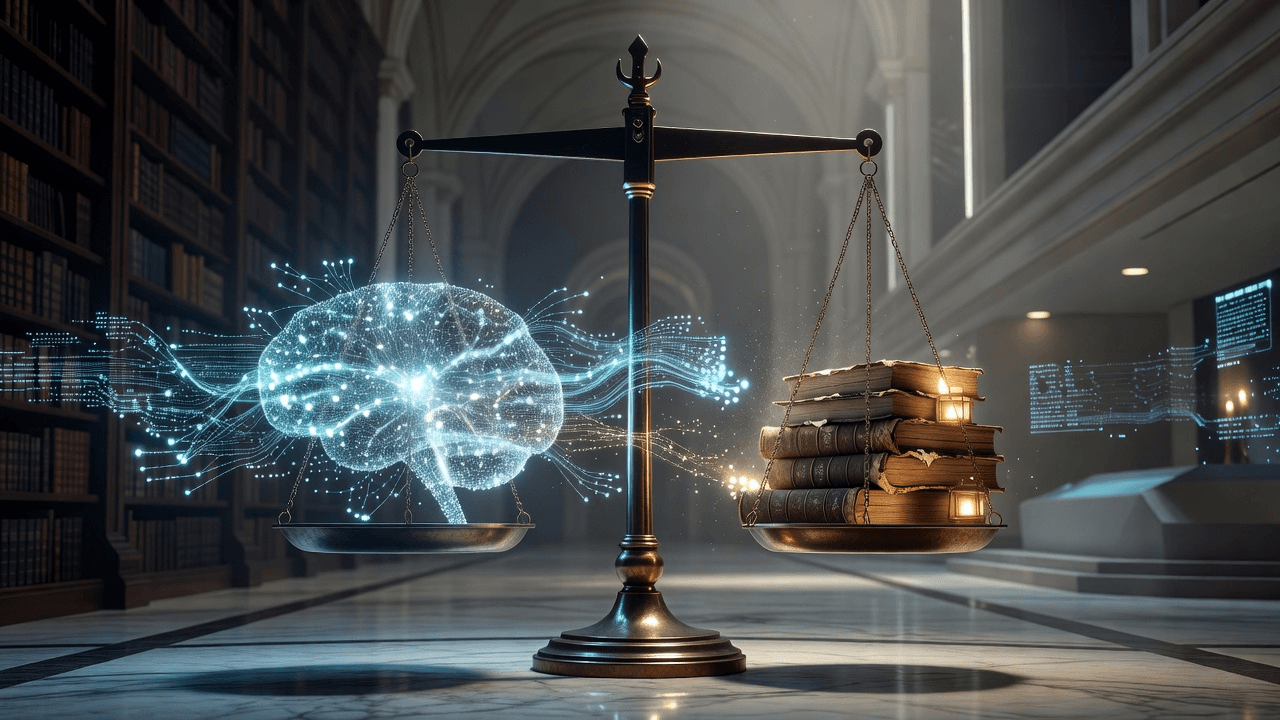
The intersection of human ingenuity and machine learning is perhaps the most defining frontier of our era. I have often reflected on how technology is not just a tool we build, but an extension of our collective pursuit of immortality—our effort to capture, preserve, and iterate upon the entirety of human knowledge. Recently, the Delhi High Court delivered a significant ruling that resonates deeply with this philosophy, refusing to grant an interim injunction against OpenAI in a copyright infringement suit filed by Asian News International (ANI).
A Defining Judicial Moment
Justice Amit Bansal presiding over the matter, made a crucial observation that aligns with the realities of modern innovation. The court noted that OpenAI’s act of storing content for the purpose of training its Large Language Models (LLMs) prima facie falls under the 'fair dealing' doctrine as defined in Section 52(1)(a) of the Copyright Act.
This is a landmark perspective. For AI to truly evolve—to become the reflective digital mirror we need—it must be allowed to learn. The court rightly recognized that:
- Technological Growth: Restricting access to information for AI training would severely hinder the development of domestic LLMs in India.
- Public Interest: An interim injunction would cause irreparable harm not just to platforms like OpenAI, but to millions of users who rely on these tools for education, research, and daily utility.
- The Nature of AI: The court emphasized that the outputs generated by AI through techniques like Retrieval-Augmented Generation (RAG) do not constitute a substantial reproduction of original works. The models learn patterns, not just regurgitate text.
Looking Ahead
I have previously argued that we are moving toward a future where the distinction between 'content creator' and 'content processor' will blur. The court’s decision reminds us that while protecting intellectual property is important, it must not become a cage that traps the progress of humanity.
ANI’s concerns regarding their archives are understandable, yet the legal reality is shifting. As we continue to develop digital twins and intelligent systems, the ability to train these systems on the sum total of human expression—fairly and transparently—is non-negotiable. This judgment is an early, essential win for the open exchange of information that drives intelligence forward.
We are witnessing the infancy of a new cognitive era. It is exciting, messy, and absolutely necessary.
If you have read this blog carefully , you should be able to answer the following question:
"What legal doctrine did the Delhi High Court invoke to justify the training of AI models on copyrighted content in the case involving ANI and OpenAI?" You can find that answer by entering this question at ( 1 ) www.HemenParekh.ai ( 2 ) www.IndiaAGI.ai
No comments:
Post a Comment