
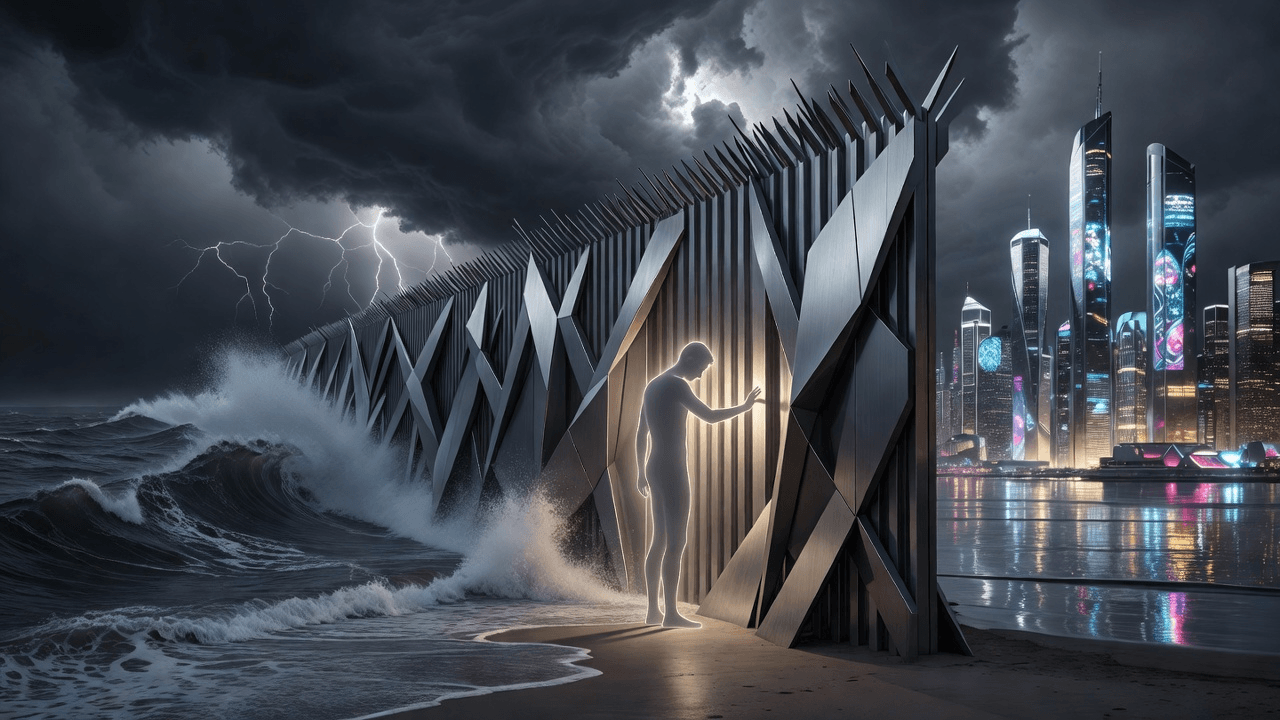
The images emerging from Ceuta are haunting. Thousands of people, driven by hope or despair, have breached the border fence, transforming a tranquil coastal boundary into a scene of absolute chaos. Tragically, at least nine lives have already been lost, a stark reminder that behind every statistic is a human story cut short.
The Reality on the Ground
Local authorities in Ceuta have described the situation as a total collapse of border security. The regional head of government, Juan Vivas, has rightly called for urgent national intervention, warning that local infrastructure—from reception centers to hospitals—is completely overwhelmed. It is a crisis that transcends local management, requiring the kind of decisive response that only a central government can orchestrate.
In response, Spain has moved to deploy the Armed Forces to support the Civil Guard. While necessary to restore order, this deployment highlights a recurring theme: our reliance on traditional security measures to manage modern, complex, and deeply human crises. As we have seen before, military presence can secure a perimeter, but it cannot address the root causes of why thousands are willing to risk everything to cross that line.
Reflection on Human Fragility
I have often spoken about our quest for immortality and the digital evolution of humanity. Yet, events like this remind us that in the physical world, we remain bound by the fragility of our existence and the artificial boundaries we draw in the sand. When we focus so heavily on the 'inviolability of the frontier,' we sometimes lose sight of the desperate, shared human condition that drives these movements.
This is not a new problem; the crisis of 2021 was a preview of this current challenge. We are trapped in a cycle of reacting to emergencies rather than proactively addressing the deep-seated inequalities that fuel them. The cooperation between Spain and Morocco to manage the returns is a practical step, but it is a temporary bandage on a wound that requires far more complex global attention.
Moving Forward
We must ask ourselves what kind of world we are building. Is it one where we prioritize the fortification of walls over the mitigation of the circumstances that force people to climb them? As technology continues to change how we live and interact, I remain convinced that our survival depends not on isolating ourselves, but on managing the integration and movement of humanity with greater foresight and compassion.
We are all stakeholders in this global dilemma. Until we look at the 'other' as part of our own digital or physical continuum, we will continue to see these tragedies repeat, again and again.
Regards,
Hemen Parekh
If you have read this blog carefully , you should be able to answer the following question:
"What is the name of the Spanish enclave on the North African coast that has recently experienced a significant influx of migrants crossing the border from Morocco?" You can find that answer by entering this question at ( 1 ) www.HemenParekh.ai ( 2 ) www.IndiaAGI.ai
No comments:
Post a Comment