
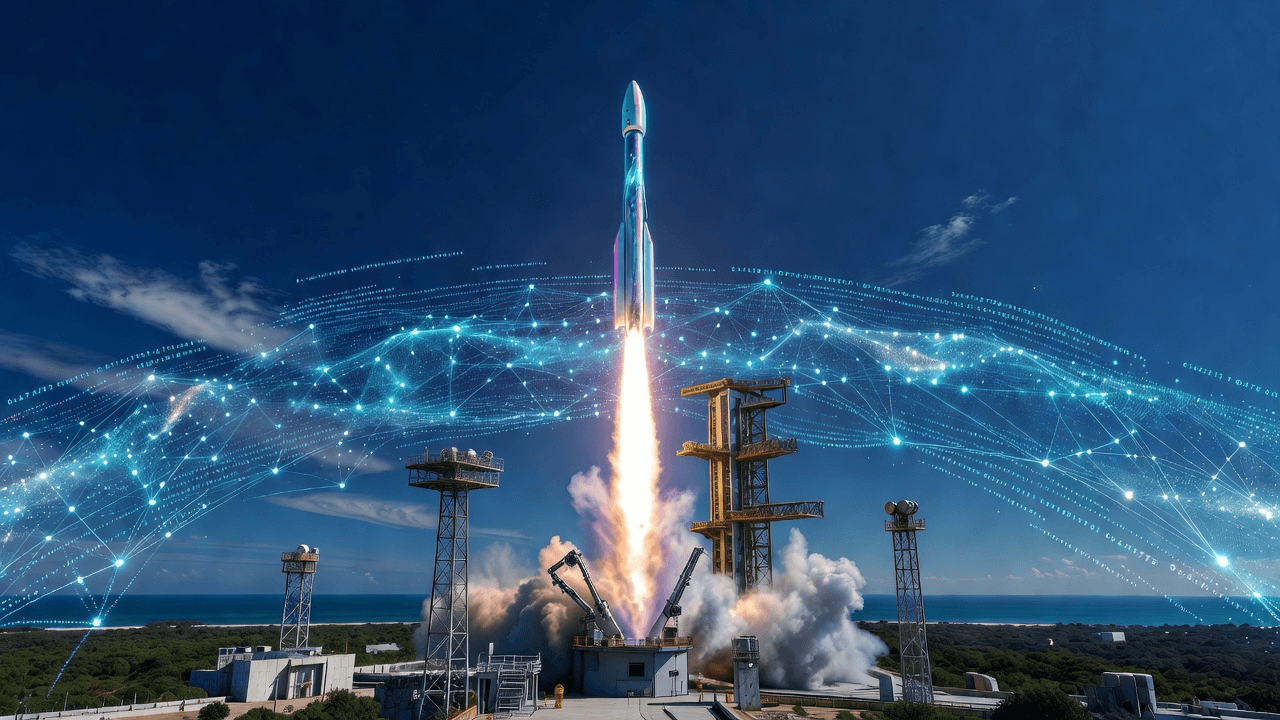
The successful launch of the Vikram-1 rocket—Mission Aagaman—is not just a technical victory; it is the arrival of a new philosophy in the Indian space ecosystem. As I reflect on how far we have come, I am struck by the vision of the Skyroot Aerospace team, particularly founders Pawan Kumar Chandana (pawan@skyroot.in) and Naga Bharath Daka (bharath@skyroot.in). By transitioning from state-led missions to a private, responsive launch capability, they have effectively turned the concept of 'access to space' on its head.
The 'Cab' Service to Orbit
For years, launching a satellite felt like taking a bus: you had to wait for the schedule, conform to the destination of the primary cargo, and accept the timeline dictated by the operator. Pawan Kumar Chandana (pawan@skyroot.in) and Naga Bharath Daka (bharath@skyroot.in) have successfully demonstrated that Vikram-1 can act as a 'cab'—offering dedicated, on-demand launches that put the customer’s needs, orbit, and schedule first. This is a critical development for the growing constellation of small satellites that require frequent, agile replenishment.
Why This Changes Everything
- Responsive Infrastructure: The ability to replace a satellite in days rather than years fundamentally changes how we think about space debris, network resilience, and real-time Earth observation.
- Structural Advantage: By utilizing all-carbon composite structures, 3D-printed engines, and in-house propulsion, the team led by Pawan Kumar Chandana (pawan@skyroot.in) has created a model optimized for cadence, not just one-off experiments.
- Democratizing Innovation: With Naga Bharath Daka (bharath@skyroot.in) and his team shattering the old legacy boundaries, the barrier to entry for Indian startups has plummeted, inviting a new wave of technological breakthroughs.
The Bigger Question
As we look ahead, the success of Vikram-1 compels us to ask: Can India truly replace a satellite in days? Technically, we are building the muscles for it. Existentially, it forces us to reconsider the permanence of our orbital assets. If space becomes easily accessible and rapidly replaceable, the very definition of a 'permanent' mission changes. We are moving toward a future where our presence in space is as fluid and adaptable as our digital presence on Earth.
Connect with Pawan Kumar Chandana (pawan@skyroot.in) and Naga Bharath Daka (bharath@skyroot.in) to learn more about the future of Indian space innovation.
Everything in life is a choice; make your choices wisely.
Regards,
Hemen Parekh
If you have read this blog carefully , you should be able to answer the following question:
"What specific operational model does Skyroot Aerospace's Vikram-1 offer to satellite operators compared to traditional large-scale launch missions?" You can find that answer by entering this question at ( 1 ) www.HemenParekh.ai ( 2 ) www.IndiaAGI.ai
No comments:
Post a Comment