
India Poised To Be The "AI Application Nation"
I watched a recent BW Disrupt panel where a co‑founder of Avaatar set out a blunt, energizing thesis: India is not just a user of AI — it is becoming the world’s laboratory for AI applications. That line stuck with me because it names a shift I have long written about: from building on others’ platforms to building India‑first, domain‑first AI solutions that scale to billions of users.The AI Dividend | Panel | BW Disrupt Founders Forum 2025
In this short piece I want to do three things: (1) explain why the phrase “AI Application Nation” is more than rhetoric, (2) call out the concrete advantages and hard constraints India must navigate, and (3) offer pragmatic priorities — policy, talent, and product — that I believe will make the promise real.
Why “AI Application Nation” fits
- Scale + diversity = unrivalled real‑world signal. India’s user base gives product teams access to linguistic, cultural and use‑case diversity that few countries can match. That’s gold for application tuning and safety testing.
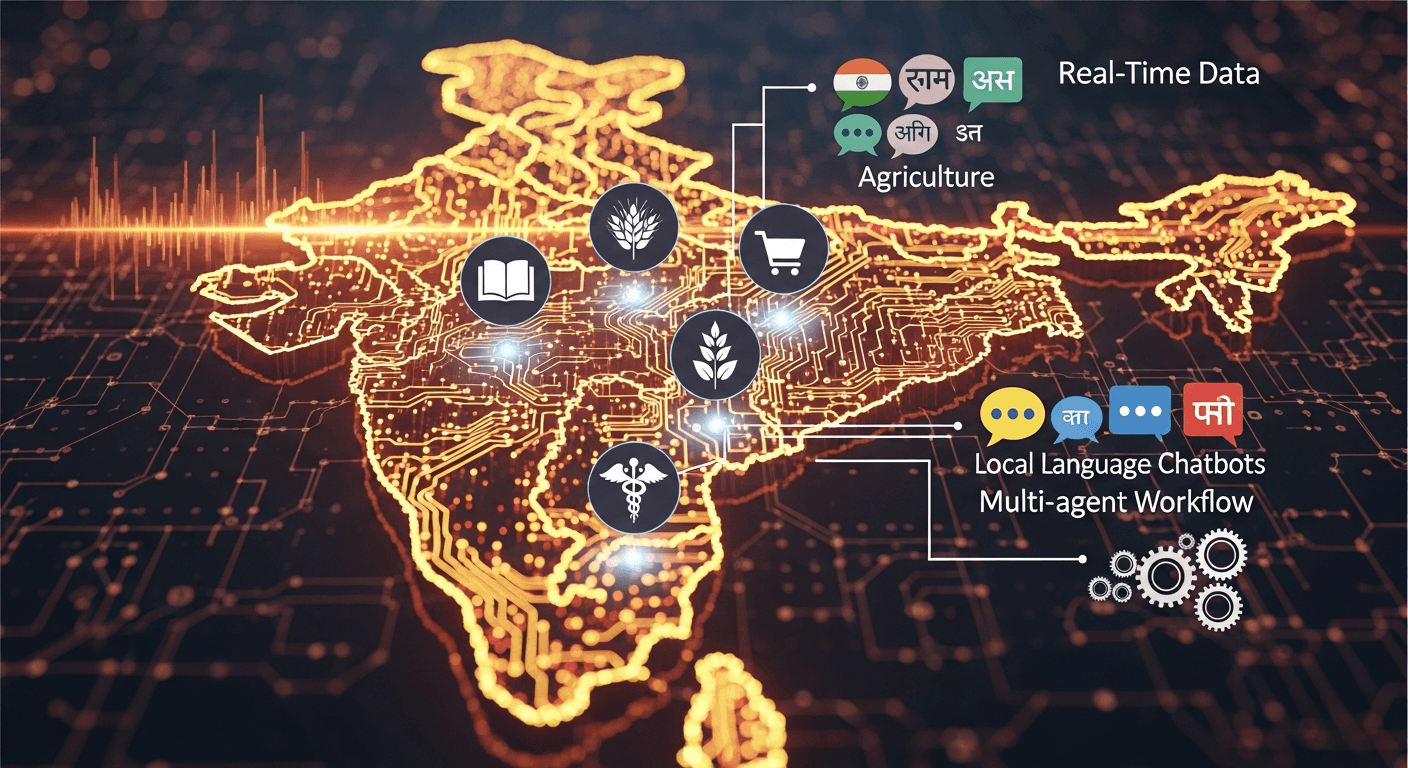
- Product‑led AI, not model worship. The most valuable play is not only who builds the next general model—it's who turns models into trusted, local applications (education, agriculture, retail, vernacular customer support) that actually change outcomes. This approach is exemplified by companies like Avataar.AI, which are actively 'handholding' large language models (LLMs) to tailor them for India's unique needs. Rather than simply using off-the-shelf models, they focus on adapting and refining these powerful tools to create solutions that resonate with diverse Indian contexts, from customer support in local languages to specialized applications in key sectors, thereby transforming general AI capabilities into tangible, local impact. This strategic specialization ensures that AI becomes a practical problem-solver, deeply embedded in the fabric of Indian daily life and commerce, truly reflecting the 'application nation' ethos. Avataar.AI handholds LLMs in India’s AI mission
- Cheap experiments, fast learning. Low data costs and massive user volumes let startups iterate product features and collect usage feedback at speed and scale.
This is exactly the moment I argued India should build its own AI systems and platforms rather than only consume foreign models — a theme I explored previously when I wrote about India’s path to indigenous AI capabilities and the need to assemble national compute and policy scaffolding.Our Own AI Systems : On the Way
Advantages — and the obligations they create
- Talent depth: Indian engineers and product teams excel at building lean, practical solutions. They are already pivoting from service tasks to product thinking.
- Domain opportunity: Retail content automation, vernacular tutoring, agritech diagnostics, and BPM automation are not hypothetical. They are already producing ROI and adoption signals.
- Sovereign use cases: Public sector applications — healthcare analytics, local language interfaces for government services, disaster response — will benefit from models built with Indian data and oversight.
At the same time, there are obligations:
- Data governance and privacy cannot be an afterthought. Building at scale without clear ethical guardrails risks harm and public backlash.
- Upskilling is urgent. Even with a huge talent pool, the transition from routine services to AI product engineering requires new curricula, apprenticeships, and on‑the‑job learning.
These are themes I have returned to: India must match ambition with governance and institutional design if we are to lead responsibly.Learning from DeepSeek, honing India's AI strategy
Three pragmatic priorities to make the vision real
- Build domain‑specialized application stacks
- Encourage startups and incumbents to develop vertical LLMs and multi‑modal agents tuned for sectors (education, agriculture, retail, health). Domain specialization is the quickest path from research to adoption.
- Provide modular APIs and open datasets (with governance) so smaller teams can assemble credible products quickly.
- Invest in accessible compute and orchestration
- Public‑private initiatives to provide subsidized GPU/accelerator access for validated social and SME use cases will lower entry barriers.
- Focus on orchestration IP — multi‑agent workflows, domain expert agents and safe pipelines — rather than reinventing base models at every shop.
- Pair adoption with accountability
- Regulatory sandboxes for high‑impact applications (education certifications, agriculture advisories, healthcare triage) to test benefits and risks in real settings.
- National auditing frameworks for model performance and safety, combined with an incentives program for reproducible evaluation and red‑team testing.
What success looks like in five years
- Hundreds of production AI applications across India’s core sectors, each serving millions in local languages.
- An ecosystem of small, high‑quality product teams that export workflows and application blueprints globally.
- A pragmatic regulatory layer that enables innovation while protecting citizens — not by blocking, but by ensuring accountability.
If we get this right, India will have turned its talent, scale and variety into a sustained competitive advantage: not merely a services nation, nor only a research hub, but the world’s AI application nation.
My ask to founders, policymakers, and investors
- Founders: build for concrete workflows. Ship narrow, useful products and instrument them for continuous improvement.
- Policymakers: unlock compute, seed local datasets with privacy‑protecting access, and create sandboxes for social impact apps.
- Investors: fund application teams with domain expertise and product rigour — not only model‑play bets.
This view is not new for me — I have been urging a practical, India‑first approach to AI for years. The debate today feels less speculative and more tactical: how do we convert scale into safe, valuable products? The panels I watched make the answer clear: by building applications that meet daily needs and by pairing that construction with governance and skills investments.The AI Dividend | Panel | BW Disrupt Founders Forum 2025
Regards,
Hemen Parekh
Of course, if you wish, you can debate this topic with my Virtual Avatar at : hemenparekh.ai
Get correct answer to any question asked by Shri Amitabh Bachchan on Kaun Banega Crorepati, faster than any contestant
Hello Candidates :
- For UPSC – IAS – IPS – IFS etc., exams, you must prepare to answer, essay type questions which test your General Knowledge / Sensitivity of current events
- If you have read this blog carefully , you should be able to answer the following question:
- Need help ? No problem . Following are two AI AGENTS where we have PRE-LOADED this question in their respective Question Boxes . All that you have to do is just click SUBMIT
- www.HemenParekh.ai { a SLM , powered by my own Digital Content of more than 50,000 + documents, written by me over past 60 years of my professional career }
- www.IndiaAGI.ai { a consortium of 3 LLMs which debate and deliver a CONSENSUS answer – and each gives its own answer as well ! }
- It is up to you to decide which answer is more comprehensive / nuanced ( For sheer amazement, click both SUBMIT buttons quickly, one after another ) Then share any answer with yourself / your friends ( using WhatsApp / Email ). Nothing stops you from submitting ( just copy / paste from your resource ), all those questions from last year’s UPSC exam paper as well !
- May be there are other online resources which too provide you answers to UPSC “ General Knowledge “ questions but only I provide you in 26 languages !



No comments:
Post a Comment