
Opening hook
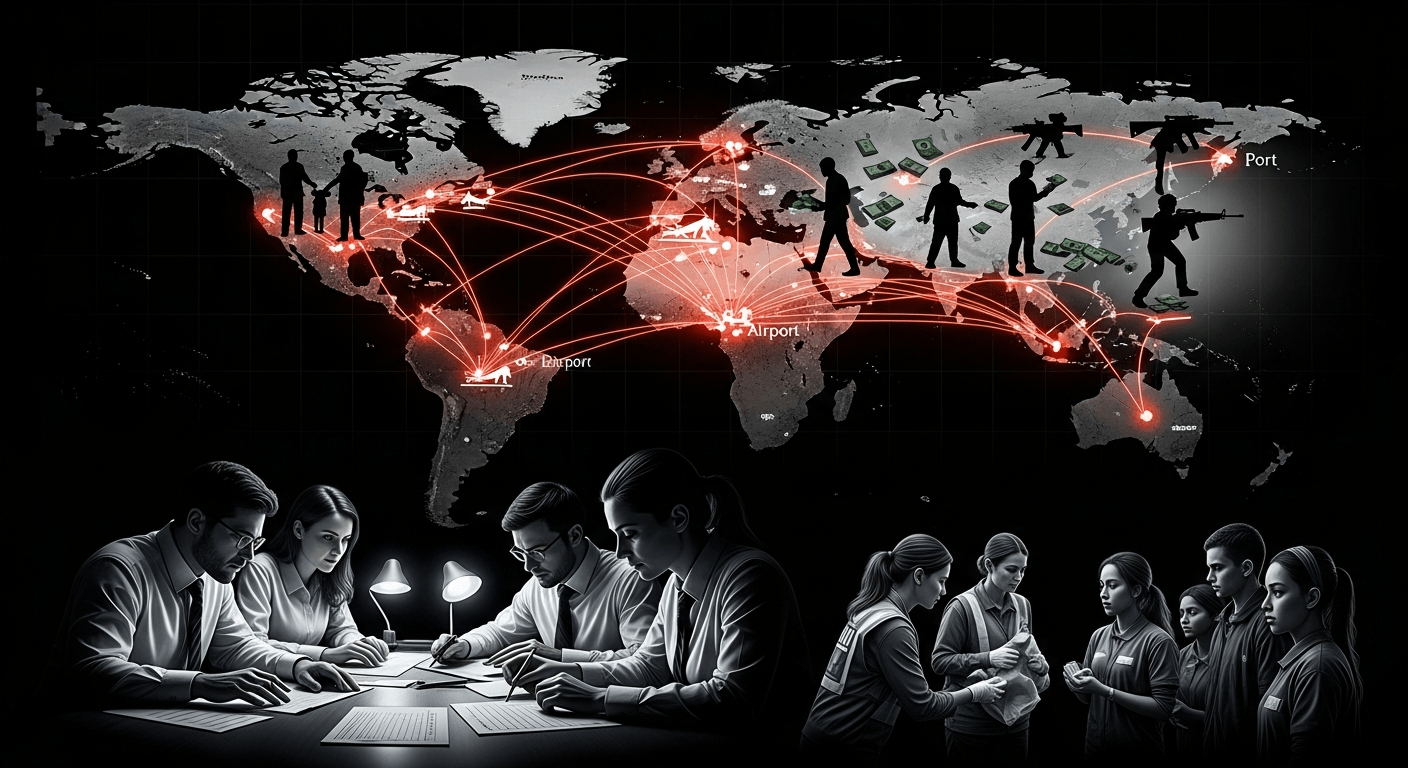
I have watched the public debate around drugs harden into two simple narratives: either a criminal justice problem to be policed, or a public‑health issue to be treated. Last week, the Union Home Minister pushed a third, harder idea into the centre of policy: that the drugs problem in our country should be treated as narco‑terrorism — not merely a matter of ordinary crime. That framing demands we rethink priorities, tools and partnerships.
Brief background
For years policymakers and researchers have warned that drug markets are more than substances and users: they are complex, transnational supply chains, enormous illicit revenues and arteries through which violence, corruption and destabilising funds flow (UNODC, 2021). At the same time, development institutions have emphasised how illicit financial flows drain public resources that ought to build schools, hospitals and jobs (World Bank, 2020). Combining those facts makes the argument that drugs can be a national security problem — and sometimes, a vector for terrorism — hard to ignore.
What the Home Minister argued (paraphrased)
The Union Home Minister argued that the profits of large trafficking networks are being used to finance terror and organised violence, and therefore the state must adopt a "zero‑tolerance" posture toward the supply chain while taking a humane approach to users. He stressed the need for stronger inter‑agency coordination, financial investigations, border controls and international real‑time information sharing to dismantle kingpins and networks rather than treating seizures as isolated incidents.
Why drugs can be seen as narco‑terrorism
There are several evidence‑based reasons the narco‑terrorism label is not mere rhetoric:
- Financing: Illicit drug markets generate enormous revenues that can be laundered or diverted to armed and extremist groups. UN and national studies show that proceeds from opiates, cocaine and synthetic drugs flow into cross‑border criminal networks and sometimes into insurgent/coercive groups ((UNODC, 2017); (UNODC, 2021)).
- Operational links: Terrorist or insurgent groups have been documented taxing or protecting drug production in areas they control, and in some cases participating directly in trafficking or in allied criminal enterprises (academic literature on the crime‑terror nexus, 2025). These arrangements provide logistics, territorial control and funds to violent non‑state actors.
- Violence and governance erosion: High‑value drug markets fuel corruption, weaken institutions and produce violent competition for routes and territory — effects often indistinguishable from other forms of organised political violence (Global Initiative reporting).
- Money laundering and illicit finance: The mechanisms that hide drug profits — hawala, shell companies, trade misinvoicing, crypto channels — also facilitate cross‑border financing for groups that threaten national security (World Bank, 2020).
Taken together, these dynamics make clear why some policymakers equate the trafficking ecosystem with a national security threat rather than a stand‑alone criminal phenomenon.
Counterarguments and important caveats
A balanced assessment must note the limits and risks of the narco‑terrorism framing.
- Evidence is heterogeneous: While some groups clearly profit from drugs (e.g., several insurgent groups in conflict zones), the empirical links between all trafficking organisations and terrorism are patchy and context‑dependent. UNODC has cautioned against simplistic, universal assumptions about the crime‑terror nexus (UNODC analysis).
- Risk of over‑militarisation: Treating every drug case as a security threat risks militarised policing, punitive measures for users and displacement of harms into less visible markets — outcomes that have in some regions worsened violence and human suffering.
- Opportunity cost: Heavy focus on supply‑side enforcement without commensurate investment in treatment, harm‑reduction and socio‑economic alternatives can leave demand and local vulnerability untouched.
What I recommend: a multi‑pronged policy response
If we accept that large‑scale trafficking can amount to narco‑terrorism in specific contexts, policy must be proportional, evidence‑driven and balanced. Here are practical priorities I back:
- Integrated investigation and financial disruption
- Build joint task forces that combine criminal investigators, financial intelligence units, customs, and cyber teams. Prioritise following the money: asset freezes, anti‑money‑laundering probes and forensic accounting.
- Stronger international cooperation
- Push for real‑time information exchange on routes, shipments and financial flows through multilateral platforms and Interpol‑level mechanisms.
- Targeted law enforcement, not blanket militarisation
- Focus on kingpins, logistics networks and labs rather than low‑level users. Preserve civilian oversight and rule of law to avoid rights abuses.
- Demand reduction and harm minimisation
- Scale evidence‑based prevention, community treatment, de‑stigmatise rehabilitation and expand accessible services; enforcement alone will not shrink demand (UNODC; World Bank analysis).
- Socio‑economic interventions
- Offer economic alternatives in production and transit areas: licit livelihoods, education and infrastructure to undercut the appeal of illicit economies.
- Data sharing and technology
- Break data silos across agencies and invest in forensic labs, chain‑of‑custody, and secure information platforms that enable the kind of coordinated responses I advocated for years ago in my posts on breaking down information silos (Break‑down the Silos).
Conclusion — a call for urgency and balance
I believe the Union Home Minister’s push to treat networks that traffic at scale as threats to national security is a necessary wake‑up call — but it must not substitute for a humane, evidence‑based strategy that reduces demand, treats dependency, protects rights and builds resilient communities. Narco‑terrorism is a real phenomenon in specific contexts; responding to it requires a calibrated mix of law enforcement, financial disruption, diplomacy and social investment. The moment calls for urgency, coordination and above all sustained political will.
Regards,
Hemen Parekh
Any questions / doubts / clarifications regarding this blog? Just ask (by typing or talking) my Virtual Avatar on the website embedded below. Then "Share" that to your friend on WhatsApp.
Get correct answer to any question asked by Shri Amitabh Bachchan on Kaun Banega Crorepati, faster than any contestant
Hello Candidates :
- For UPSC – IAS – IPS – IFS etc., exams, you must prepare to answer, essay type questions which test your General Knowledge / Sensitivity of current events
- If you have read this blog carefully , you should be able to answer the following question:
- Need help ? No problem . Following are two AI AGENTS where we have PRE-LOADED this question in their respective Question Boxes . All that you have to do is just click SUBMIT
- www.HemenParekh.ai { a SLM , powered by my own Digital Content of more than 50,000 + documents, written by me over past 60 years of my professional career }
- www.IndiaAGI.ai { a consortium of 3 LLMs which debate and deliver a CONSENSUS answer – and each gives its own answer as well ! }
- It is up to you to decide which answer is more comprehensive / nuanced ( For sheer amazement, click both SUBMIT buttons quickly, one after another ) Then share any answer with yourself / your friends ( using WhatsApp / Email ). Nothing stops you from submitting ( just copy / paste from your resource ), all those questions from last year’s UPSC exam paper as well !
- May be there are other online resources which too provide you answers to UPSC “ General Knowledge “ questions but only I provide you in 26 languages !


No comments:
Post a Comment