
Why I’m Watching These Citizen Meets Closely
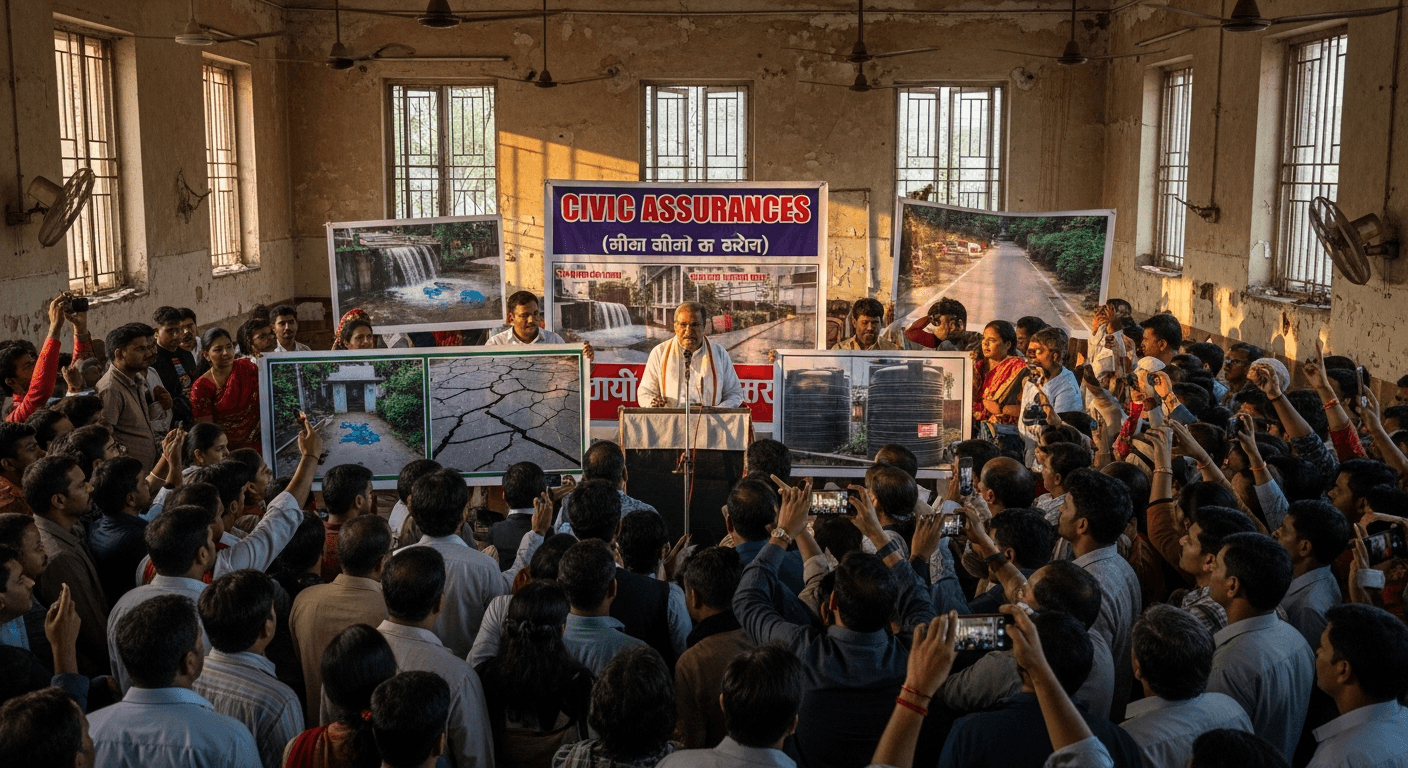
I’ve been following the recent wave of resident groups inviting netas to public meetings — an exercise I believe speaks to the heart of Mumbai’s civic health. Across several wards, forums and resident welfare associations have sent structured invitations and questionnaires asking for concrete civic assurances before residents are asked to give their mandate. The mood on the ground is both determined and impatient: people are tired of slogans; they want timelines and verifiable commitments.
Who’s Involved (and Why It Matters)
Stakeholders in these conversations include:
- Resident Welfare Associations (RWAs) and Area Level Meetings (ALMs)
- Local NGOs and advocacy groups focused on environment, health and open spaces
- Corporators and aspiring councillors (netas)
- MLAs and state-level representatives where redevelopment or larger infrastructure is at stake
- Brihanmumbai Municipal Corporation (BMC) officials and contractor networks
Each of these parties plays a role: RWAs bring local knowledge and urgency, NGOs bring technical framing, politicians bring power to execute, and the BMC holds the purse strings and implementation capacity.
The Typical Civic Issues on the Table
When citizens ask for assurances, they aren’t asking for miracles. They are asking for the basics to work reliably. The checklist I’ve seen — and the same themes recur in dozens of meetings — usually covers:
- Cleanliness and sustained waste management (no seasonal rushes before inspections)
- Safe, reliable water supply and stopping wastage from overflowing tanks
- Desilting and maintenance of storm-water drains to prevent flooding
- Timely road repairs and accountability for shoddy contractor work
- Rational parking policy and restriction of commercial vehicles in residential lanes
- Strengthening of local public transport connections and last-mile mobility
- Transparent slum redevelopment processes with resident safeguards
- Targeted COVID/vaccine outreach, health camps and preparedness for future public-health needs
These are practical, ward-scale demands that a corporator and the BMC can influence directly.
What Residents Are Asking Politicians To Pledge
The invitations I’ve seen come with a combination of written questionnaires and a compact set of pledges. Typical assurances requested include:
- Monthly public grievance meetings with documented minutes
- Public disclosure of funds spent on ward-level projects
- A 48–72 hour timeline for emergency fixes (blocked drain, water leak, collapsed footpath)
- Penalties for contractors when work fails quality checks
- A commitment to protect and restore open spaces and play grounds
- No use of civic funds for personal publicity (no hoardings/one-off ‘photo-op’ projects)
These are intentionally measurable — residents want “show me the invoice” accountability, not vague promises.
Voices from the Ground (Paraphrased)
A citizen leader at one RWA put it plainly: “We are not asking for lotteries of projects; we are asking that what already exists actually works.”
A local politician I spoke to (an aspirant corporator) was candid and pragmatic: “Time is short in campaign season, but I understand why residents want written commitments. I will agree to monthly public meetings and publish ward expenditure online.”
These are paraphrases of common positions I’ve heard during door-to-door conversations and community calls: citizens want process and proof; politicians — when they engage — often accept the logic of transparency.
Possible Outcomes and What Comes Next
I see three likely trajectories:
- Token engagement: candidates give short, non-binding replies and continue traditional campaigning. The civic issues remain unresolved after votes.
- Selective engagement: a few candidates sign the pledges and commit to visible, early wins (road patches, extra desilting). These create local credibility and pressure others to follow.
- Institutional response: the BMC and winning councillors adopt a ward-level transparency framework — public dashboards, grievance trackers and contractor performance scores. This is harder but transformative.
Which of these plays out will depend on sustained citizen pressure and how many voters remember who showed up versus who avoided the meeting.
My Read on Responsibility
This is not just about holding individual netas to account. It is about rebuilding a culture where local governance is daily, boring and reliably functional. That means demanding simple systems: regular public meetings, documented answers, and easy-to-access channels for reporting and tracking repairs.
How Residents Can Engage — A Short Call to Action
If you live in Mumbai and care about your street, here’s what you can do:
- Attend the local “Meet Your Candidate” session or the RWA meeting in your building. Presence matters.
- Ask for the written questionnaire and insist that answers be posted publicly (WhatsApp group, RWA mailer, pinned notice).
- Use simple tools: note the complaint number, photograph the problem, and request timelines in writing.
- Reach out to your corporator’s office and to the BMC helplines; escalate to your MLA if ward-level promises stall.
- Join or form an ALM or RWA if one doesn’t exist — collective voice gets results.
I believe civic accountability begins with these small, repeatable actions. If voters make attendance and documentation part of our civic routine, netas will stop treating meetings as optional.
Regards,
Hemen Parekh
Any questions / doubts / clarifications regarding this blog? Just ask (by typing or talking) my Virtual Avatar on the website embedded below. Then "Share" that to your friend on WhatsApp.
Get correct answer to any question asked by Shri Amitabh Bachchan on Kaun Banega Crorepati, faster than any contestant
Hello Candidates :
- For UPSC – IAS – IPS – IFS etc., exams, you must prepare to answer, essay type questions which test your General Knowledge / Sensitivity of current events
- If you have read this blog carefully , you should be able to answer the following question:
- Need help ? No problem . Following are two AI AGENTS where we have PRE-LOADED this question in their respective Question Boxes . All that you have to do is just click SUBMIT
- www.HemenParekh.ai { a SLM , powered by my own Digital Content of more than 50,000 + documents, written by me over past 60 years of my professional career }
- www.IndiaAGI.ai { a consortium of 3 LLMs which debate and deliver a CONSENSUS answer – and each gives its own answer as well ! }
- It is up to you to decide which answer is more comprehensive / nuanced ( For sheer amazement, click both SUBMIT buttons quickly, one after another ) Then share any answer with yourself / your friends ( using WhatsApp / Email ). Nothing stops you from submitting ( just copy / paste from your resource ), all those questions from last year’s UPSC exam paper as well !
- May be there are other online resources which too provide you answers to UPSC “ General Knowledge “ questions but only I provide you in 26 languages !





No comments:
Post a Comment