
Lead
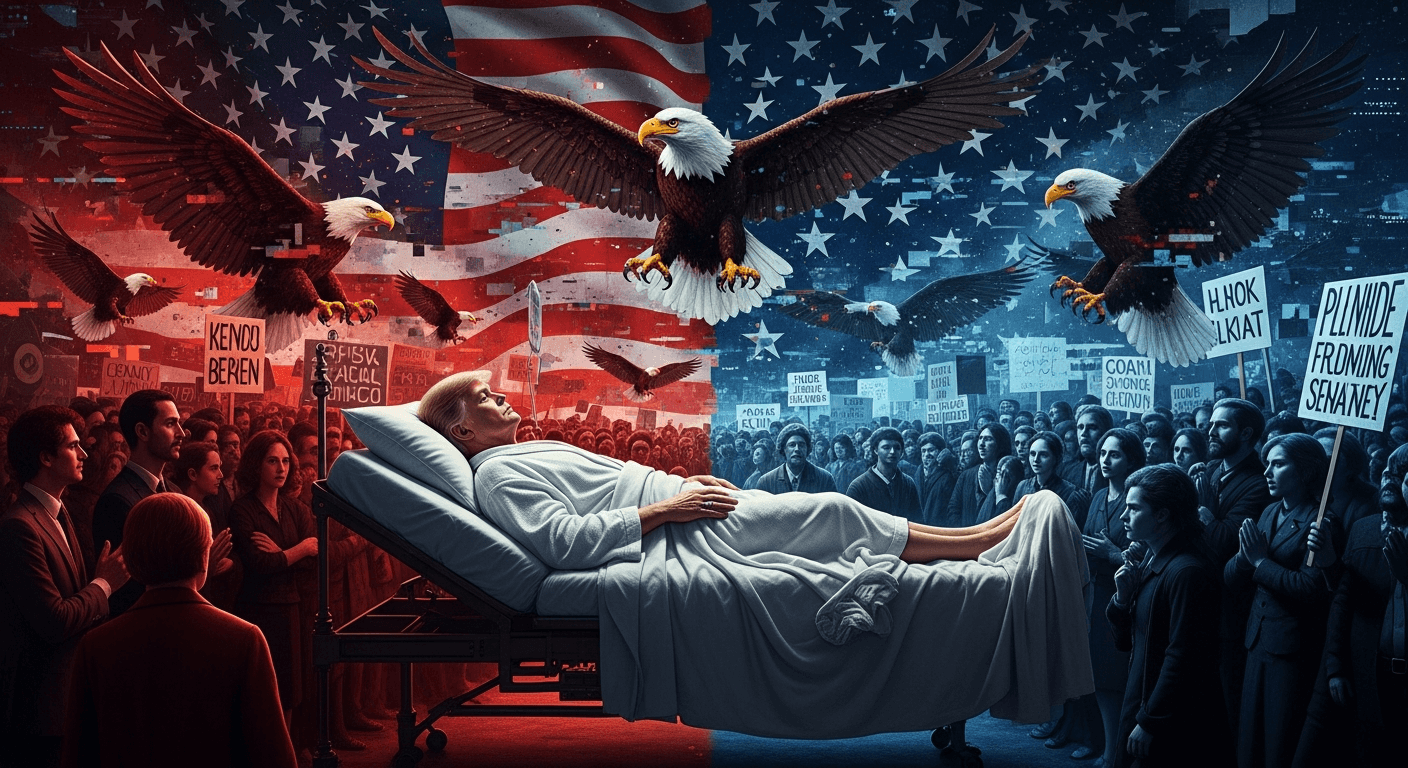
I watched, like millions of others, as a social post—an AI-generated image that cast the sitting U.S. president in a Christ-like pose—appeared on a major conservative platform, ignited a firestorm, and then vanished. The post's author defended it as a playful depiction of himself "as a doctor" and insisted, "I do make people better." The episode landed at the intersection of religion, politics, AI, and media strategy—and it deserves a measured unpacking.
Context and what happened
Late on a weekend, an image was posted showing the president in flowing robes placing a healing hand over a patient, surrounded by patriotic symbols. Within hours, the post drew condemnation from religious leaders, alarm from some supporters on the same platform, and mockery across mainstream social networks. The image was deleted the next morning. The president then told reporters he thought the picture showed him as a doctor, linked it to humanitarian imagery and Red Cross themes and reiterated the line, "I do make people better."
This sequence—post, backlash, deletion, explanation—is familiar in our media age. What felt new was the explicit role of generative AI in producing a politically charged, religiously resonant image and the way it escalated a rhetorical conflict that had already been brewing between the administration and senior religious figures over foreign policy.
Quotes and immediate reactions
The simplest quote captured much of the spectacle: "I do make people better," the president said in his defense. Religious leaders called the imagery inappropriate and, for some, blasphemous. Conservatives and supporters were split—some defended intent and tone as humour or political theatre, others warned it crossed a line.
Independent news outlets documented the rollout and deletion; I followed coverage in the political press and on broadcasts that captured reporters’ immediate questions to the White House and to religious spokespeople (Politico). My own past writing on deepfakes and the risks of leaving the symbolic field unguarded by public figures feels relevant here—when leaders do not control their image in the digital commons, AI will.
Analysis: political implications
There are three political seams to watch.
Base cohesion and elite signalling. A leader’s symbolic gestures are carefully read by core supporters and by elites inside the party. An image that appears to conflate political and sacred authority can alarm religious constituencies and conservative influencers who worry about tone and credibility.
Religious voters and swing constituencies. Even in electorates where a majority voted for the president, explicit religious imagery tied to a single political figure invites scrutiny. Religious leaders are not a monolith; their responses can shift faith communities’ perceptions in ways that matter electorally and culturally.
International and diplomatic fallout. Public clashes with senior religious authorities—especially when couched in moral terms about war, peace, or humanitarian obligations—can complicate diplomatic outreach and soft power.
Legal and platform background
Legally, there is no crime in creating or posting an AI image that depicts a public figure with religious or messianic overtones. The First Amendment protects a wide range of political expression. Platforms, however, have their own policies: some moderate content that targets religious groups or that constitutes hate or violent imagery; others focus on harassment, impersonation, or misinformation when context matters. In this case, deletion appears to have been a choice by the account owner or platform moderation in response to a public backlash rather than a clear-cut policy enforcement action.
The broader legal backdrop includes ongoing debates about deepfakes and election integrity. My long-standing concern—about leaving the ground of public symbolism undefended while AI tools get better at creating persuasive, manipulative media—has precedent in my writing about deepfakes and the need for responsible digital avatars “Dear PM: your DEEP FAKE is here before your DEEP REAL”.
Reactions from stakeholders
Religious leaders: Frustration and moral admonition. For many clerics, religious symbols are not rhetorical props, and the image was read as disrespectful in timing and tone.
Supporters and party operatives: Mixed. Some dismissed the controversy as media overreach; others worried about alienating religious voters or about the optics of mixing divinity and leadership.
Media and civil-society voices: Skepticism about AI’s role in political messaging, and a renewed call for public figures to take responsibility for how digital content is used in their name.
Why this matters beyond the meme
We are rapidly entering a phase in which political symbolism can be manufactured at scale by AI and distributed instantly to sympathetic audiences. That capability amplifies the consequences of offhand gestures and invites rapid escalation. For leaders, the choice is stark: either engage proactively with how their image is used—establishing clear boundaries and digital stewardship—or accept that third-party content will define them in ways they did not intend.
Closing reflection
As someone who has written about AI’s capacity to reshape public discourse, I see this incident as a cautionary parable. It is not merely about taste or sacrilege; it’s about control, narrative, and the fragile contract between leaders and the communities they lead. The deletion was swift, the explanation immediate, but the incident has already seeded conversations about authenticity, responsibility, and the ethics of using sacred symbols for political ends. If we want a saner public square, public figures must be more deliberate, platforms must be clearer about norms, and citizens must demand better — not just because of politics, but because of what we owe each other as a civic community.
References
- Reporting and timelines I followed included mainstream political coverage and video transcripts of the White House exchange (Politico).
- My earlier writing on deepfakes and digital identity is available here: Dear PM: your DEEP FAKE is here before your DEEP REAL.
Regards,
Hemen Parekh
Any questions / doubts / clarifications regarding this blog? Just ask (by typing or talking) my Virtual Avatar on the website embedded below. Then "Share" that to your friend on WhatsApp.
Get correct answer to any question asked by Shri Amitabh Bachchan on Kaun Banega Crorepati, faster than any contestant
Hello Candidates :
- For UPSC – IAS – IPS – IFS etc., exams, you must prepare to answer, essay type questions which test your General Knowledge / Sensitivity of current events
- If you have read this blog carefully , you should be able to answer the following question:
- Need help ? No problem . Following are two AI AGENTS where we have PRE-LOADED this question in their respective Question Boxes . All that you have to do is just click SUBMIT
- www.HemenParekh.ai { a SLM , powered by my own Digital Content of more than 50,000 + documents, written by me over past 60 years of my professional career }
- www.IndiaAGI.ai { a consortium of 3 LLMs which debate and deliver a CONSENSUS answer – and each gives its own answer as well ! }
- It is up to you to decide which answer is more comprehensive / nuanced ( For sheer amazement, click both SUBMIT buttons quickly, one after another ) Then share any answer with yourself / your friends ( using WhatsApp / Email ). Nothing stops you from submitting ( just copy / paste from your resource ), all those questions from last year’s UPSC exam paper as well !
- May be there are other online resources which too provide you answers to UPSC “ General Knowledge “ questions but only I provide you in 26 languages !





No comments:
Post a Comment