
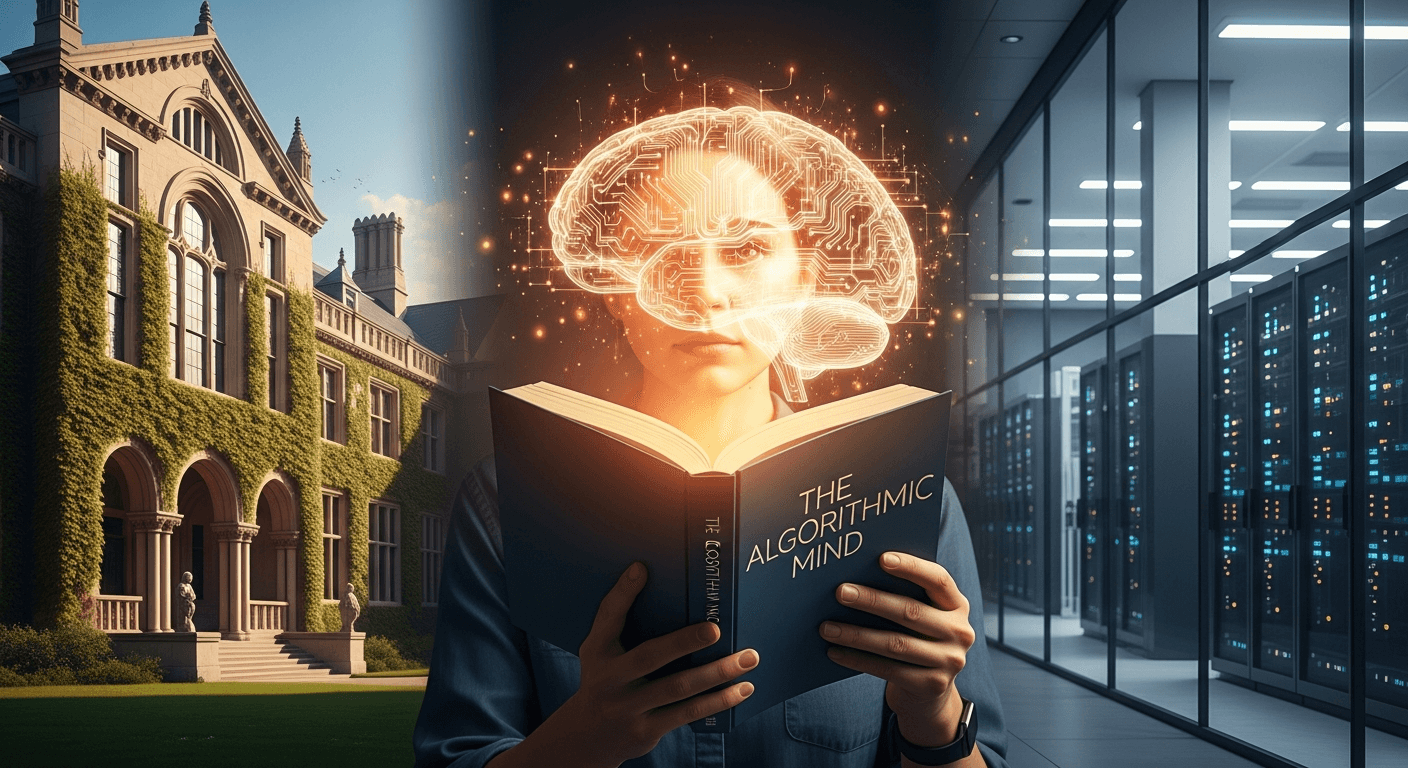
Why a literature degree feels suddenly timely
I remember advising students for years to combine curiosity with practical skills. Lately, though, that advice has a different ring to it. When I heard Daniela Amodei (daniela@anthropic.com) — cofounder and president of Anthropic — reflect on her own literature background and hiring instincts, it confirmed something I’ve been arguing for a while: as AI takes on more technical work, uniquely human capacities matter more, not less Fortune, Business Insider.
Her point — paraphrased — was that large language models and other AI systems are already strong in STEM-like tasks, and so the comparative advantage shifts toward skills that interpret, contextualize, and care for people. That is not a dismissal of technical education; it’s a rebalancing of what teams need to build technology that actually serves society.
A short history: why this feels like a reversal
Anthropic is one of several companies born in the last decade to push safer, more interpretable AI systems. The broader AI arc moved from symbolic systems to data‑driven neural nets, then to large models that can generate text, images, and code. That technical ascendancy made engineers, statisticians, and data scientists the obvious stars. But the successes of generative models also exposed gaps: explanation, context-sensitivity, ethics, and human-centred communication.
Those gaps are precisely where humanities and social-science training excel. I’ve written before about the fragility of human critical thinking in an AI-enabled information environment and why strengthening those muscles matters now “Critical Thinking: Achilles’ Heal of AI?”.
What humanities and social-science degrees actually bring
Degrees that once seemed mismatched now provide concrete, transferable skills for modern AI work:
- Ethics and moral reasoning — frameworks to evaluate trade-offs, fairness, and responsibility.
- Critical thinking and argumentation — spotting bad assumptions, constructing and testing narratives.
- Communication and storytelling — making technical work accessible to policy makers, customers, and the public.
- Interpretability and sense‑making — reading model outputs with nuance and cultural awareness.
- Policy and regulatory literacy — understanding institutions, laws, and the social impacts of deployment.
These aren’t soft extras. They shape product requirements, guardrails, and user trust.
What this means for students, employers, and educators
For students: if you have a degree in philosophy, literature, history, anthropology, or a social science, treat it as a strength. Pair domain knowledge with pragmatic technical fluency — basic statistics, data literacy, and hands‑on experience with tooling (even prompt engineering) make you far more employable.
For employers: hiring managers should broaden their signal sets. A CV that demonstrates rigorous thinking, evident writing, and evidence of collaborative projects can be as predictive of success on multidisciplinary AI teams as a technical pedigree. Anthropic’s hiring signals — emphasis on communication, EQ, and curiosity — are a practical template.
For educators: curricula need hybrids. Combine humanistic inquiry with computational exposure. Offer courses where students critique models, design human-centered evaluations, and collaborate across departments.
Practical steps for people with humanities degrees to enter AI-related roles
- Learn core concepts: statistics basics, data ethics, and how models are trained. Short online courses suffice.
- Build a portfolio: write case studies that analyze real model outputs, annotate harms or failure modes, and propose interventions.
- Contribute to interdisciplinary projects: volunteers, research assistants, or internships in AI labs or policy groups give credibility.
- Master translation skills: practice explaining technical limitations and societal impacts to non-experts — make your writing your calling card.
- Network into product, policy, and trust teams: these areas value narrative clarity and contextual judgment.
- Learn tooling: experiment with prompt design, evaluation frameworks, and model interpretability libraries.
These steps are realistic and cost-effective; they bridge the conceptual strengths of the humanities with the operational language of AI teams.
A balanced view
This is not a call to abandon technical education or to romanticize the humanities as a cure-all. AI will continue to create new technical specializations. Rather, it’s a pragmatic readjustment: diverse skill sets make systems better. Tech without judgement risks harm; judgement without technical awareness can be impotent. The productive path is to blend both.
Implications beyond hiring
If institutions — companies, universities, regulators — adopt this blended mindset, we get better governance, more humane product design, and a healthier public conversation about technology. If they don’t, we risk repeating familiar cycles where rhetoric about values isn’t matched by practice.
Takeaway
I’m optimistic because this is an opportunity: people trained to ask the hard, messy questions about meaning, fairness, and context are now central to building AI that serves humans. If you hold one of those degrees, don’t apologize for it. Translate it, pair it with practical skills, and step into roles where human judgment matters.
Regards,
Hemen Parekh
Any questions / doubts / clarifications regarding this blog? Just ask (by typing or talking) my Virtual Avatar on the website embedded below. Then "Share" that to your friend on WhatsApp.
Get correct answer to any question asked by Shri Amitabh Bachchan on Kaun Banega Crorepati, faster than any contestant
Hello Candidates :
- For UPSC – IAS – IPS – IFS etc., exams, you must prepare to answer, essay type questions which test your General Knowledge / Sensitivity of current events
- If you have read this blog carefully , you should be able to answer the following question:
- Need help ? No problem . Following are two AI AGENTS where we have PRE-LOADED this question in their respective Question Boxes . All that you have to do is just click SUBMIT
- www.HemenParekh.ai { a SLM , powered by my own Digital Content of more than 50,000 + documents, written by me over past 60 years of my professional career }
- www.IndiaAGI.ai { a consortium of 3 LLMs which debate and deliver a CONSENSUS answer – and each gives its own answer as well ! }
- It is up to you to decide which answer is more comprehensive / nuanced ( For sheer amazement, click both SUBMIT buttons quickly, one after another ) Then share any answer with yourself / your friends ( using WhatsApp / Email ). Nothing stops you from submitting ( just copy / paste from your resource ), all those questions from last year’s UPSC exam paper as well !
- May be there are other online resources which too provide you answers to UPSC “ General Knowledge “ questions but only I provide you in 26 languages !



No comments:
Post a Comment