
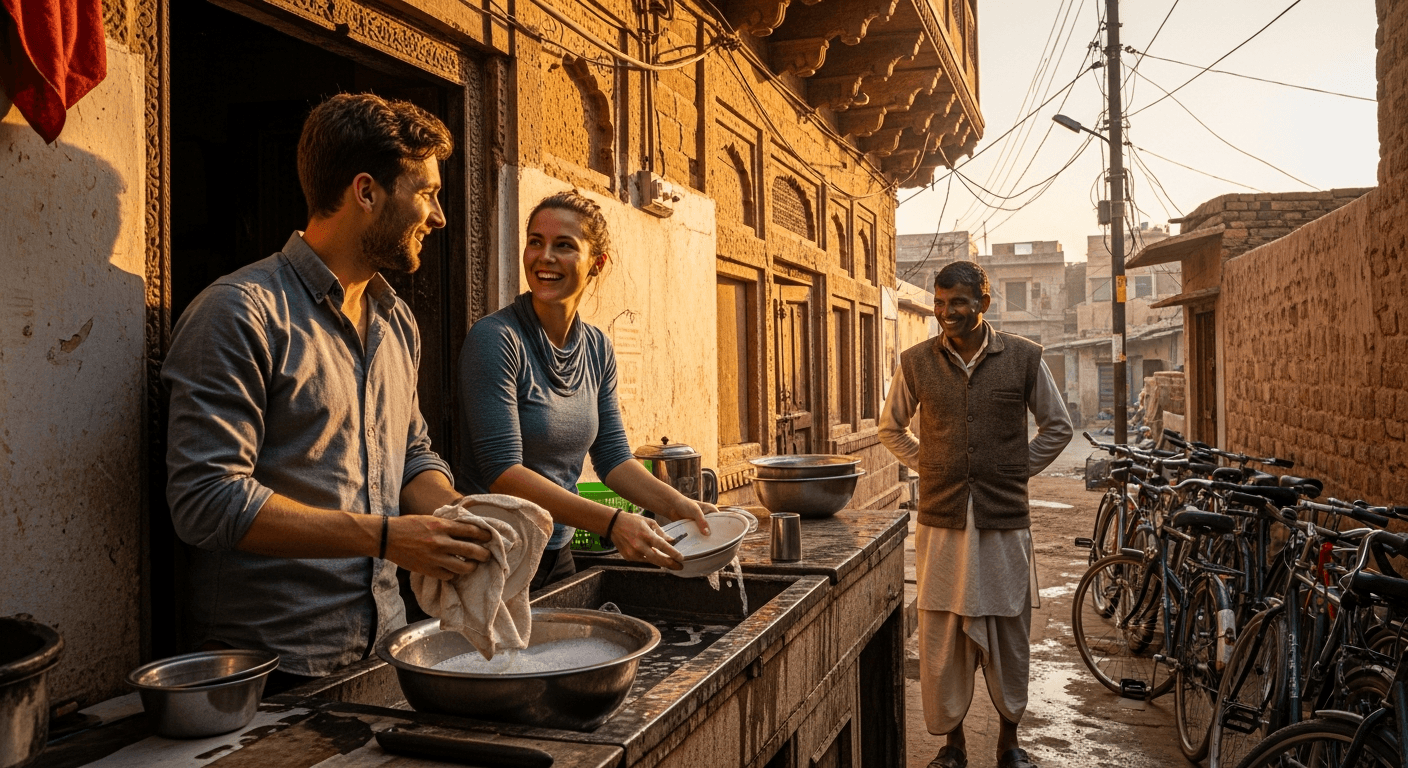
I remember the first time I saw it with my own eyes: two relaxed travellers slipping behind a small hotel counter in Jaisalmer, clearing breakfast plates, chatting with staff, then vanishing into the honey-coloured alleys to explore the fort. They weren’t staff. They were tourists — and they were working for their stay.
Connect with me: Hemen Parekh — hcp@recruitguru.com
What I saw — and why it surprised me
A recent piece in the Times of India told a simple, revealing story: two UK travellers quietly helping in a hotel kitchen in exchange for food and a room, then spending the rest of their days wandering the town and learning local crafts and stories[1]. At first glance it feels surprising because it flips our picture of the typical tourist: instead of paying for comfort, they swapped a few hours of honest work for hospitality.
But the surprise fades once you see how practical and generous the arrangement is — and how common it’s become. I’ve seen versions of this in homestays, hostels, farms and even small temples across India.
Why they do it: five straightforward reasons
- Cost stretching: Flights are expensive; daily expenses add up. Trading time for board makes longer travel possible.
- Deeper connection: Working alongside hosts opens conversations that money doesn’t buy. You learn kitchen secrets, local festivals, and real neighbourhood gossip.
- Flexibility: A few hours of work a day = more daylight hours for exploring. It’s low-effort, high-reward.
- Skill exchange: Many travellers teach English, social media, light maintenance or cooking in return for food and a bed.
- Ethical travel: Some prefer to give time rather than money — a way to contribute and reduce exploitative cash-for-tourism flows.
Cultural context: why India makes this possible
India’s hospitality economy is built on small enterprises: family-run guesthouses, independent cafés, and community-run farms. Many hosts appreciate extra hands, and many travellers offer skills (English conversation, basic repair work, photography). The social fabric here values reciprocity: help someone, and hospitality follows. That cultural comfort with exchange — combined with platforms that connect hosts and volunteers — creates a practical ecosystem for sustained travel.
Anecdote: Jaisalmer, breakfast plates and curious conversations
That morning in Jaisalmer the two travellers weren’t hiding. They joked with guests, learned to fold rotis properly, and later showed me a postcard from a child they’d started tutoring for an hour each morning. The hotel owner told me he’d happily host them because, beyond saving on staff costs, they became part of the place for a while — they helped keep rooms tidy, they taught a little English to the front-desk clerk, and they left with more than they arrived with: friendships and stories.
Practical tips if you want to try this style of travel
- Use established platforms: Workaway, Worldpackers, WWOOF and similar sites list hosts that provide food and lodging for a few hours of work each day. They’re a great starting point.
- Be transparent: Offer your skills honestly and agree hours and chores up front.
- Respect local rules: Always check visa regulations. Tourist visas typically don’t allow paid work; bartered exchanges for board are common but check the fine print and local laws.
- Learn a few phrases: A little Hindi (or the regional language) goes a long way in building trust.
- Keep expectations realistic: Hostel-help usually means reception shifts, cleaning, social media help, or teaching basic English — not managerial roles.
The reasons behind the surprising behaviour — beyond money
There’s a psychological element: many modern travellers want meaning, not just postcards. Working alongside locals dissolves the “tourist/us” barrier. It creates a rhythm that turns a trip into a temporary life rather than a string of checklist sites. For some, it’s also an ethical choice: compensating hosts with time instead of cash when budgets are tight, and actually contributing something useful.
A few cautions
- Avoid exploitative setups: If a host expects long, unpaid labour beyond agreed terms, walk away.
- Beware of visa complications: Check with consulates or reliable travel resources before relying on work-exchange long-term.
- Cultural sensitivity: Some chores or places may have cultural constraints (gendered work roles, religious customs) — always ask.
What this tells us about travel today
Travel is evolving. The old model — pay for a package, tick off attractions — is being joined by a gentler, exchange-based model where people trade time for hospitality and, in doing so, discover more authentic corners of a place. I’ve written about sustainable and community-minded travel before on my blog, where I argued that travel with purpose transforms both traveler and host (see my earlier reflections at hemenparekh.in). This Jaisalmer moment was a small, clear example of that idea in action.
Final thought
Is it surprising that UK tourists — or any travellers — will help wash dishes for a bed and a plate? Maybe the surprise is really ours. The real lesson is humility: be willing to trade a few hours of work for an authentic connection, and you’ll often leave richer in stories than you arrived.
Regards,
Hemen Parekh
Get correct answer to any question asked by Shri Amitabh Bachchan on Kaun Banega Crorepati, faster than any contestant
Hello Candidates :
- For UPSC – IAS – IPS – IFS etc., exams, you must prepare to answer, essay type questions which test your General Knowledge / Sensitivity of current events
- If you have read this blog carefully , you should be able to answer the following question:
- Need help ? No problem . Following are two AI AGENTS where we have PRE-LOADED this question in their respective Question Boxes . All that you have to do is just click SUBMIT
- www.HemenParekh.ai { a SLM , powered by my own Digital Content of more than 50,000 + documents, written by me over past 60 years of my professional career }
- www.IndiaAGI.ai { a consortium of 3 LLMs which debate and deliver a CONSENSUS answer – and each gives its own answer as well ! }
- It is up to you to decide which answer is more comprehensive / nuanced ( For sheer amazement, click both SUBMIT buttons quickly, one after another ) Then share any answer with yourself / your friends ( using WhatsApp / Email ). Nothing stops you from submitting ( just copy / paste from your resource ), all those questions from last year’s UPSC exam paper as well !
- May be there are other online resources which too provide you answers to UPSC “ General Knowledge “ questions but only I provide you in 26 languages !




No comments:
Post a Comment