
By Hemen Parekh (hcp@recruitguru.com)
Why accessibility matters for Grok
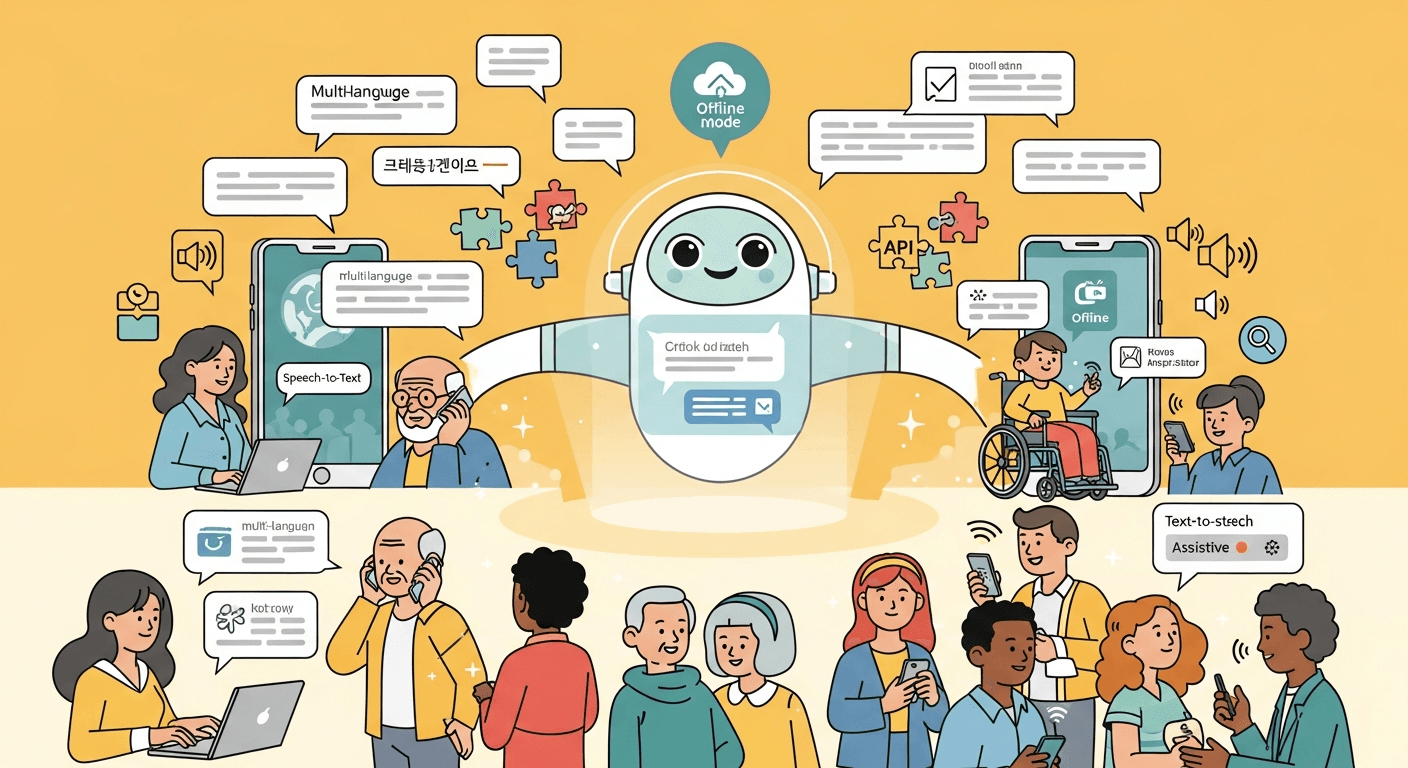
xAI’s Grok is already interesting because it blends real-time web and X (formerly Twitter) data, multimodal inputs and an opinionated tone that some users prefer to other assistants. But raw capability isn’t the same as broad usefulness. If Grok is to move from a headline-grabbing novelty to something that helps millions, accessibility has to be deliberate: better UI, lower friction, broader language support, affordable pricing, integrations and developer-friendly APIs.
I’ve been writing about democratising AI and language access for some time — making models usable in many languages and contexts so more people benefit Making AI more accessible and impactful.
How xAI (Grok’s maker) can increase accessibility — practical levers
Below I walk through clear, practical changes and why they matter.
1) Simpler, inclusive UI
- Clean, low-distraction chat layouts with large fonts and high-contrast themes for older eyes.
- Voice-first and voice-to-text flows so people who prefer speaking can use Grok hands-free (important for mobility-impaired users).
- Guided templates (e.g., “Research summary”, “Customer reply”, “Homework help”) to reduce prompt-engineering burden.
Why it helps: better UI lowers the activation energy for new users and makes advanced modes discoverable rather than hidden behind technical menus.
2) Tiered, empathetic pricing
- A generous free tier with modest daily queries and clear limits (so curious users can try Grok).
- Affordable mid tiers aimed at students, educators and small nonprofits.
- Pay-as-you-go API credits for developers and microbusinesses.
Why it helps: pricing determines who gets to learn and build with the product. Moving away from exclusive paywalls expands real-world utility — from classroom use to local-language startups.
3) Rich integrations and embedding
- Native plugins for popular tools (Google Workspace, Microsoft 365, Slack, WhatsApp Business).
- Embedded widget and low-code SDKs so small websites and government portals can surface Grok capabilities without heavy engineering.
- Offline-capable clients for low-bandwidth settings (see below).
Why it helps: useful AI lives inside workflows, not behind a separate app.
4) Real multilingual support
- Full support for major world languages and targeted investment in under-served languages (regional Indian languages, African languages, Southeast Asian languages).
- Localized UI, culturally-aware prompt templates and region-specific knowledge packs.
Why it helps: language is the largest barrier to adoption outside wealthy, English-first populations. Grok’s web/X access is powerful — making that power speak many tongues multiplies impact.
5) Offline and low-bandwidth modes
- Lightweight on-device models for core use-cases (summaries, translations, reading assistance) with periodic sync to cloud for heavy reasoning.
- Progressive web apps (PWAs) and small-footprint mobile clients that cache models and context.
Why it helps: many regions have intermittent connectivity. Offline tiers put capability in hands of people who most need it.
6) Assistive technology-first features
- Screen-reader optimized responses and explicit ARIA roles in web UI.
- Keyboard-first shortcuts, large interactive controls and simplified conversation flows for cognitive accessibility.
- Voice modulation and slow-read modes for people with hearing or processing differences.
Why it helps: accessibility is not an add-on. Designing for assistive tech from day one avoids exclusion.
7) Open-ish APIs and developer tooling
- Transparent, well-documented APIs with sandbox tiers and open SDKs.
- Example apps: community health chatbots in local languages, micro-business invoice assistants, classroom tutors.
- Developer grants and community model weights (where safe) to accelerate local innovation.
Why it helps: third-party builders will find novel ways to reach niche communities and embed Grok where the company alone cannot.
Potential impacts (positive and cautionary)
Positive
- Faster adoption in education, small business, and civic services.
- Local-language journalism, government help-lines and healthcare triage bots built faster.
- More creators and entrepreneurs using AI as a utility rather than an exclusive tool.
Concerns
- Safety and moderation at scale: broad access may surface more harmful uses and misinformation. xAI will need stronger monitoring and transparent policies. (Grok’s public iterations show how tone and content policies quickly become political and technical challenges.)
- Cost & compute externalities: low-cost tiers and offline modes are desirable, but the carbon and infrastructure cost of large models must be managed.
- Cultural risk: one-size system prompts tuned for a particular audience can alienate others; localized tuning is essential.
Examples of accessible-first product features (concrete)
- "Student mode": answers with citations, step-by-step math explanations and a reading-level toggle.
- "LocalGov embed": a lightweight widget that returns FAQ-style answers for municipal services in the local language.
- "Assistive reader": uploads a PDF and Grok reads it aloud with highlighted text and summary bullets.
A balanced, mildly optimistic closing
Grok already has technical strengths — real-time web/X access and multimodal features — but technical excellence alone won’t guarantee broad societal benefit. If xAI makes accessibility a first-order principle (UI, pricing, languages, offline modes, assistive tech and open APIs), Grok can broaden who uses and builds with it. That would be a win: more people solving local problems with AI, responsibly.
I’ve argued before for inclusive AI design and language access; the roadmap above is practical and, if implemented, would move Grok from an interesting chatbot to a genuinely useful platform for many more people Making AI more accessible and impactful.
Regards,
Hemen Parekh (hcp@recruitguru.com)
Any questions / doubts / clarifications regarding this blog? Just ask (by typing or talking) my Virtual Avatar on the website embedded below. Then "Share" that to your friend on WhatsApp.
Get correct answer to any question asked by Shri Amitabh Bachchan on Kaun Banega Crorepati, faster than any contestant
Hello Candidates :
- For UPSC – IAS – IPS – IFS etc., exams, you must prepare to answer, essay type questions which test your General Knowledge / Sensitivity of current events
- If you have read this blog carefully , you should be able to answer the following question:
- Need help ? No problem . Following are two AI AGENTS where we have PRE-LOADED this question in their respective Question Boxes . All that you have to do is just click SUBMIT
- www.HemenParekh.ai { a SLM , powered by my own Digital Content of more than 50,000 + documents, written by me over past 60 years of my professional career }
- www.IndiaAGI.ai { a consortium of 3 LLMs which debate and deliver a CONSENSUS answer – and each gives its own answer as well ! }
- It is up to you to decide which answer is more comprehensive / nuanced ( For sheer amazement, click both SUBMIT buttons quickly, one after another ) Then share any answer with yourself / your friends ( using WhatsApp / Email ). Nothing stops you from submitting ( just copy / paste from your resource ), all those questions from last year’s UPSC exam paper as well !
- May be there are other online resources which too provide you answers to UPSC “ General Knowledge “ questions but only I provide you in 26 languages !



No comments:
Post a Comment