
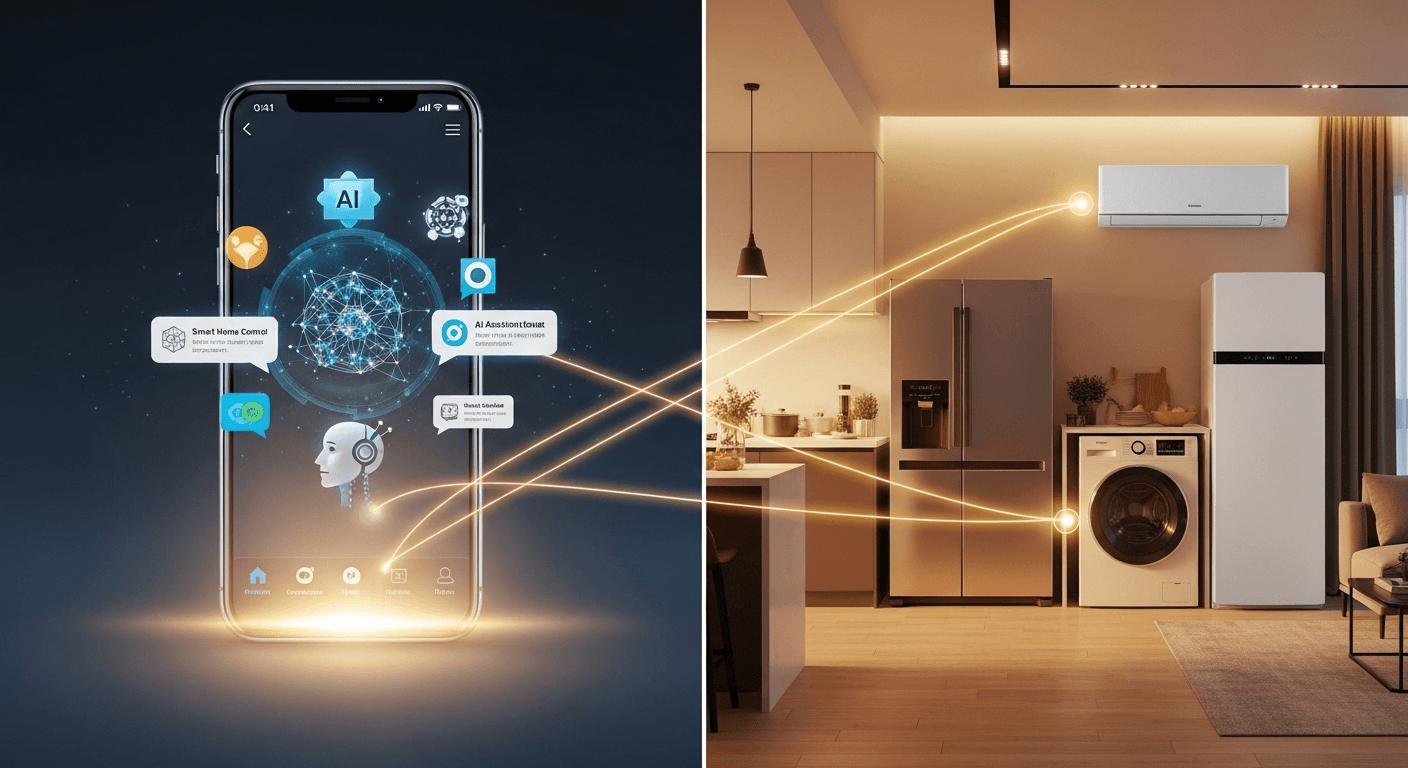
Opening: A news hook and why I’m paying attention
The Times of India recently reported that Samsung is planning to infuse AI across its entire product line — not just flagship phones but TVs and home appliances too (Times of India). As someone who watches how technology migrates from novelty into daily habit, this felt like a meaningful inflection point: the same intelligence that lives in our pockets is being invited into the kitchen, laundry room and living room.
I’ve written about this trajectory before — about generative AI and energy-aware chips for appliances — and the current announcements feel like the next chapter of that story (My earlier post on Samsung and Gen AI).
Background: Samsung’s cross-device AI strategy
Samsung’s approach is not a single product launch but an ecosystem move: AI features on Galaxy phones, vision and recommendation engines on TVs, and a fast-growing “Bespoke AI” portfolio for refrigerators, washers, ACs and more. The glue is Samsung’s SmartThings platform — the company’s existing IoT hub — now layered with AI features for personalization, diagnostics, energy optimisation and two-way voice interaction.
In short, Samsung aims to shift from selling discrete devices to offering a coherent, AI-enabled living experience where devices share context and anticipate needs.
Examples of AI features (phones to appliances)
Smartphones
On-device generative and assistive features (productivity tools, conversational assistants and real-time image/video understanding).
Seamless handoff of context to home devices (e.g., send a recipe from phone to fridge display).
TVs and Vision AI
Natural-language recommendations, scene understanding, and personalized content suggestions.
Refrigerators and kitchen devices
"AI Vision" that recognises food items, tracks expiry dates and suggests recipes or shopping lists.
Inventory reminders and automated notifications to reduce food waste.
Washing machines and laundry combos
AI Wash/Dry that detects fabric type, load size and soil level to optimise water, detergent and cycle time.
Features aimed at saving time and reducing energy and water use.
Air conditioners and energy systems
AI Energy modes that learn usage patterns, optimise cooling schedules and can reduce consumption.
Across these examples, recurring themes are personalization, automation, preventive maintenance, and measurable savings.
Potential benefits for consumers
- Convenience: routines automated (laundry schedules, recipe suggestions, coordinated device actions).
- Cost and energy savings: smarter cycles and demand-aware behaviour can lower bills and environmental impact.
- Longer device life: predictive diagnostics can flag problems early, reducing repair costs.
- Accessibility and inclusion: voice ID, multi-language support and adaptive interfaces can make devices easier for more people to use.
These are practical, everyday gains — the kind that change behavior slowly but surely.
Competitive landscape
This move is not unique to one company. The device + AI play is now table stakes:
- Apple: tight hardware-software integration with on-device intelligence and a privacy-first messaging around AI.
- Google: strengths in cloud AI, Assistant, and Android ecosystem integrations for smart home control.
- Amazon: deep voice-first experience through Alexa and Alexa-compatible appliances and services.
- Chinese and other OEMs (Xiaomi, Haier, etc.): fast rollout of price-competitive smart appliances with integrated AI features.
Samsung’s advantage is breadth — phones, TVs and appliances under one brand — and investments in both localised software and security layers for device trustworthiness.
Privacy, security and trust considerations
Whenever household devices gain sensors, cameras, voice microphones and cloud connectivity, privacy questions follow. The core issues are:
- Data minimisation and consent: which signals are collected, how long they’re stored, and whether users can opt out.
- Local vs cloud processing: on-device AI reduces exposure, but cloud models enable more powerful features.
- Secure device identity and update paths: a compromised appliance on a network can be an entry point.
Samsung has emphasised its device-hardening and Knox security layers; that’s a necessary baseline, but consumers and regulators will want transparency about data use, third-party access and anonymisation practices.
Challenges and regulatory concerns
- Interoperability: users often want devices from different brands to work together. Proprietary ecosystems can limit choice and fragment the experience.
- Standards and certification: what counts as “secure AI” for a home appliance? Industry-wide standards and third-party audits will become important.
- Energy footprint: smarter devices can save energy, but large-scale rollout of always-on AI features and cloud inference carries its own carbon and infrastructure cost.
- Liability and safety: when AI suggests medical or safety-related actions (e.g., inactivity alerts for an elderly person), who is responsible if the system errs?
- Local regulations: data localisation rules, consumer protection and product safety standards differ by market and will shape deployments.
These are not insurmountable, but they require thoughtful product design and engagement with policymakers.
What this shift means — for consumers and the market
For consumers, the promise is subtle but real: fewer small frictions in daily life, smarter resource use, and an ecosystem that learns household routines. For the market, Samsung’s push signals that AI is now moving out of the lab and into durable goods at scale. That will accelerate competition, force clearer privacy practices, and push other brands to tie services to hardware more tightly.
I remain slightly optimistic. The technical pieces — sensors, connectivity, on-device models and cloud services — are maturing. The important work now is humane design: giving users clear control, measurable benefits, and real transparency.
If Samsung’s rollout delivers genuine savings, accessible interfaces and robust security, the net effect could be positive: smarter homes that feel less like surveillance hubs and more like helpful companions.
Regards,
Hemen Parekh
Any questions / doubts / clarifications regarding this blog? Just ask (by typing or talking) my Virtual Avatar on the website embedded below. Then "Share" that to your friend on WhatsApp.
Get correct answer to any question asked by Shri Amitabh Bachchan on Kaun Banega Crorepati, faster than any contestant
Hello Candidates :
- For UPSC – IAS – IPS – IFS etc., exams, you must prepare to answer, essay type questions which test your General Knowledge / Sensitivity of current events
- If you have read this blog carefully , you should be able to answer the following question:
- Need help ? No problem . Following are two AI AGENTS where we have PRE-LOADED this question in their respective Question Boxes . All that you have to do is just click SUBMIT
- www.HemenParekh.ai { a SLM , powered by my own Digital Content of more than 50,000 + documents, written by me over past 60 years of my professional career }
- www.IndiaAGI.ai { a consortium of 3 LLMs which debate and deliver a CONSENSUS answer – and each gives its own answer as well ! }
- It is up to you to decide which answer is more comprehensive / nuanced ( For sheer amazement, click both SUBMIT buttons quickly, one after another ) Then share any answer with yourself / your friends ( using WhatsApp / Email ). Nothing stops you from submitting ( just copy / paste from your resource ), all those questions from last year’s UPSC exam paper as well !
- May be there are other online resources which too provide you answers to UPSC “ General Knowledge “ questions but only I provide you in 26 languages !





No comments:
Post a Comment