
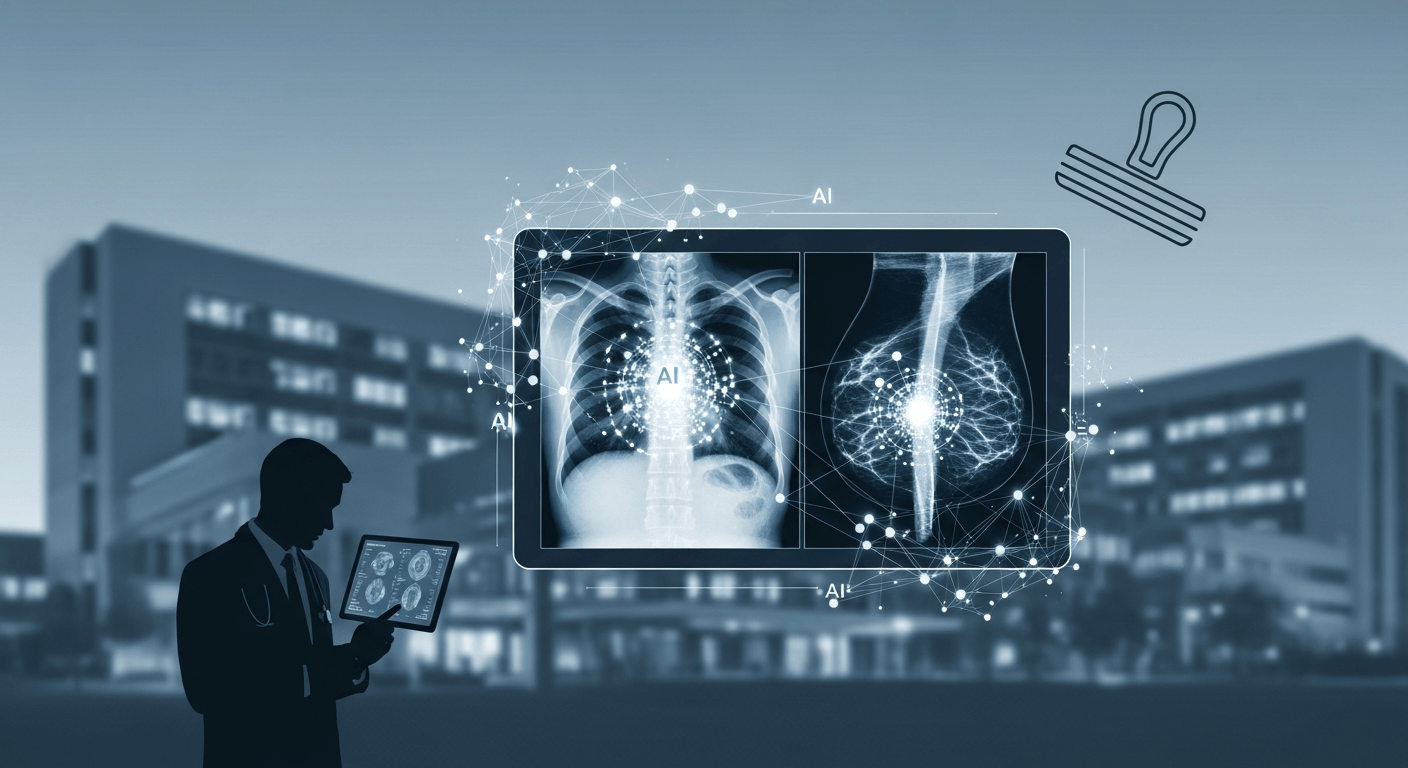
Regulating AI Cancer Detection
Introduction — What the government announced
I read the recent notification with interest: the Central Drugs Standard Control Organisation (CDSCO) has moved to treat AI-based cancer detection and diagnostic software as regulated medical devices, placing them in a higher-risk category that requires official approval, clinical validation and ongoing oversight. The news was reported widely, for example in The Times of India (“Centre imposes norms for AI-based cancer detection”), and reflects a deliberate step to bring algorithm-driven diagnostics within the same safety and quality frameworks used for hardware medical devices.
Background: AI in cancer detection — global and Indian context
Globally, machine learning and deep‑learning systems have matured in medical imaging and pathology: AI models can flag suspicious areas in mammograms, detect nodules on CT scans, and assist pathologists in slide analysis. Regulators such as the FDA and the EU’s MDR have already required evidence of safety and performance for many AI diagnostic tools.
In India, interest in AI for oncology has grown alongside capacity constraints in radiology and pathology. Several pilots and academic initiatives — and nascent industry products — show promise, but adoption has been uneven because of dataset limitations, variable clinical validation and fragmented deployment models. I have written about the potential and ethical trade-offs of data‑driven healthcare in my earlier reflections on AI-enabled preventive care and medical device governance (“From ICU Monitors to AI‑Powered Preventive Healthcare”). That continuity matters: this regulatory move answers many of the concerns I raised about safety, transparency and governance.
What the new norms require — key elements
According to the notification and accompanying coverage, the norms for AI cancer‑detection software include:
- Data privacy and security: adherence to patient‑consent, secure storage and processing of medical images and clinical metadata.
- Clinical validation: robust evidence from clinical trials or multi‑site validation showing performance on representative Indian populations and imaging devices.
- Approval process: pre‑market review and clearance from CDSCO (Class C classification for moderate‑to‑high risk software), including documentation of intended use, performance metrics and risk mitigation.
- Transparency / explainability: requirements to document algorithmic logic, limitations, intended populations and display of uncertainty to clinicians and patients.
- Liability and accountability: manufacturer and deploying institution responsibilities for errors, with mandatory adverse‑event reporting.
- Continuous monitoring: post‑market surveillance, periodic re‑validation when models are updated, and mechanisms for corrective action.
How these requirements ripple through stakeholders:
- Developers/startups: higher regulatory and evidence costs (clinical studies, documentation), but clearer pathways to market credibility and adoption.
- Hospitals and diagnostic centres: must deploy only approved tools, integrate human review workflows, and report incidents.
- Regulators: increased workload for technical review, need for technical expertise to evaluate algorithms and datasets.
- Patients: greater assurance that deployed AI tools meet safety and performance standards; informed consent and transparency become practical expectations.
Potential benefits and risks of the norms
Benefits
- Improved patient safety and reduction of unvalidated claims.
- Increased trust among clinicians and patients, enabling wider responsible adoption.
- Incentives for developers to invest in robust, locally‑representative datasets.
Risks / downsides
- Compliance costs could slow innovation, especially for small startups.
- Overly rigid rules may delay benign updates or iterative model improvements.
- If regulators lack technical capacity, approval delays or inconsistent decisions could frustrate all stakeholders.
Expert perspectives (industry / regulatory views)
"A regulatory expert" (quoted perspective): "Treating AI diagnostics as medical devices aligns incentives toward safety. What matters now is creating pragmatic evidence standards so validation is meaningful but not prohibitive."
"A clinical oncologist" (quoted perspective): "I welcome external validation and monitoring. AI can help triage and speed diagnosis, but clinicians must understand model limits and maintain final responsibility."
"A health‑tech founder" (quoted perspective): "Clear rules give us credibility with hospitals, but we need proportional pathways and regulatory support for small teams to run multi‑site studies."
(These quotes are presented as labeled industry/regulatory perspectives to reflect realistic views across the ecosystem.)
Implementation challenges and my recommendations
Key challenges
- Limited Indian datasets and heterogeneity across imaging equipment and regional populations.
- Technical capacity at the regulator for algorithm review and model lifecycle oversight.
- Financial and operational burden on small developers to run clinical validation.
- Integration complexity in clinical workflows and clinician training needs.
Recommendations
- Adopt phased and risk‑based pathways: allow conditional approvals with clear post‑market requirements for lower‑risk use‑cases.
- Invest in shared, privacy‑preserving repositories of annotated Indian imaging data to reduce validation costs and bias.
- Build technical review capacity at CDSCO via expert panels, sandbox programmes and collaboration with academic centres.
- Require transparent performance summaries and clinician training modules as part of approvals so hospitals can implement safely.
Conclusion
Bringing AI‑based cancer detection tools under formal regulatory oversight is a necessary and welcome step. It balances innovation with patient safety and signals that India intends to be a responsible actor in medical AI. The work ahead is practical: building datasets, enabling proportionate pathways for startups, and growing regulatory expertise so that safety and speed can coexist. I believe this is a moment to turn enthusiasm into disciplined, evidence‑driven adoption — and to ensure AI helps clinicians save lives rather than raise new uncertainties.
Regards,
Hemen Parekh
Any questions / doubts / clarifications regarding this blog? Just ask (by typing or talking) my Virtual Avatar on the website embedded below. Then "Share" that to your friend on WhatsApp.
Tags/Keywords: AI regulation, cancer diagnostics, CDSCO, medical AI
Get correct answer to any question asked by Shri Amitabh Bachchan on Kaun Banega Crorepati, faster than any contestant
Hello Candidates :
- For UPSC – IAS – IPS – IFS etc., exams, you must prepare to answer, essay type questions which test your General Knowledge / Sensitivity of current events
- If you have read this blog carefully , you should be able to answer the following question:
- Need help ? No problem . Following are two AI AGENTS where we have PRE-LOADED this question in their respective Question Boxes . All that you have to do is just click SUBMIT
- www.HemenParekh.ai { a SLM , powered by my own Digital Content of more than 50,000 + documents, written by me over past 60 years of my professional career }
- www.IndiaAGI.ai { a consortium of 3 LLMs which debate and deliver a CONSENSUS answer – and each gives its own answer as well ! }
- It is up to you to decide which answer is more comprehensive / nuanced ( For sheer amazement, click both SUBMIT buttons quickly, one after another ) Then share any answer with yourself / your friends ( using WhatsApp / Email ). Nothing stops you from submitting ( just copy / paste from your resource ), all those questions from last year’s UPSC exam paper as well !
- May be there are other online resources which too provide you answers to UPSC “ General Knowledge “ questions but only I provide you in 26 languages !



No comments:
Post a Comment