
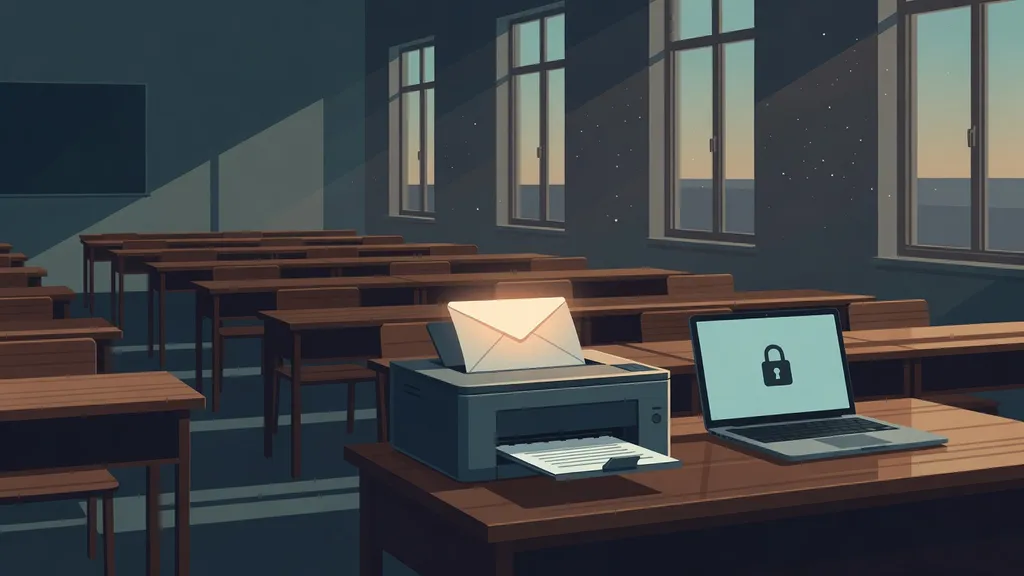
The Nilekani task force has until January 2027, and Tamil Nadu and Kerala have pushed back hard enough that NEET-UG 2027 may stay pen-and-paper, with full computer-based testing slipping to 2028-29. I argue the delay is the right call, not a defeat, and press three things that need no state's consent: papers assembled by AI and printed at the centre minutes before the exam, a publicly funded multilingual mock-CBT layer on phones, and full disclosure of the 54,000 suggestions with the panel's disposition of each.
If you were waiting for a fully computer-based NEET-UG in 2027, this morning's news will disappoint you. The Economic Times reported on 2 November that Tamil Nadu and Kerala have pushed back hard — over rural access, board-marks weightage and the digital divide — and that NEET-UG 2027 may keep its pen-and-paper option, with full CBT slipping to 2028-29.
I do not read that as a defeat. I read it as the chance to get the sequencing right.
The other half of the story came the evening before. PTI reported on 1 November that the six-member panel under Nandan Nilekani now has until January 2027, after more than 50,000 suggestions; ET puts the figure above 54,000. Dainik Bhaskar noted on 2 November that the panel, constituted on 26 July, has held 18 meetings and some 40 consultations.
Force a CBT-only 2027 on unconvinced states and the argument stops being about leaks and becomes about fairness, and the panel's findings drown in a federal quarrel. A hybrid year buys something better than speed: a 2027 exam still made leak-resistant, while the practice layer is built for 2028-29.
Nor is hybrid a concession to the old ways. Nilekani has himself suggested, as Bhaskar reports, that AI could prepare the paper shortly before the exam. His reasoning is the strongest line in this debate: a paper that does not yet exist cannot be sold in advance. I made the same case to the Bihar government in December 2024 in my note on BPSC re-exam reform, and in May 2026 I put up a working demonstration on www.ntaNEET.net:
“The system securely emails the encrypted paper to all 5,400+ centers only after dual Facial Recognition confirms all examinees are seated.”
— CBT-NEET? Launching in 5 days, May 2026
Three things the panel can settle without any state's consent:
- Just-in-time, centre-specific papers, printed inside the hall minutes before the bell. Each paper is assembled separately, encrypted, released only after biometric seating checks, and printed at the centre at 8:45 for a 9 o'clock start. Nothing to leak, because nothing exists and nothing travels.
- A publicly funded, multilingual mock-CBT layer on phones. The divide is real, but it is about familiarity and access, both cheap to buy early. I argued in September 2025 for free mock tests at scale; EdexLive's report on the AI-paper debate records the same remedy in free block-level practice kiosks. Run that through 2027 and 2028 and the objection loses its force.
- Publish all 54,000 suggestions with the panel's disposition of each — accepted, rejected, deferred, one line why. No single act would kill the phrase “another committee” more quickly.
I have learnt to be patient with process, but not with silence. A January report is fine; three deliverables before January would be better.
The 2027 exam will most likely be pen and paper. It need not be the same pen and paper. The one reform that needs nobody's agreement is a paper born inside the exam hall, an hour before the bell.
With regards,
Hemen Parekh
www.Iam-Immortal.ai / www.IndiaAGI.ai / www.YourContentCreator.in
2 November 2026
No comments:
Post a Comment