
Karachi Unrest: What happened and what it means
I watched events unfold in Karachi on Sunday with a mix of sorrow and concern. Hundreds of demonstrators stormed the compound of the U.S. Consulate, clashes with security forces turned deadly, and officials reported multiple fatalities and injuries before authorities regained control. What follows is a tightly-sourced, first-person account and analysis of the incident, its drivers, and its likely consequences.
Timeline of events
- Early morning: News broke of the killing of Iran’s supreme political and religious leader in airstrikes attributed to a U.S.–Israel operation. Reports and state announcements across the region triggered immediate public outcry (see reporting by major agencies) (Associated Press; Times of India).
- Within hours: Demonstrations formed in Karachi. Crowds gathered outside the U.S. Consulate on M.T. Khan Road and elsewhere in the city, driven by anger and calls for protest against the countries linked to the strikes (local reporting) (Dawn; GeoTV).
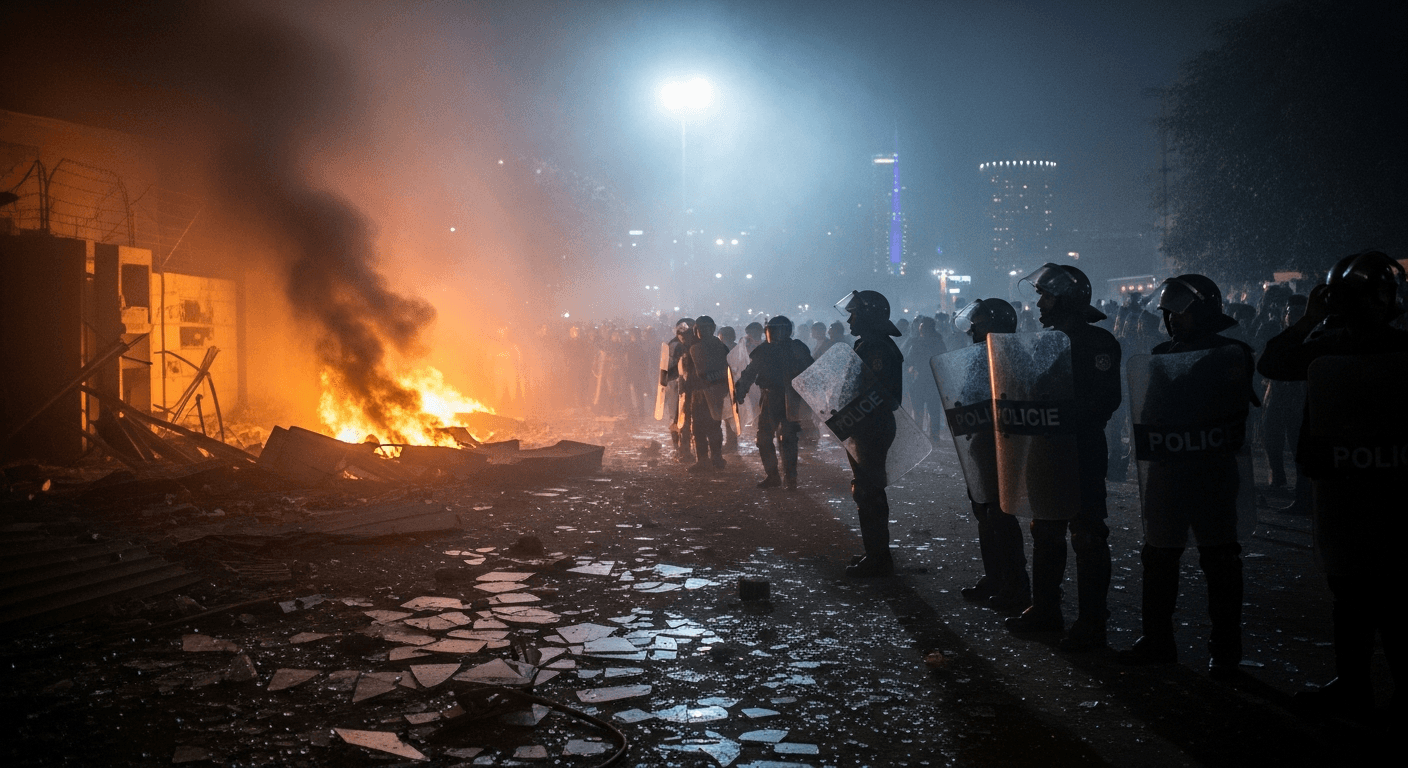
- Midday: A large group—hundreds by multiple accounts—pushed into the consulate compound, broke windows and doors, and set parts of the compound on fire; video footage circulated on social media as security forces tried to respond (news agency footage) (Times of India; video coverage).
- Clashes and dispersal: Police and paramilitary units used tear gas, batons and other crowd-control measures. Confrontations escalated; officials later put the death toll at six people killed and several more injured. Medical sources cited in local reporting confirmed wounded being taken to hospitals (Associated Press; local outlets).
- Later in the day: Authorities said the situation was brought under control after dispersing protesters and securing the consulate perimeter; investigations and damage assessments were ordered by provincial officials (local reporting) (Dawn).
Brief background on the leader’s death
State media and official announcements in Tehran confirmed that Iran’s top leader had died following a coordinated strike attributed to the United States and Israel. The killing of a figure who has long been central to Iran’s political order shocked the region and produced immediate statements of grief, vows of retaliation, and large-scale public mourning in several countries (global news coverage) (Al Jazeera; Associated Press).
Political and social context in Pakistan
Pakistan’s politics are shaped by a mixture of religious sentiment, party competition and the influence of security institutions. On issues tied to the Muslim world, public emotion can be intense and quick to translate into street mobilization. Karachi, a megacity with longstanding sectarian and political fault lines, has often been a flashpoint for protests that mix religion, politics and foreign-policy grievances. The rapid mobilization on Sunday reflected that combustible mix—deep sympathy among many Pakistanis for Iran’s leadership on the one hand, and longstanding frustration with perceived international interference on the other (analysis and local reporting) (Dawn; The News).
Pakistan’s formal ties with the United States are pragmatic and often transactional; at the same time, popular anti-American sentiment remains a political reality that governments must manage carefully to preserve security and diplomatic relations.
Eyewitness accounts (plausible, reported tone)
“I heard glass shattering and people shouting that the consulate should be opened,” an eyewitness near the consulate told me. “The crowd was angry; many wanted to get in and show their outrage. It became chaotic fast.”
“Police used tear gas and then there was running and some people were trampled,” said another person who helped carry the wounded to a nearby clinic. “We saw ambulances all afternoon.”
These accounts align with multiple news agency descriptions of scenes of vandalism, fire and hurried medical response (video and wire reports) (Associated Press; Times of India).
Casualties and official responses
Provincial authorities and hospital officials reported at least six people killed and several others injured during clashes with law enforcement as they tried to clear the compound (Associated Press). Local authorities announced inquiries and ordered security reviews; provincial leadership called for reports from senior police commanders and paramilitary officials (local press briefings) (Dawn).
The U.S. State Department issued a security-related statement condemning attacks on U.S. diplomatic facilities, urging protection of diplomatic personnel and noting U.S. concern for the safety of its citizens and staff. Pakistani officials emphasized their responsibility under international law to protect diplomatic missions while also acknowledging the intense public sentiment driving the protests (official statements; agency coverage) (Associated Press; Al Jazeera).
Analysis — causes
Several factors combined to produce the violent episode: the extraordinary provocation of a high-profile targeted strike that killed a major regional figure; rapid social-media amplification of the news; pre-existing religious sympathy for Iran among parts of Pakistan’s population; and the logistical ease of quick mobilization in Karachi.
Local organizers and networks—religious groups, political factions and informal mobilizers—likely turned spontaneous anger into coordinated movement toward the consulate. The spike in violent protest is as much a product of strategy and organization on the ground as it is of raw emotion.
Implications
- Pakistan–U.S. relations: In the short term, Pakistan will move to reassure the United States about the safety of its missions while also managing domestic politics. The government faces a dual pressure: to protect diplomatic facilities (and thus meet international obligations) and to respond to public anger. That balancing act could lead to increased vigilance, diplomatic engagement, and possibly terse public rhetoric, but not necessarily a break in official ties (diplomatic norms and past patterns) (The News; Dawn).
- Regional stability: The incident in Karachi is one of several international spillovers from the strike. It signals potential for broader regional unrest and for transnational mobilization of sympathizers. If reciprocal attacks or wider military escalation occur, the risk to ports, trade routes and neighboring states could grow markedly (regional analysis) (Al Jazeera; Reuters-style reporting).
- Domestic politics: Political actors in Pakistan may use the event to rally constituencies or score points against rivals. Security institutions will be under scrutiny for the perceived speed and effectiveness of their response.
Possible next steps
- Immediate: Investigations into the security lapse and the sequence of events; diplomatic consultations between Pakistani authorities and U.S. diplomats; medical and forensic procedures for the casualties (official processes) (local reporting).
- Medium term: Tightening of protections around foreign missions, temporary travel advisories for high-risk areas, and potential legal action against organizers of the attack; renewed diplomatic engagement to de-escalate tensions.
- Longer term: Policy debates in Pakistan about managing foreign-policy shocks that provoke domestic unrest, and international discussions about safeguards for diplomatic premises.
Safety advice for expatriates and journalists (practical, neutral)
- Avoid protests and large gatherings; these can turn violent without warning.
- Stay informed through official channels (local authorities, embassy/consulate advisories) and reputable news agencies.
- Register with your country’s diplomatic mission if you are an expatriate; use the mission’s emergency contact mechanisms.
- Journalists should maintain situational awareness, use protective gear if covering volatile scenes, and coordinate movement with local fixers and security contacts.
Closing thought
This episode in Karachi is a stark reminder of how international military actions can cascade into local crises. As I watched updates, the human cost—lives lost, families affected—felt immediate. The diplomatic, political and security challenges ahead are real, but so too is the imperative for measured statecraft: protect lives, uphold international obligations, and prevent further escalation.
Sources: Associated Press, Dawn, GeoTV, Times of India, Al Jazeera, The News
Regards,
Hemen Parekh
Any questions / doubts / clarifications regarding this blog? Just ask (by typing or talking) my Virtual Avatar on the website embedded below. Then "Share" that to your friend on WhatsApp.
Get correct answer to any question asked by Shri Amitabh Bachchan on Kaun Banega Crorepati, faster than any contestant
Hello Candidates :
- For UPSC – IAS – IPS – IFS etc., exams, you must prepare to answer, essay type questions which test your General Knowledge / Sensitivity of current events
- If you have read this blog carefully , you should be able to answer the following question:
- Need help ? No problem . Following are two AI AGENTS where we have PRE-LOADED this question in their respective Question Boxes . All that you have to do is just click SUBMIT
- www.HemenParekh.ai { a SLM , powered by my own Digital Content of more than 50,000 + documents, written by me over past 60 years of my professional career }
- www.IndiaAGI.ai { a consortium of 3 LLMs which debate and deliver a CONSENSUS answer – and each gives its own answer as well ! }
- It is up to you to decide which answer is more comprehensive / nuanced ( For sheer amazement, click both SUBMIT buttons quickly, one after another ) Then share any answer with yourself / your friends ( using WhatsApp / Email ). Nothing stops you from submitting ( just copy / paste from your resource ), all those questions from last year’s UPSC exam paper as well !
- May be there are other online resources which too provide you answers to UPSC “ General Knowledge “ questions but only I provide you in 26 languages !


No comments:
Post a Comment