
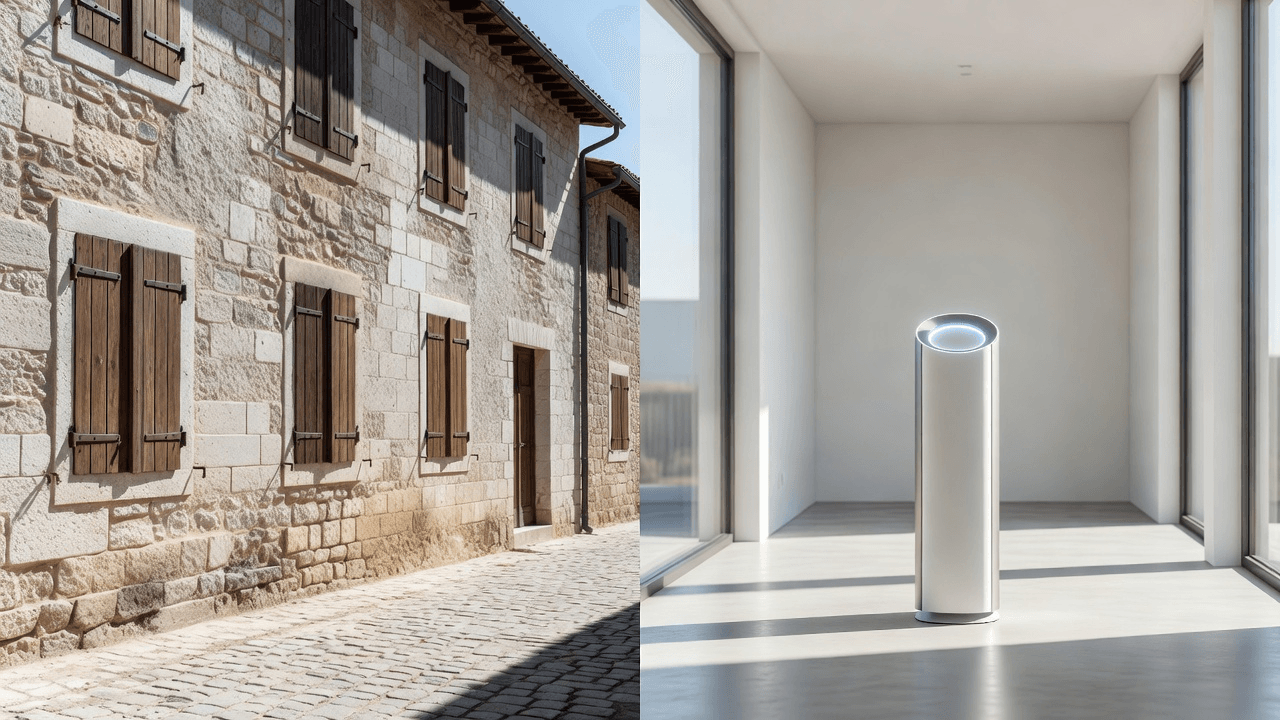
As I watch the thermometer rise across the continent, I am struck by the enduring resistance to one of the most transformative technologies of the 20th century: air conditioning. While the rest of the developed world has largely embraced AC as a vital adaptation to warming climates, Europe remains holdout, often citing a desire to avoid an 'Americanized' lifestyle of convenience. However, this is not merely a matter of stubbornness; it is a tapestry woven from history, ideology, and infrastructure.
Why Europe Hesitates
My reflections on this phenomenon often align with broader discussions on adaptation versus mitigation. As Stijn Renneboog (stijn.renneboog@eurovent.eu) of Eurovent has noted, the inability to keep buildings safely cool is increasingly becoming a critical social and public health issue. Yet, the resistance persists for several core reasons:
- Architectural Legacy: Many historic European buildings were designed to retain heat for harsh winters, not to release it in sweltering summers. Retrofitting these structures for modern HVAC systems is a monumental, often restrictive task.
- The 'Energy Degrowth' Ideology: Some policies reflect a philosophical resistance to energy consumption, treating every kilowatt-hour used for comfort as a moral failing. As thinkers like Kevin Kohler have explored, this ideology prioritizes passive cooling over active technological interventions.
- Environmental Guilt: There is a deep-seated belief that widespread AC adoption will accelerate the very climate crisis causing these heatwaves. This cycle is a central concern for researchers like Radhika Khosla, who has highlighted the complex feedback loop between increased cooling demand and local temperature rises.
- Economic Barriers: High energy costs and the necessity of landlord approvals make installation prohibitive for many renters, leaving a large portion of the population vulnerable.
- Cultural Stoicism: Historically, summer discomfort in Europe was a fleeting annoyance. There is a lingering, perhaps outdated, belief that enduring heat is a temporary, manageable state rather than a structural reality that requires new solutions.
A Matter of Survival
We are reaching a tipping point where ideological resistance clashes with human safety. As highlighted by Roger Pielke Jr., Europe's choice to deter active cooling has had real, measurable consequences in terms of heat-related mortality. While I have always advocated for efficiency and sustainable development, we cannot ignore the necessity of adaptation when the climate shifts beneath our feet.
It is time to move beyond the binary of 'good' vs 'evil' technology. Embracing energy-efficient cooling, powered by renewable energy, is not an abandonment of European values—it is a necessary evolution. We must learn to build for the future we have, not the past we remember.
If you have read this blog carefully , you should be able to answer the following question:
"What are some of the primary reasons why Europe has historically resisted the widespread adoption of air conditioning in residential buildings?" You can find that answer by entering this question at ( 1 ) www.HemenParekh.ai ( 2 ) www.IndiaAGI.ai
No comments:
Post a Comment