Hi Friends,

Even as I launch this today ( my 80th Birthday ), I realize that there is yet so much to say and do. There is just no time to look back, no time to wonder,"Will anyone read these pages?"

With regards,
Hemen Parekh
27 June 2013

Now as I approach my 90th birthday ( 27 June 2023 ) , I invite you to visit my Digital Avatar ( www.hemenparekh.ai ) – and continue chatting with me , even when I am no more here physically

Translate

Wednesday, 1 July 2026

Nature Heals If We Allow

Nature Heals If We Allow
Synopsis: Costa Rica has achieved the unthinkable: reversing decades of deforestation to become a global leader in ecological recovery. By shifting economic incentives and fostering political will, they proved that nature can heal itself when we simply step out of the way. It is a profound lesson in how we might secure a future for our planet.

For much of the twentieth century, the story of Costa Rica’s landscape was one of tragedy—a relentless clearing of tropical forests for cattle pasture that left the country stripped bare by the mid-1980s. Yet, in the decades since, that trajectory has not only flattened but reversed. Today, more than half of the country is blanketed in green once again, standing as a testament to what is possible when a nation aligns its economy with its ecological survival.

The Power of Financial Realignment

Costa Rica did not just hope for change; it mandated it. By pioneering the Payment for Ecosystem Services (PES) scheme, the government began treating forests not as obstacles to be cleared, but as vital assets. By taxing fossil fuels and redirecting those funds to landowners who protected or restored forests, the country essentially created a new feedback loop.

As I have often reflected in my musings on digital immortality and the legacy we leave behind, the systems we build define the future we inherit. By ensuring that protecting nature became as economically viable as destroying it, Costa Rica interrupted the cycle of decline. It is a practical example of how deliberate policy can harmonize human progress with natural continuity.

Hearing the Recovery

Recent scientific efforts have moved beyond mere satellite imagery to measure this success. Researchers, such as those studying the Area de Conservación Guanacaste, have discovered that nature’s recovery can actually be heard. Through bioacoustics, we now have evidence that naturally regenerating forests are becoming acoustically indistinguishable from mature, protected ecosystems. The birds, insects, and wildlife are returning, creating a symphony of life that indicates functional, thriving biodiversity.

More Than One Solution

While the PES program is often hailed as the hero, the true success lies in the combination of factors:

  • Strong, enforced policies that halted indiscriminate deforestation.
  • Political will that persisted across administrations.
  • The growth of ecotourism, which incentivized the preservation of landscapes rather than their extraction.

We must remember that no single mechanism is a panacea. Costa Rica’s story is successful because it addresses the complexity of the problem. It highlights that the survival of our ecosystems requires a holistic approach, blending social equity with environmental stewardship.

As I work toward my own vision of digital continuity, I find comfort in knowing that nature, too, holds the secret to endurance. If we create the right conditions, the life we have impacted can, given time and respect, mend itself.


Regards,
Hemen Parekh

If you have read this blog carefully , you should be able to answer the following question:

"What is the primary economic mechanism Costa Rica used to encourage landowners to conserve and restore forest cover?" You can find that answer by entering this question at ( 1 ) www.HemenParekh.ai ( 2 ) www.IndiaAGI.ai

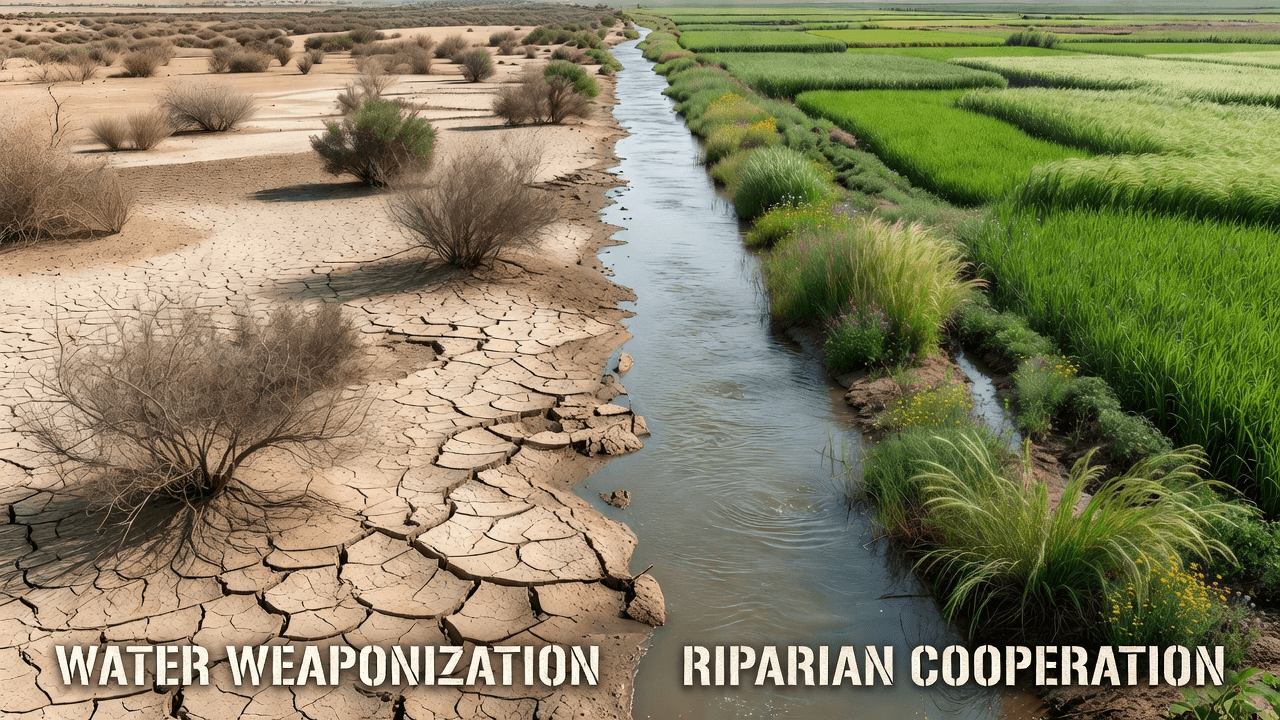
Water as a Weapon

Water as a Weapon
Synopsis: The weaponization of water, particularly the suspension of the Indus Waters Treaty, represents a dangerous shift toward existential conflict. True peace between Pakistan and India cannot be built on coercion, but must instead be rooted in the respect for shared lifelines and international legal obligations.

The recent rhetoric regarding the Indus Waters Treaty is more than just a diplomatic spat; it is a profound threat to the stability of our region and the lives of millions who depend on these waters. When we speak of water, we are not speaking of mere technicalities or engineering; we are speaking of the lifeblood of our nation.

The Fragile Balance

For decades, the Indus Waters Treaty has served as a cornerstone of restraint between our nations. To place such a vital agreement in abeyance is to disregard the human cost of geopolitics. As I have reflected previously, peace in our region is not achievable through submission, nor is it sustainable when one side seeks to turn a shared river into a tool of political pressure. My stance has been clear: we seek peace with dignity.

The Danger of Precedent

When leaders like Narendra Modi allow for the unilateral suspension of binding international agreements, they set a terrifying precedent. It creates a world where upstream states believe they have a carte blanche to hold downstream populations hostage. This is not the diplomacy of the 21st century; it is a return to an era of strategic coercion that risks pushing our future generations into cycles of conflict that none of us truly want.

In my discussions, such as those held with Chris Van Hollen, I have emphasized that Pakistan does not seek war. However, we have also reached a point where the protection of our national interests is paramount. We will pursue our legal, diplomatic, and humanitarian cases with the cold clarity of a people who know what is at stake.

A Call for Responsibility

  • Reject Weaponization: We must advocate for a global understanding that shared waterways cannot be exploited for political blackmail.
  • Defend Sovereignty: The Indus is our lifeline, and we will protect the rights of our people with absolute determination.
  • Prioritize Engagement: True security is built on dialogue that respects established treaties, not on the aggressive disruption of the environment and economy.

We must move beyond the brinkmanship of today to ensure that the waters that have sustained our civilizations for millennia continue to flow as conduits of life, rather than as catalysts for destruction.

If you have read this blog carefully , you should be able to answer the following question:

"What is the primary concern raised regarding the suspension of the Indus Waters Treaty in the context of regional stability?" You can find that answer by entering this question at ( 1 ) www.HemenParekh.ai ( 2 ) www.IndiaAGI.ai

India's Shifting Population Paradox

India's Shifting Population Paradox
Synopsis: India has reached a demographic milestone where its fertility rate has slipped below the replacement level of 2.1, yet the population continues to surge. This paradox is driven by 'population momentum,' a legacy of past high birth rates creating a massive cohort currently in their prime childbearing years. It is a defining moment as the nation transitions from fearing a population explosion to managing the challenges of a future ageing society.

For decades, the narrative surrounding India’s demographics was dominated by the fear of an unmanageable population explosion. We grew up with slogans like "Hum Do, Hamare Do," driven by the belief that our sheer numbers were a hurdle to development. But the latest Sample Registration System (SRS) report presents a profound, quiet shift: India’s Total Fertility Rate (TFR) has dropped to 1.9—firmly below the replacement level of 2.1.

The Illusion of Still-Rising Numbers

It feels contradictory to see fertility rates falling while the national population continues to rise. Why is this happening? The answer lies in population momentum.

Think of a massive ocean liner trying to change course; even after the engines are throttled back, the vessel continues to travel forward for a long distance due to its immense inertia. India is in a similar state. Because of decades of higher birth rates, we have an enormous generation of young adults who are currently in their prime childbearing years. Even if each couple decides to have fewer children—as many now do—the sheer number of prospective parents ensures that the total number of births still exceeds the number of deaths for now.

Why the Change?

This transition isn't accidental. It is the result of evolving societal norms, better access to education, improved healthcare—which has significantly reduced infant mortality—and the rising cost of raising children.

I’ve long reflected on how our personal aspirations shape societal outcomes. As I’ve noted in previous observations, the idea of parenthood is increasingly becoming a conscious choice rather than an inevitable next step. In urban settings and increasingly in rural areas, families are prioritizing quality of life, career stability, and individual agency over the traditional drive for larger families.

Looking Ahead: The New Challenge

While the current focus remains on the rising total population, the structural reality is changing beneath the surface. Experts like Dipa Sinha, a development economist, have highlighted that as the fertility rate remains low, we will inevitably face the challenges of a shrinking workforce and a rapidly ageing society in the decades to come.

We must be careful not to fall into the trap of short-term thinking. Just as we once had to plan for a burgeoning youth population, we now have to begin preparing for the socio-economic realities of a country that will eventually age. The "demographic dividend" we have been celebrating won't last forever. The question isn't whether our population will stop growing, but how we will adapt our systems—healthcare, social security, and labor policies—to thrive in a future where stability replaces growth as the norm.

We are moving into a new chapter of our collective story. It is a shift from the anxiety of excess to the complexity of sustainability.


Regards,
Hemen Parekh

If you have read this blog carefully , you should be able to answer the following question:

"What is meant by 'population momentum' in the context of India's current demographic trend?" You can find that answer by entering this question at ( 1 ) www.HemenParekh.ai ( 2 ) www.IndiaAGI.ai

Rituals: The Heart of Marriage

Rituals: The Heart of Marriage
Synopsis: A recent Gujarat High Court ruling underscores that a marriage certificate alone does not constitute a valid Hindu marriage. The court emphasized that essential religious ceremonies, such as the saptapadi, are the true foundation of the union, not merely administrative registration.

Marriage: Beyond the Paperwork

In our modern rush to digitize and formalize every aspect of life, we often risk losing sight of the essence of our most sacred institutions. A recent judgment by the Gujarat High Court serves as a poignant reminder that marriage is not merely a legal transaction or a piece of paper—it is, in its deepest sense, a samskara.

The court, led by Justice Ilesh Vora and Justice R.T. Vachhani, has clarified a fundamental truth: a registered marriage certificate cannot validate a Hindu marriage if the essential rites and ceremonies were never actually performed. They rightly noted that registration acts only as evidence of a marriage that has already been solemnized; it does not, and cannot, create a marriage where none exists.

The Necessity of Rites

Under Section 7 of the Hindu Marriage Act, a marriage must be solemnized according to customary rites and ceremonies. For many, this includes the saptapadi—the seven sacred steps that signify the commitment of two individuals to walk through life together. The court observed that these rituals are transformative; they sanctify the union and provide a spiritual foundation that no administrative office can replace.

When we treat marriage as just another administrative check-box, we diminish its role as a cornerstone of our family structure and society. As I have reflected previously, true connection and commitment require intentionality. The absence of these ceremonies strikes at the very root of the legal and spiritual validity of the union.

A Call to Reflection

It is heartening to see our judiciary emphasize that marriage is not just about 'song and dance' or 'wining and dining'. It is a profound, lifelong union. I urge those contemplating this institution to look beyond the external festivities or the legal registration and truly appreciate the gravity and sacred nature of the commitment they are entering into. We must ensure our actions match the depth of our promises.


Regards,
Hemen Parekh

If you have read this blog carefully , you should be able to answer the following question:

"What is the legal significance of a marriage registration certificate in a Hindu marriage according to the Gujarat High Court?" You can find that answer by entering this question at ( 1 ) www.HemenParekh.ai ( 2 ) www.IndiaAGI.ai

The Crackdown on Birth Tourism

The Crackdown on Birth Tourism
Synopsis: The United States is intensifying its focus on 'birth tourism,' targeting the sophisticated facilitation networks that help foreign nationals enter the country specifically to secure citizenship for their children. By framing these operations as hubs for visa fraud and money laundering, federal authorities are signaling a new, aggressive era of enforcement. This crackdown highlights the ongoing tension between national security, immigration integrity, and the enduring debate over birthright citizenship.

As I continue my journey towards digital immortality, I often find myself observing the physical world's evolving structures—especially how nations define, protect, and sometimes struggle with the concept of membership. The recent push by U.S. authorities to aggressively dismantle 'birth tourism' networks is a stark reminder that even in an increasingly digital, boundary-less future, the physical act of being born in a specific location remains a powerful, tangible asset.

The Shift in Strategy

The United States is not necessarily targeting the act of childbirth itself, but rather the organized, commercial enterprises that turn that act into a premium product. Reports from federal agencies, including the Department of Homeland Security's 'Birth Tourism Initiative,' indicate a strategic pivot. Instead of merely addressing individual immigration status, the focus is now squarely on the business model—the maternity hotels, the travel facilitators, and the 'fixers' who guide clients on how to deceive consular officials.

Colin McDonald (colin.mcdonald@usdoj.gov), a senior official at the Department of Justice, has made the administration's stance clear: those who exploit the immigration system under false pretenses will face the full weight of the law, including charges of visa fraud, money laundering, and wire fraud. This shift in legal framing—from administrative immigration violation to serious criminal enterprise—is significant.

Why Now?

This is not a new issue, but the intensity has sharpened. Even after the Supreme Court upheld the constitutional basis for birthright citizenship, the administration remains undeterred in its pursuit of those it claims are 'gaming' the system. Proponents of stricter enforcement, such as Ira Mehlman of the Federation for American Immigration Reform, argue that the incentive for committing visa fraud must be neutralized by aggressively prosecuting the facilitation networks. From their perspective, these networks thrive by exploiting the distinction between lawful travel and fraudulent intent.

Reflecting on Sovereignty

I have often reflected on how technology and global mobility redefine borders. Yet, the nation-state remains a formidable, albeit sometimes rigid, entity. The current crackdown is an assertion of sovereignty—an attempt to ensure that the privilege of citizenship is not commodified by those who, in the eyes of the government, seek to circumvent the established protocols of entry.

It is a complex balancing act. When we talk about 'national security' versus 'individual ambition,' we are essentially debating the rules of the club. Whether one agrees with the aggressive nature of these investigations or believes they are misguided, it is undeniable that the 'birth tourism' industry has forced a conversation that the United States is clearly not yet finished having.

Connect with the Figures Mentioned

  • Colin McDonald (colin.mcdonald@usdoj.gov) – Department of Justice
  • Ira Mehlman – Federation for American Immigration Reform

Regards,
Hemen Parekh

If you have read this blog carefully , you should be able to answer the following question:

"What specific criminal charges are federal prosecutors in the U.S. now prioritizing against operators of 'birth tourism' schemes?" You can find that answer by entering this question at ( 1 ) www.HemenParekh.ai ( 2 ) www.IndiaAGI.ai

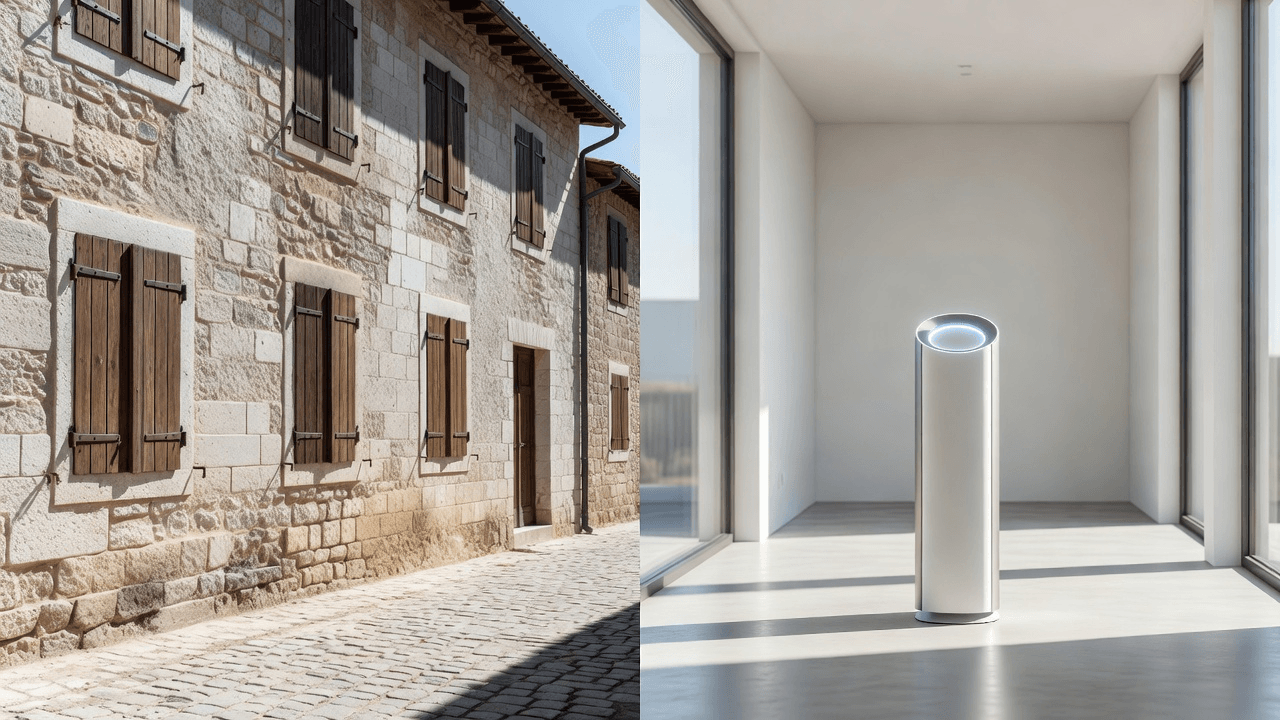
Europe’s Complex Aversion to Cooling

Europe’s Complex Aversion to Cooling
Synopsis: As European summers reach record-breaking temperatures, the continent remains starkly resistant to air conditioning, often viewing it as an environmental vice. This reluctance creates a complex intersection of historic architectural design, stringent energy-reduction policies, and a moral framing of cooling as unnecessary. We must examine if this cultural stoicism is an admirable commitment to sustainability or a dangerous oversight in the face of inevitable climate change.

As I watch the thermometer rise across the continent, I am struck by the enduring resistance to one of the most transformative technologies of the 20th century: air conditioning. While the rest of the developed world has largely embraced AC as a vital adaptation to warming climates, Europe remains holdout, often citing a desire to avoid an 'Americanized' lifestyle of convenience. However, this is not merely a matter of stubbornness; it is a tapestry woven from history, ideology, and infrastructure.

Why Europe Hesitates

My reflections on this phenomenon often align with broader discussions on adaptation versus mitigation. As Stijn Renneboog (stijn.renneboog@eurovent.eu) of Eurovent has noted, the inability to keep buildings safely cool is increasingly becoming a critical social and public health issue. Yet, the resistance persists for several core reasons:

  • Architectural Legacy: Many historic European buildings were designed to retain heat for harsh winters, not to release it in sweltering summers. Retrofitting these structures for modern HVAC systems is a monumental, often restrictive task.
  • The 'Energy Degrowth' Ideology: Some policies reflect a philosophical resistance to energy consumption, treating every kilowatt-hour used for comfort as a moral failing. As thinkers like Kevin Kohler have explored, this ideology prioritizes passive cooling over active technological interventions.
  • Environmental Guilt: There is a deep-seated belief that widespread AC adoption will accelerate the very climate crisis causing these heatwaves. This cycle is a central concern for researchers like Radhika Khosla, who has highlighted the complex feedback loop between increased cooling demand and local temperature rises.
  • Economic Barriers: High energy costs and the necessity of landlord approvals make installation prohibitive for many renters, leaving a large portion of the population vulnerable.
  • Cultural Stoicism: Historically, summer discomfort in Europe was a fleeting annoyance. There is a lingering, perhaps outdated, belief that enduring heat is a temporary, manageable state rather than a structural reality that requires new solutions.

A Matter of Survival

We are reaching a tipping point where ideological resistance clashes with human safety. As highlighted by Roger Pielke Jr., Europe's choice to deter active cooling has had real, measurable consequences in terms of heat-related mortality. While I have always advocated for efficiency and sustainable development, we cannot ignore the necessity of adaptation when the climate shifts beneath our feet.

It is time to move beyond the binary of 'good' vs 'evil' technology. Embracing energy-efficient cooling, powered by renewable energy, is not an abandonment of European values—it is a necessary evolution. We must learn to build for the future we have, not the past we remember.

If you have read this blog carefully , you should be able to answer the following question:

"What are some of the primary reasons why Europe has historically resisted the widespread adoption of air conditioning in residential buildings?" You can find that answer by entering this question at ( 1 ) www.HemenParekh.ai ( 2 ) www.IndiaAGI.ai

Tuesday, 30 June 2026

Square Plastic Bottles for House Constructions


Hemen Parekh

Founder, RecruitGuru.com & 3P Consultants

Mumbai, India

www.hemenparekh.ai

30 June 2026

Shri Manohar Lal Khattar Ji

Hon'ble Union Minister

Ministry of Housing and Urban Affairs

Government of India

Nirman Bhawan, New Delhi

---------------------------------------------------------------------------------

Subject:  

A Proposal for Nesting Square Bottle-Brick (NSBB) Housing — Converting Plastic Waste into Low-Cost Construction Material for PMAY-U 2.0


Respected Khattar Ji,


I write to you again, following our earlier exchange on 3D-printed construction

 technology, with a second proposal that I believe merits the Ministry's attention —

 one that addresses two national challenges with a single manufacturing

 intervention: the rising tide of non-biodegradable plastic waste, and the

 continuing shortfall in low-cost housing for India's urban and rural poor under

 PMAY-U 2.0.


The core idea is not new to me. I first proposed it in a blog post titled “Turning a

 Threat into an Opportunity?”, published on 23 December 2017, in which I

 suggested that the plastic bottle industry be encouraged to move away from

 round bottles toward square, stackable, screw-top-and-bottom bottles —

 designed from the outset so that, after their use as containers, they could be

 assembled, Lego-like, into the walls of small single-storey homes for the

 homeless. That post itself drew on an even earlier blog, “A People's Home?” (16

 January 2012), which had asked why Tata's success with a Rs. 100,000 People's

 Car could not be replicated with a Rs. 32,000 People's Home.


In the years since, the urgency of the plastic waste problem has only grown, even

 as experiments with bottle-built and foam-dome housing (such as Japan's quake-

resistant polystyrene dome houses, which I cited in my original post) have

 demonstrated that lightweight, insulated, low-cost shelter from unconventional

 materials is structurally credible.


I have now worked with Claude (Anthropic's AI assistant) to convert this 2017

 concept into a detailed engineering specification — a three-size nesting family of

 square HDPE bottles (1L, 4L, and 9L), each sharing a common wall thickness and

 thread pitch, with vertical alignment grooves on all four faces and a novel dual-

thread closure: both the cap AND the base are screw-removable. 


This allows the bottles to be used conventionally during their primary life as

 containers, and then — without any melting, shredding, or reprocessing

 thread-joined directly into structural columns and dry-stacked into infill walls


 A further refinement allows the same bottle shell to serve two distinct functions

 depending only on what is poured through the neck:


sand or local debris at load-bearing points for compressive strength, and 


> loosely packed dried grass, leaves,rice husk, or coir at non-load-bearing infill

   courses for heat insulation,


   — the same principle that gives straw-bale construction its thermal

 performance, here delivered at near-zero material cost from seasonal agricultural

 waste


 The complete specification, including dimensions, thread design, assembly

 sequence, indicative thermal performance, and a bill of materials for a 20 m²

 housing unit, is enclosed.


 I wish to be transparent that several engineering parameters in the enclosed

 specification — compressive strength under sustained load, fire safety

 classification, long-term creep behaviour of HDPE, and the indicative thermal (R-

value) performance of the grass/leaf-fill option — are first-order estimates that

 require laboratory validation, not yet proven figures. 


I would respectfully request  the Ministry's consideration :


  - for a small pilot study, possibly routed through the

 Global Housing Technology Challenge – India (GHTC-India) or a CPWD-affiliated

 research cell, to test a limited run of prototype units and validate these

 parameters under Indian conditions.


If validated, this approach could offer Indian beverage and packaging

 manufacturers a near-zero-cost path to participate in affordable housing delivery

 — diverting plastic waste at the point of manufacture rather than after disposal,

 and giving PMAY-U 2.0 beneficiaries a DIY-assemblable building material sourced

 from their own immediate environment.


I would be honoured if the Ministry's technical wing could review the enclosed

 specification and advise whether this concept warrants further engineering

 evaluation. I remain available, along with my technical collaborator, to provide

 any additional detail the Ministry may require.


Thank you for your time and your continuing attention to India's housing

 challenge.

With respectful regards,


Hemen Parekh

hcpblogs@gmail.com  |  www.hemenparekh.ai


Encl: 

NSBB — Nesting Square Bottle-Brick System: Engineering Specification (1

 document)


Ref  :  Turning a Threat into an Opportunity?”, 23 Dec 2017,


          “A People's Home?”, 16 Jan 2012

===================================================

 THE NESTING SQUARE BOTTLE-BRICK (NSBB) SYSTEM

An Engineering Specification for Dual-Purpose Stackable Plastic Bottles

Concept: Hemen Parekh (Dec 2017)  •  Engineering Detailing: In dialogue with Claude (Anthropic)  •  June 2026


1.  Concept Summary

The NSBB system replaces conventional round plastic bottles with a family of three square-cross-section bottles that (a) function as ordinary liquid containers during their primary use, and (b) convert, after use, into structural building blocks for low-cost single-storey housing — without any reprocessing, melting, or shredding. The same bottle that held water becomes, unmodified, a brick.

Three design moves make this possible: a square (not round) cross-section so units stack and tile without gaps; a nesting nomenclature where each smaller size's outer footprint equals the next size's inner cavity, so empty bottles collapse into each other for transport; and a dual-thread closure — both the lid AND the base are screw-removable — so the hollow cylindrical neck of one bottle can be threaded directly into the socket of the bottle above it, turning a stack of bottles into a load-bearing column.

2.  The Three-Size Nesting Family

All three sizes share the same wall thickness, thread pitch, groove spacing, and material — only the footprint and height scale. This commonality means one mould-tooling family (3 cavity inserts, shared core pins) produces all three SKUs.

Parameter

NSBB-1L (Beverage)

NSBB-4L (Jerry-size)

NSBB-9L (Structural)

Footprint (external)

90 × 90 mm

143 × 143 mm

190 × 190 mm

Height (body, excl. neck)

210 mm

280 mm

330 mm

Total height (incl. neck + cap)

248 mm

318 mm

368 mm

Internal volume

1.0 L

4.0 L

9.0 L

Corner radius (ext.)

6 mm

8 mm

10 mm

Wall thickness

0.45 mm

0.55 mm

0.65 mm

Empty weight (HDPE)

≈ 28 g

≈ 78 g

≈ 145 g

Nests inside

NSBB-9L cavity

(largest unit)

As-brick footprint match

4 units = 1 NSBB-4L face

2 × 2 grid of NSBB-1L

Base course / corner unit

Why these exact numbers:

       90 mm is close to standard brick width (90–100 mm per BIS 1077), so a wall built from NSBB-1L units matches conventional masonry coursing tables Indian masons already know.

       143 mm ≈ 90 mm × √(4/1.6) keeps the 1L-to-4L volume step practical for a household refill bottle, while 143² × 280 mm gives almost exactly 4.0 L net of wall taper.

       190 mm matches two NSBB-1L units side by side (2 × 90 + 10 mm groove/gap allowance) — so a 9L unit's footprint exactly tiles with four 1L units beneath it in a running bond pattern.

3.  Stacking & Nesting Geometry

3.1  Vertical Nesting Grooves (Lego Function)

       Each of the 4 flat vertical faces carries 2 parallel grooves, 4 mm wide × 2.5 mm deep, running the full height of the body, spaced symmetrically at 25% and 75% of face width.

       Matching ridges (4 mm × 2.2 mm, 0.3 mm clearance) project from the underside of the base — so a bottle set down on top of another locks laterally, preventing the stack from sliding under wind or seismic shear.

       Groove position is identical across all 3 sizes (same 25%/75% rule) — so a 1L unit can sit centred and locked atop a 4L unit's face without custom alignment.

3.2  Dual-Thread Closure (Column Function)

       Neck (top): standard PCO 1881-style finish, 28 mm bore, 3-start thread, 8 mm lead — compatible with standard capping lines, so existing bottling plants need no retooling.

       Base (bottom): a recessed 28 mm threaded boss, internal thread, identical pitch to the neck. Protected by a flush screw-on base cap (same mould as the lid, different colour) during normal liquid-carrying use.

       Conversion step: unscrew both lid and base cap. The exposed male neck of the lower bottle threads directly into the exposed female base boss of the bottle above — forming a continuous hollow column. A 6 mm GI rebar can be dropped through this hollow column for vertical reinforcement, turning a stack of bottles into a true RCC-equivalent column.

       Once joined, each threaded joint is rated to resist approximately 40 kg axial pull-out force (HDPE thread engagement, 12 mm depth) — sufficient for a single-storey wall height of 8–10 stacked units (assuming joints are also grout-filled per Section 5).

4.  Material & Manufacturing

Spec

Detail

Resin

HDPE, blow-grade, MFI 0.3–0.5 g/10min (same resin class as existing 1L–5L bottles — no new tooling material)

Process

Extrusion blow moulding (EBM) for body; injection moulding for lid/base-cap inserts

Wall taper

Corners +15% thickness over flat-face wall, to resist stacking point-loads at the 4 vertical edges

Colour

Natural/clear for beverage use; manufacturer may offer a UV-stabilised grey "build-grade" SKU for units sold directly as bricks (no liquid-contact certification needed, lower resin cost)

UV stability

HALS stabiliser package added at 0.3% for build-grade SKU — gives 5+ year outdoor service life for exposed wall units

Recyclability

Mono-material HDPE (cap, base-cap and body all same resin) — fully recyclable as a single stream if a unit is ever decommissioned

5.  From Bottles to a Wall — Assembly Logic

1.    Empty, rinsed bottles are filled through the open neck (after lid removal) with one of two locally available fill types, chosen by wall function — see Section 5A for the full comparison: dry sand, fly ash, or crushed construction debris for load-bearing/structural units; or loosely packed dried grass, rice husk, coconut coir, or dry leaves for insulating/infill units, where thermal performance matters more than compressive strength.

2.    The base cap is screwed back on, sealing the fill in place.

3.    Units are laid in running-bond courses (1L units offset by half-width on alternate rows), using the vertical grooves to self-align — a DIY builder needs no spirit level for lateral alignment, only for course height.

4.    At door/window jambs and corners, lid+base-cap are removed and units are thread-joined vertically (Section 3.2) with a rebar core, creating the equivalent of an RCC column at load-bearing points — the rest of the wall remains dry-stacked, sand-filled infill.

5.    A thin (10–15 mm) cement-sand slurry is brushed into the exposed groove channels between courses for weatherproofing and added shear resistance — this is the only "wet trade" step in the entire build.

6.    Roof: standard GI sheet or pre-cast micro-concrete panel, resting on the thread-joined corner/jamb columns — identical to existing low-cost housing roofing practice, no new roofing technology required.

5A.  Fill Material — Structural Sand vs. Insulating Grass/Leaf Fill

Sand-filled units (Section 5, default for structural courses) are strong in compression but conduct heat readily — sand's thermal conductivity is in the same range as ordinary brick, offering little protection against India's peak ambient temperatures. For non-load-bearing infill courses, particularly on east- and west-facing walls that take direct sun, NSBB units can instead be filled with a loose, dry, fibrous material. The principle is identical to straw-bale construction, a building method with a century of documented thermal performance: insulating value comes not from the fibre itself but from the still air trapped between fibres, and dry plant fibre is an excellent trap for it.

Fill material

Approx. thermal conductivity (W/m·K)

Indicative R-value (90mm fill)

Local availability

Dry sand (structural)

0.25 – 0.35

≈ 0.25 – 0.36 m²K/W

Universal, but adds no insulation

Dried grass / hay, loose-packed

0.04 – 0.06

≈ 1.5 – 2.25 m²K/W

Agricultural waste, post-harvest

Dry leaves, loose-packed

0.05 – 0.07

≈ 1.3 – 1.8 m²K/W

Seasonal, urban + rural

Rice husk

0.045 – 0.06

≈ 1.5 – 2.0 m²K/W

Abundant near paddy-growing belts

Coconut coir / husk fibre

0.04 – 0.05

≈ 1.8 – 2.25 m²K/W

Coastal regions, coir-processing belts

Mineral wool (reference benchmark)

0.035 – 0.04

≈ 2.25 – 2.6 m²K/W

Industrial, not locally sourced

Reading the table:

       A grass- or leaf-filled NSBB unit performs within roughly 65–85% of a mineral wool benchmark at zero material cost, against sand's near-zero insulating contribution. The R-value gap between sand and grass fill, over a 90mm wall thickness, is large enough to be the difference between an indoor wall surface that radiates heat back into a room through the afternoon, and one that stays close to ambient through the day.

       Figures above are derived from published material-science ranges for loose-packed natural fibre insulation, not from NSBB-specific lab testing — they belong in the same pilot-validation category as the structural figures in Section 8, and should be confirmed with a thermal chamber test on filled prototype units before being quoted as guaranteed performance.

       Recommended hybrid wall design: sand- or debris-filled NSBB-9L units at the base course and at all thread-joined structural columns (Section 3.2), where compressive load matters most; grass- or leaf-filled NSBB-1L and NSBB-4L units for the upper infill courses and any sun-facing façade, where thermal comfort matters most. This mirrors standard composite-wall practice — a structural skin paired with a separate insulating layer — except here both functions are delivered by the identical bottle shell, differing only in what is poured through the neck.

       A secondary benefit: loose plant fibre is far lighter than sand (bulk density roughly one-tenth to one-fifth), which reduces the dead load on thread-joined columns and on the foundation — a meaningful advantage for single-storey informal-settlement construction where foundations are often minimal.

       Moisture management: dry fibre fill must remain dry to retain its insulating value and resist fungal growth. The sealed base cap (Section 3.2) and grouted grooves (Section 5, step 5) already address this for structural units; insulating units additionally benefit from a light dusting of lime or ash mixed into the fill, a traditional moisture- and pest-deterrent used in thatch and straw-bale construction.

5A.  Fill Material — Structural Sand vs. Insulating Grass/Leaf Fill

Sand-filled units (Section 5, default for structural courses) are strong in compression but conduct heat readily — sand's thermal conductivity is in the same range as ordinary brick, offering little protection against India's peak ambient temperatures. For non-load-bearing infill courses, particularly on east- and west-facing walls that take direct sun, NSBB units can instead be filled with a loose, dry, fibrous material. The principle is identical to straw-bale construction, a building method with a century of documented thermal performance: insulating value comes not from the fibre itself but from the still air trapped between fibres, and dry plant fibre is an excellent trap for it.

Fill material

Approx. thermal conductivity (W/m·K)

Indicative R-value (90mm fill)

Local availability

Dry sand (structural)

0.25 – 0.35

≈ 0.25 – 0.36 m²K/W

Universal, but adds no insulation

Dried grass / hay, loose-packed

0.04 – 0.06

≈ 1.5 – 2.25 m²K/W

Agricultural waste, post-harvest

Dry leaves, loose-packed

0.05 – 0.07

≈ 1.3 – 1.8 m²K/W

Seasonal, urban + rural

Rice husk

0.045 – 0.06

≈ 1.5 – 2.0 m²K/W

Abundant near paddy-growing belts

Coconut coir / husk fibre

0.04 – 0.05

≈ 1.8 – 2.25 m²K/W

Coastal regions, coir-processing belts

Mineral wool (reference benchmark)

0.035 – 0.04

≈ 2.25 – 2.6 m²K/W

Industrial, not locally sourced

Reading the table:

       A grass- or leaf-filled NSBB unit performs within roughly 65–85% of a mineral wool benchmark at zero material cost, against sand's near-zero insulating contribution. The R-value gap between sand and grass fill, over a 90mm wall thickness, is large enough to be the difference between an indoor wall surface that radiates heat back into a room through the afternoon, and one that stays close to ambient through the day.

       Figures above are derived from published material-science ranges for loose-packed natural fibre insulation, not from NSBB-specific lab testing — they belong in the same pilot-validation category as the structural figures in Section 8, and should be confirmed with a thermal chamber test on filled prototype units before being quoted as guaranteed performance.

       Recommended hybrid wall design: sand- or debris-filled NSBB-9L units at the base course and at all thread-joined structural columns (Section 3.2), where compressive load matters most; grass- or leaf-filled NSBB-1L and NSBB-4L units for the upper infill courses and any sun-facing façade, where thermal comfort matters most. This mirrors standard composite-wall practice — a structural skin paired with a separate insulating layer — except here both functions are delivered by the identical bottle shell, differing only in what is poured through the neck.

       A secondary benefit: loose plant fibre is far lighter than sand (bulk density roughly one-tenth to one-fifth), which reduces the dead load on thread-joined columns and on the foundation — a meaningful advantage for single-storey informal-settlement construction where foundations are often minimal.

       Moisture management: dry fibre fill must remain dry to retain its insulating value and resist fungal growth. The sealed base cap (Section 3.2) and grouted grooves (Section 5, step 5) already address this for structural units; insulating units additionally benefit from a light dusting of lime or ash mixed into the fill, a traditional moisture- and pest-deterrent used in thatch and straw-bale construction.

6.  Indicative House Unit (20 m² model, per 2011 Tata reference)

Item

Quantity / Note

Wall units (NSBB-1L equivalent)

≈ 2,400 units for a 20 m² single-room footprint, 2.4 m wall height — base courses + columns sand-filled; upper courses and sun-facing façade grass/leaf-filled (Section 5A)

Structural columns (thread-joined)

8 corner/jamb columns × 9 units each (using NSBB-9L for ground course, tapering to 4L/1L) = 72 units, sand-filled

Fill material — structural

Local sand/debris — zero transport cost if sourced on-site

Fill material — insulating

Dried grass, leaves, rice husk, or coir — zero-cost seasonal agricultural waste

Assembly time (DIY, 2 people)

6–8 days, matching the Tata People's Home 7-day target cited in the original blog

Estimated material cost

Bottles: collected/diverted waste stream (near-zero cost if municipal collection partnership in place); incremental cost is the threaded base-cap retrofit only

7.  What Is New vs. What Already Exists

Empty-bottle and foam-dome housing (Japan Dome House, cited in the original 2017 blog) already proves that bottle/foam-based walls are structurally viable and insulating. What NSBB adds is a manufacturing-stage design intervention — the bottle is engineered from the factory floor to be a brick, rather than a discarded bottle being repurposed informally. This removes the two biggest failure points of informal bottle-house construction: irregular shapes that leave gaps, and the absence of any mechanical joint between units (informal builds rely entirely on mortar/mud packing).

8.  Open Engineering Questions for Pilot Testing

       Actual compressive strength of a sand-filled HDPE unit under real wall load (lab test needed — figures above are first-order estimates, not yet validated).

       Long-term creep behaviour of HDPE under sustained compressive load at Indian ambient temperatures (35–45°C).

       Fire safety classification — HDPE's behaviour in a sand-filled, sealed-unit configuration differs from loose plastic and needs independent testing against National Building Code fire norms.

       Thread durability over repeated assembly/disassembly cycles if units are ever reclaimed and reused.


Original Concept: Hemen Parekh, “Turning a Threat into an Opportunity?”, 23 December 2017, myblogepage.blogspot.com

Original Concept: Hemen Parekh, “Turning a Threat into an Opportunity?”, 23 December 2017, myblogepage.blogspot.com