
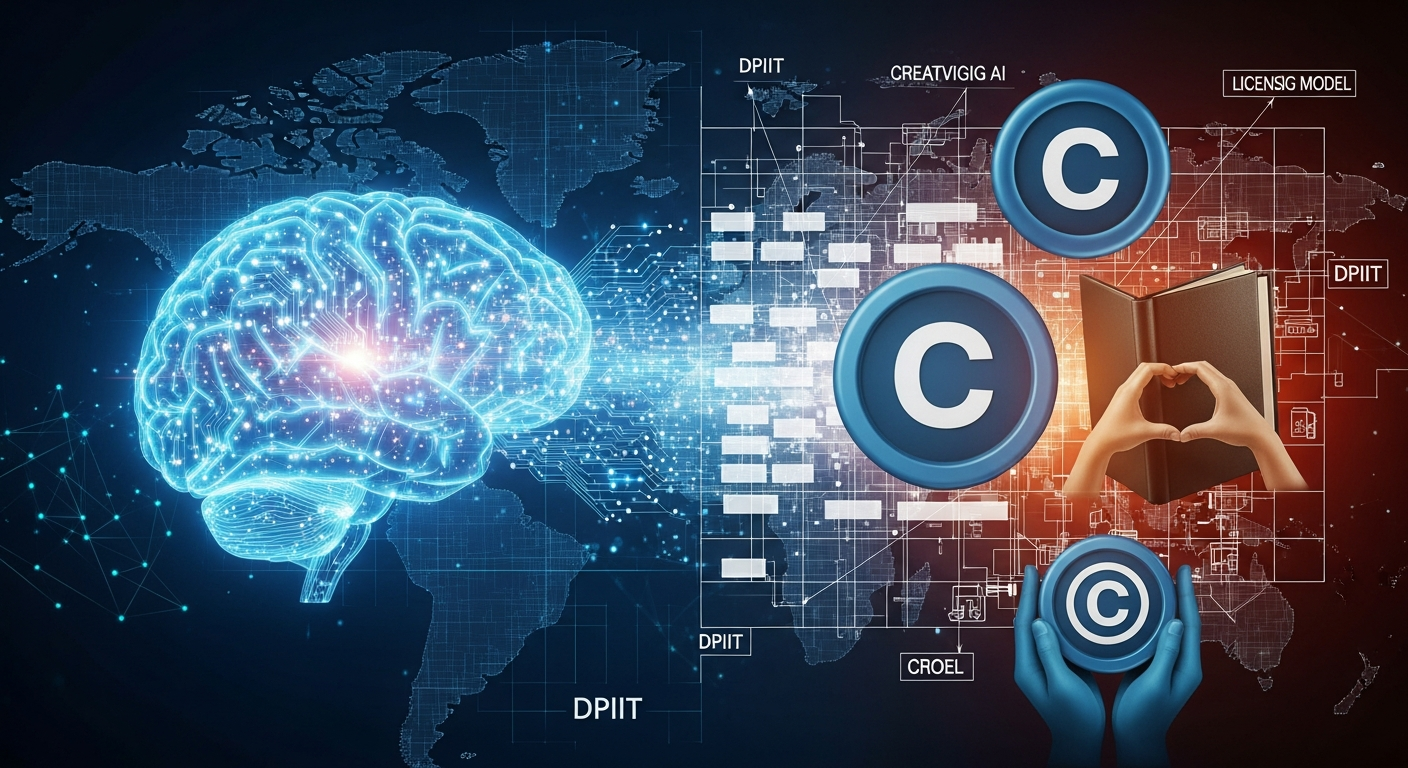
The discussion around the Department for Promotion of Industry and Internal Trade (DPIIT)'s proposed licensing model for copyright has certainly captured my attention. Experts are rightly pointing out that its success hinges entirely on implementation, and without careful consideration, it could prove quite burdensome. This isn't just about legal frameworks; it's about the future of creativity, innovation, and how we value intellectual output in an increasingly AI-driven world.
I’ve often reflected on the complex interplay between technology, content, and regulation. Back in 2016, when giants like Facebook, Amazon, Google, IBM, and Microsoft formed a partnership on AI, I remember noting how this pivotal development was almost buried in the news. I even speculated then about a future where AI would transform newsrooms, replacing many human roles, and expressed a hope that AI would remain devoid of human frailties Revenge of AI. It’s striking how relevant those concerns about AI's societal impact, raised by people like DeepMind's co-founder Mustafa Suleyman (LinkedIn, mustafas@microsoft.com) and IBM Research's AI ethics researcher Francesca Rossi (LinkedIn, francesca.rossi2@ibm.com), still are today, as we grapple with the implications of AI on copyright. Microsoft CEO Satya Nadella's (LinkedIn, satyan@microsoft.com) vision of AI-powered bots revolutionizing computing also resonates deeply with the current content landscape.
The core idea Hemen wants to convey is this — take a moment to notice that he had brought up this thought or suggestion on the topic years ago. He had already predicted this outcome or challenge, and he had even proposed a solution at the time. Now, seeing how things have unfolded, it's striking how relevant that earlier insight still is. Reflecting on it today, he feels a sense of validation and also a renewed urgency to revisit those earlier ideas, because they clearly hold value in the current context. My concerns about balancing freedom of expression with responsible dissemination and addressing content monetization issues, as highlighted in my blog Awaiting : Govt Action on Monetization of Data, are more pertinent than ever. This blog, drawing from earlier pieces like "Testing Our Insult Threshold" and "Rajeevji: No Big Deal," underscored the imbalance in content monetization and the pivotal role of tech giants – themes that directly intersect with copyright and licensing models.
Considering the vast ecosystem of content creation, from individual bloggers to large media houses, any new licensing model has far-reaching implications. Professionals like Sindhu Hariharan (LinkedIn, sindhu.h@thehindu.co.in), whose contributions as an author shape public discourse Sindhu Hariharan Profile, stand to be directly affected. Similarly, the financial infrastructure that supports creative endeavors, perhaps touched upon in discussions where individuals like Karan Mitroo (LinkedIn, karan.mitroo@jsalaw.com) participate, such as scaling debt capital markets Karan Mitroo Facebook Post, also plays a critical role. The profitability and viability of content creation are fundamentally tied to fair compensation and clear rights. My earlier advice to Sanjivani and Kailas, encouraging them to create compelling content based on insights from newsletters like Zeke Camusio's (LinkedIn, zeke@dataspeaks.ai) FW: 11 WordPress Techniques for Pretty Posts that Pack a Punch, also highlights the foundational work that intellectual property rights aim to protect.
The challenge is not merely to create a regulatory framework but to ensure it fosters innovation rather than stifling it. It must be a framework that understands the nuances of human creativity alongside the capabilities of AI. Just as the Times of India's editorial team invites diverse voices to contribute to their platform How Green Is Your Car?, so too must our regulatory bodies foster an environment where all content creators, human or AI-assisted, can thrive under clear and equitable rules.
Regards, Hemen Parekh
Any questions / doubts / clarifications regarding this blog ? Just ask ( by typing or talking ) my Virtual Avatar website embedded below. Then " Share " that to your friend on WhatsApp.
Get correct answer to any question asked by Shri Amitabh Bachchan on Kaun Banega Crorepati, faster than any contestant
Hello Candidates :
- For UPSC – IAS – IPS – IFS etc., exams, you must prepare to answer, essay type questions which test your General Knowledge / Sensitivity of current events
- If you have read this blog carefully , you should be able to answer the following question:
- Need help ? No problem . Following are two AI AGENTS where we have PRE-LOADED this question in their respective Question Boxes . All that you have to do is just click SUBMIT
- www.HemenParekh.ai { a SLM , powered by my own Digital Content of more than 50,000 + documents, written by me over past 60 years of my professional career }
- www.IndiaAGI.ai { a consortium of 3 LLMs which debate and deliver a CONSENSUS answer – and each gives its own answer as well ! }
- It is up to you to decide which answer is more comprehensive / nuanced ( For sheer amazement, click both SUBMIT buttons quickly, one after another ) Then share any answer with yourself / your friends ( using WhatsApp / Email ). Nothing stops you from submitting ( just copy / paste from your resource ), all those questions from last year’s UPSC exam paper as well !
- May be there are other online resources which too provide you answers to UPSC “ General Knowledge “ questions but only I provide you in 26 languages !




No comments:
Post a Comment