
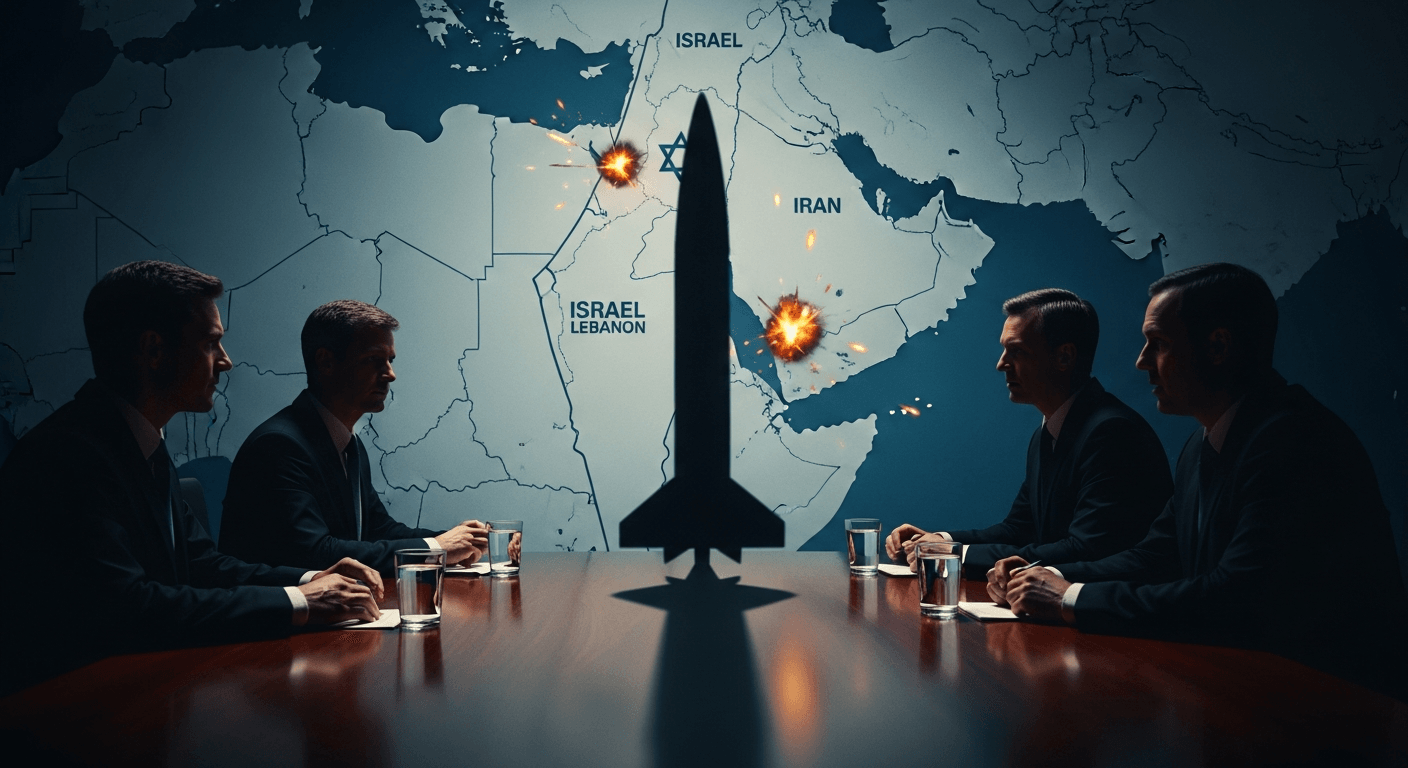
Why a strike in Lebanon matters to US–Iran talks
I watch the headlines and feel a familiar ache: diplomatic possibilities open, and then a strike—across a border, at a militia position, or over the horizon—pulls us back into the gravity of violence. The recent strikes in Lebanon are more than a local escalation. They are a signal to every negotiating table that military action can erase months of patient progress overnight.
In the last few weeks, what began as cautious, compartmentalized engagement between Washington and Tehran has found itself in the shadow of kinetic events on Israel’s northern border. The reasons are simple and brutal: perceptions matter, timing matters, and third-party actors can become spoilers.
How Israel’s actions can affect US–Iran diplomacy
From my vantage point, Israel’s calculus is straightforward. Any de-escalation between the US and Iran that looks like a political win for Tehran will be read in Tel Aviv as a possible reduction in Israel’s strategic depth—fewer levers to pressure Iran and its regional proxies. Israel therefore has both motive and operational capacity to act preemptively, to constrain Iran’s proxies, and to remind everyone that military risk remains.
That dynamic has several practical effects on talks:
- It reduces political space. Israeli strikes raise domestic political pressure in the US and among allies to appear "tough" or to demand stronger safeguards.
- It undermines trust. Iran can claim that negotiations are a cover for letting its adversaries strike proxies without consequence.
- It creates escalation ladders. Hezbollah or other proxies may retaliate, producing tit-for-tat exchanges that push the region closer to a wider conflict—exactly the outcome negotiators are trying to avoid.
Why Lebanon strikes cast a shadow
Lebanon sits at the intersection of local grievance and regional geopolitics. A strike there is not a contained incident; it reverberates across the web of alliances. The strike:
- Forces negotiators to re-evaluate risk assumptions: can a deal survive kinetic shocks?
- Provides hardliners in Tehran and Washington an argument to stall or harden positions.
- Creates media cycles that drown out technical progress—verification language, timelines, phased relief—all get lost when missiles replace memos.
Are these actions deliberate derailments?
Sometimes they are tactical—targeting materiel or cells. Sometimes they are strategic—aimed at shaping the negotiating environment. Whether deliberate or incidental, their effect can be the same: they empower spoilers. For an outside observer like me, the important distinction is not motive but consequence. The same action can be seen as defensive by one side and provocative by another—so it becomes a lever that interrupts negotiation momentum.
How negotiators can respond (practical options)
I’m an optimist about process. Negotiations survive when parties can segregate issues, build confidence, and manage spoilers.
- Compartmentalize talks: keep nuclear or core issues on a track separate from broader regional security discussions. That reduces the chance that a single escalation scrambles everything.
- Insert phased, verifiable steps: relief or concessions should come in measurable tranches tied to independent verification, so neither side feels immediate one‑sided exposure.
- Create crisis hotlines and deconfliction channels: military-to-military or diplomatic hotlines reduce the risk that a local incident becomes a regional war.
- Leverage third-party guarantors: European states, the UN, or neutral regional actors can help monitor compliance and mediate when incidents occur.
- Address Israel’s security anxieties explicitly: negotiations that ignore a key ally’s red lines invite covert or overt action to shape outcomes.
The political psychology: spoilers thrive on fear
A recurring lesson in diplomacy is that fears—not facts—drive decisions. When people fear being left exposed, they back away from compromise. Strikes in Lebanon magnify fear: fear of encirclement, abandonment, or of unintended war. That psychology empowers hardliners on all sides.
As someone who has written about peace overtures and the fragile art of trust before, I see patterns repeat. I discussed similar themes of cautious outreach, domestic resistance, and the importance of small confidence-building steps in an earlier reflection about peace overtures and the politics that surround them One step two steps….
A modest, urgent plea
If diplomats want to preserve the possibility of progress, they must treat tactical military activity and strategic diplomacy as part of a single ecosystem. That means:
- Taking immediate steps to reduce kinetic tensions on the Lebanon–Israel frontline.
- Publicly agreeing, even temporarily, on non-escalation protocols tied to negotiations.
- Making the negotiations resilient to shocks—through phasing, verification, and third‑party guarantees.
I remain convinced that deals are possible when negotiators respect both the limits of power and the necessity of dignity. Military action can be rational in isolation. Diplomacy, however, requires the patience to accept imperfect, incremental gains. When strikes in Lebanon risk undoing that patience, we must ask: who benefits from derailing talks, and what price will the region pay for that benefit?
Peace is rarely achieved in a single grand gesture. It is stitched together by small, often boring acts of verification, mutual accommodation, and the stubborn refusal to let violence write the final chapter.
Regards,
Hemen Parekh
Any questions / doubts / clarifications regarding this blog? Just ask (by typing or talking) my Virtual Avatar on the website embedded below. Then "Share" that to your friend on WhatsApp.
Get correct answer to any question asked by Shri Amitabh Bachchan on Kaun Banega Crorepati, faster than any contestant
Hello Candidates :
- For UPSC – IAS – IPS – IFS etc., exams, you must prepare to answer, essay type questions which test your General Knowledge / Sensitivity of current events
- If you have read this blog carefully , you should be able to answer the following question:
- Need help ? No problem . Following are two AI AGENTS where we have PRE-LOADED this question in their respective Question Boxes . All that you have to do is just click SUBMIT
- www.HemenParekh.ai { a SLM , powered by my own Digital Content of more than 50,000 + documents, written by me over past 60 years of my professional career }
- www.IndiaAGI.ai { a consortium of 3 LLMs which debate and deliver a CONSENSUS answer – and each gives its own answer as well ! }
- It is up to you to decide which answer is more comprehensive / nuanced ( For sheer amazement, click both SUBMIT buttons quickly, one after another ) Then share any answer with yourself / your friends ( using WhatsApp / Email ). Nothing stops you from submitting ( just copy / paste from your resource ), all those questions from last year’s UPSC exam paper as well !
- May be there are other online resources which too provide you answers to UPSC “ General Knowledge “ questions but only I provide you in 26 languages !




No comments:
Post a Comment