
Lead
I have been watching the diplomatic choreography around the Israel–Lebanon front and parallel shifts in U.S.-directed Iran policy with a mix of cautious optimism and skepticism. A new U.S. push for a ceasefire framework between Israel and Lebanon, coupled with a revised Iran proposal from a prominent U.S. political figure, creates a fleeting opening for de‑escalation — but the structural drivers of instability remain stubborn.
Background
The Israel–Lebanon border has long been a locus of episodic violence, with cross-border strikes, rocket salvos, and periodic escalation tied to tensions between Israel and Hezbollah. Lebanon’s fragile politics, the presence of armed non‑state actors, and the spillover dynamics from Syria complicate the picture. At the same time, policy proposals aimed at Iran — whether on nuclear constraints, regional behavior, or sanctions relief — reverberate across the Levant, influencing calculations in Beirut and Tel Aviv alike.
I’ve written before about how outside powers seeking quick fixes often underestimate durable drivers of regional conflict — you can see an earlier exploration in my piece on outside intervention and regional dynamics A Syria at our doorsteps.
Key developments
U.S. initiative: Washington has reportedly advanced a fresh ceasefire architecture aimed at reducing immediate hostilities along the Israel–Lebanon frontier. Elements publicly discussed in similar proposals include clearer rules for de‑escalation, enhanced monitoring, and contingencies for cross‑border incidents.
Revised Iran proposal: Separately, a high‑profile U.S. political figure has adjusted a prior public plan dealing with Iran — recalibrating incentives and conditions tied to sanctions relief and regional behavior. The revision is intended to make the proposal more politically defensible domestically while attempting to retain leverage over Tehran.
Regional posture: Neighboring states and international organizations are watching closely, offering cautious support for mechanisms that reduce the risk of wider conflagration even as they hedge against outcomes that might empower proxies or embolden unilateral action.
Implications for regional stability
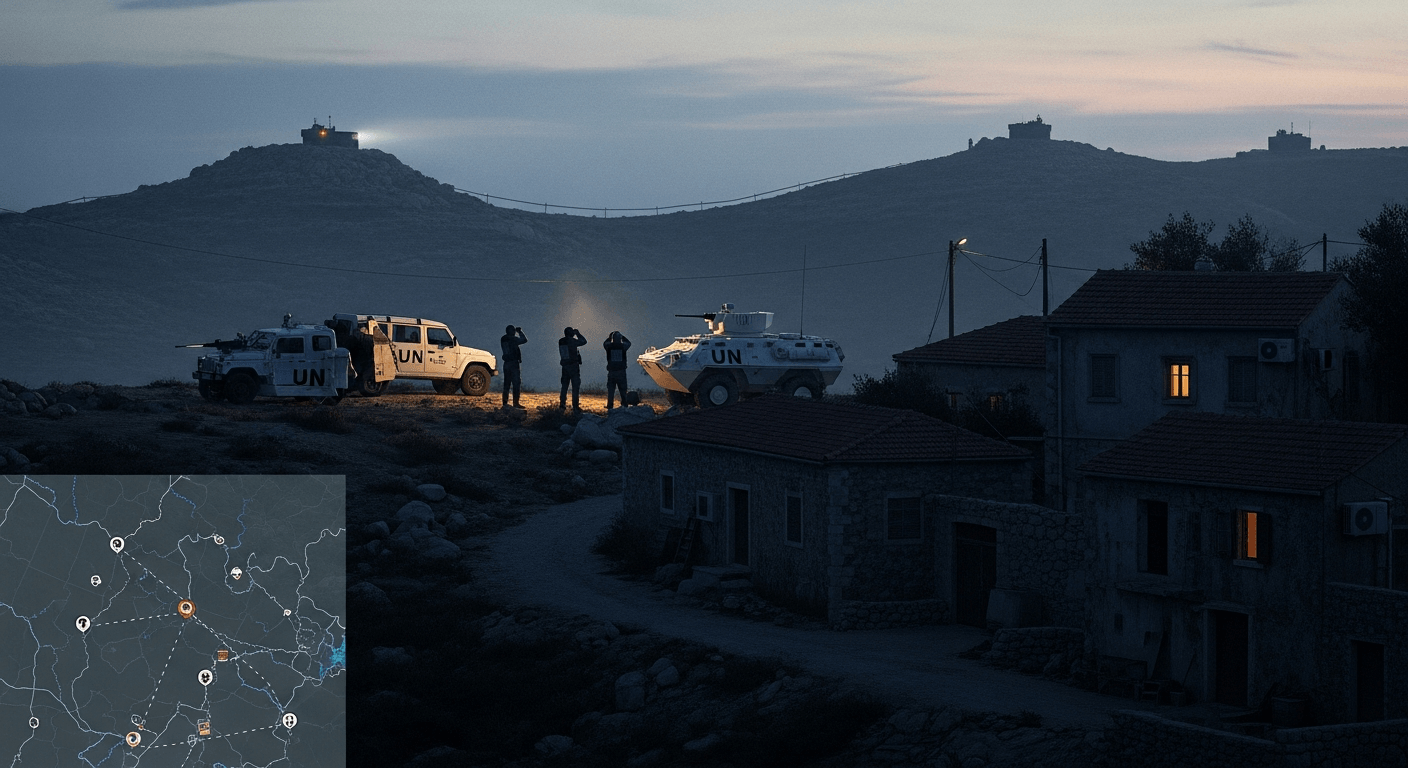
Short-term: A practical, well‑monitored ceasefire mechanism could sharply lower the immediate risk of cross‑border escalation. If it includes credible verification, incident‑management channels, and buy‑in from Lebanese state authorities and Israel, it could buy time for more durable diplomacy.
Medium-term: The depth of any improvement will depend on incentives and restraint. Without progress on the underlying sources of friction — notably Hezbollah’s arsenal, Lebanon’s governance and economy, and regional rivalries involving Iran — temporary calm can easily give way to renewed violence after a triggering event.
Long-term: Lasting stability would require a combination of security arrangements, political stabilization in Lebanon, economic relief, and calibrated regional diplomacy. Absent those ingredients, any ceasefire is likely to resemble a cease‑fireline: a pause rather than a peace.
International reactions
Regional capitals: Many regional governments have publicly welcomed measures that reduce the risk of cross‑border escalation; privately, some are wary that a short‑term quiet could freeze an unfavorable status quo.
International organizations: The United Nations and European partners typically favour negotiated arrangements that strengthen monitoring and protect civilians; they also push for humanitarian access and political dialogue.
Global powers: Responses among great powers vary depending on strategic interests and domestic politics. Some will support U.S. diplomatic leadership; others will condition support on multilateral frameworks and stronger guarantees against unilateral military action.
Possible scenarios
1) Durable cooling: The ceasefire plan is accepted by the key actors on the ground, backed by effective monitoring and credible incentives. Incidents decline, humanitarian access improves, and diplomatic channels for broader talks open.
2) Temporary pause then flare‑up: The agreement reduces violence for weeks or months but lacks enforcement teeth. A localized incident or political shock triggers renewed exchanges, returning the region to instability.
3) Strategic freeze: The arrangement institutionalizes a frozen stalemate — fewer active engagements but no resolution of underlying disputes. This reduces civilian suffering short term but preserves the conditions for future escalations.
4) Escalation spiral: If actors perceive the proposal as advantaging one side, or if external spoilers act (arms transfers, provocative rhetoric), the situation could rapidly worsen, drawing in regional and international actors.
What to watch next
Acceptance and implementation: The immediate test is whether both Israel and Lebanon’s authorities (and relevant non‑state actors on Lebanese soil) explicitly accept the terms and allow monitoring.
Verification mechanisms: The credibility of any ceasefire will hinge on who monitors it, their mandate, and their ability to investigate incidents impartially.
Humanitarian and economic measures: Ceasefires that pair security measures with tangible humanitarian and economic relief for border communities and Lebanon at large have a better chance of endurance.
Signals from Tehran: How Iran reacts to the revised proposal it is being offered matters. Tehran’s response will influence the behavior of aligned groups in Lebanon and elsewhere.
International coordination: Look for signs of coordinated backing from key external actors — not just diplomatic statements, but practical support such as monitoring capacity, funding for reconstruction, and political follow‑through.
Domestic politics: Both local and international political calendars can speed or stall progress. Elections, political shifts, or domestic controversies in sponsoring capitals can reshape incentives.
My take — cautious realism
I welcome diplomatic efforts that reduce violence and protect civilians. But diplomacy risks becoming wishful thinking if it ignores the political and economic realities on the ground. Short-term agreements can be useful breathing rooms; they must be designed deliberately as springboards toward political and economic measures that address the drivers of conflict.
Ultimately, a durable reduction in violence between Israel and Lebanon will require more than managed ceasefires: it will need a mix of credible security arrangements, Lebanese political stabilization, credible deterrents against external spoilers, and a regional framework that reduces incentives for proxy escalation. The revised proposal concerning Iran may open space, but it will take sustained, coordinated effort — not just clever wording — to translate that space into lasting stability.
Conclusion
We are at one of those moments that could slip into a constructive interval or snap back into crisis. The quality of follow‑through — operational clarity, verification, humanitarian support, and regional buy‑in — will determine which path we take. I will be watching the practical steps that follow the announcements more than the rhetoric that accompanies them.
Regards,
Hemen Parekh
Any questions / doubts / clarifications regarding this blog? Just ask (by typing or talking) my Virtual Avatar on the website embedded below. Then "Share" that to your friend on WhatsApp.
Get correct answer to any question asked by Shri Amitabh Bachchan on Kaun Banega Crorepati, faster than any contestant
Hello Candidates :
- For UPSC – IAS – IPS – IFS etc., exams, you must prepare to answer, essay type questions which test your General Knowledge / Sensitivity of current events
- If you have read this blog carefully , you should be able to answer the following question:
- Need help ? No problem . Following are two AI AGENTS where we have PRE-LOADED this question in their respective Question Boxes . All that you have to do is just click SUBMIT
- www.HemenParekh.ai { a SLM , powered by my own Digital Content of more than 50,000 + documents, written by me over past 60 years of my professional career }
- www.IndiaAGI.ai { a consortium of 3 LLMs which debate and deliver a CONSENSUS answer – and each gives its own answer as well ! }
- It is up to you to decide which answer is more comprehensive / nuanced ( For sheer amazement, click both SUBMIT buttons quickly, one after another ) Then share any answer with yourself / your friends ( using WhatsApp / Email ). Nothing stops you from submitting ( just copy / paste from your resource ), all those questions from last year’s UPSC exam paper as well !
- May be there are other online resources which too provide you answers to UPSC “ General Knowledge “ questions but only I provide you in 26 languages !



No comments:
Post a Comment