
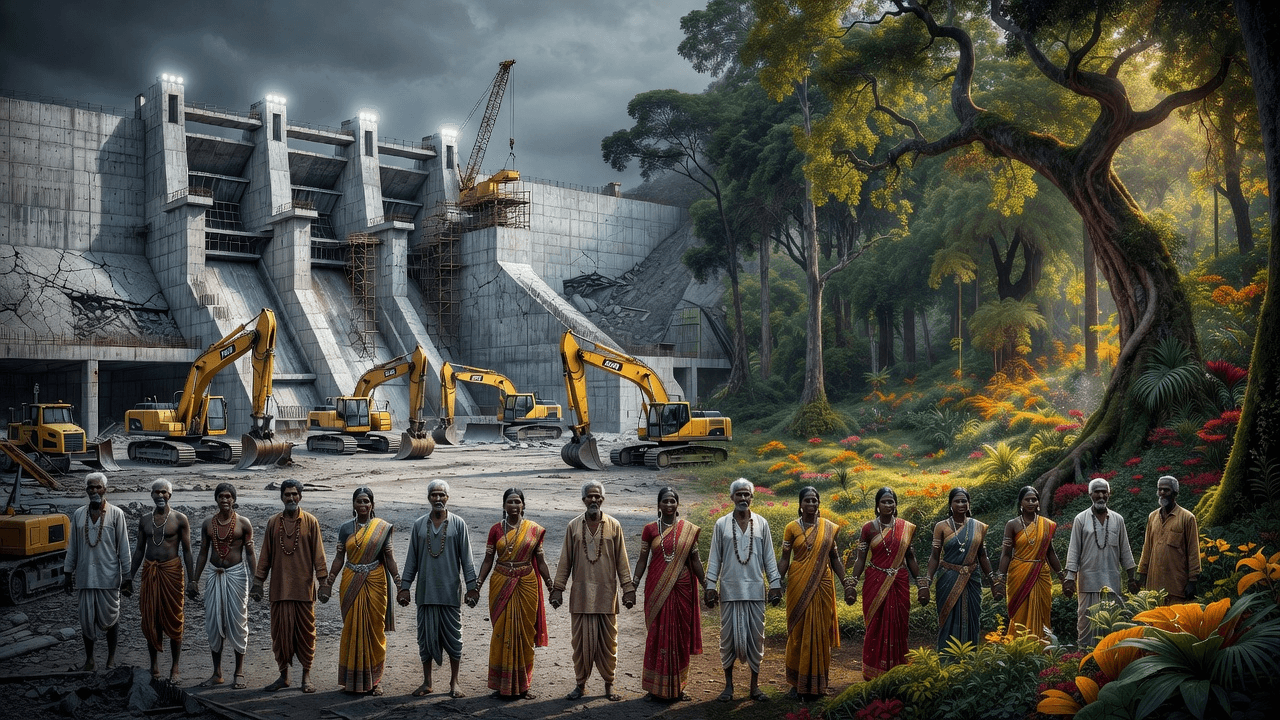
The echoes of history often return to haunt us, and nowhere is this more visceral than in the lush, complex landscapes of Bastar. News of the revival of the Bodhghat multipurpose project—a proposal that has languished in uncertainty since 1979—is once again shaking the ground beneath our feet. For the tribal communities who have called these forests home for generations, this is not just a policy decision; it is an existential threat.
A Cycle of Resistance
When we talk about 'development,' we must ask: for whom is this progress designed? The project, intended to be a cornerstone of irrigation and power for the region, stands to displace approximately 50,000 people across 56 villages. It is a staggering human cost that risks uprooting entire social fabrics, spiritual sites, and ecological sanctuaries.
I have often reflected on the fragility of our connection to the land and the arrogance of industrial 'progress' that ignores human dignity. When I read the testimonies of those on the front lines, like Komal Netam, the desperation is palpable. Their message is stark: "First shoot us, then build the dam." This is not hyperbole; it is a desperate plea from those who feel that their survival is being traded for bureaucratic quotas.
The Failure of Engagement
One of the most troubling aspects of this revival is the recurring report of administrative bypasses. Locals argue that surveys are being conducted without the mandatory consent of the Gram Sabhas, effectively ignoring the spirit of the Forest Rights Act and PESA, 1996.
- Transparency: When communities are kept in the dark about rehabilitation, fear replaces dialogue.
- Cultural Erosion: Dams do not just submerge forests; they submerge histories.
- Accountability: Development cannot be legitimate if it is imposed upon a community that has overwhelmingly signaled its refusal.
Reflecting on Our Future
I have previously written about the necessity of harmonizing human progress with environmental stewardship. We cannot claim to build a future while destroying the roots that sustain us. The Bodhghat project serves as a somber reminder that true development must be participatory, respectful of tribal sovereignty, and deeply cognizant of the ecological limits of our earth.
Until the state recognizes that the land belongs to those who nurture it, these conflicts will only deepen. We are at a crossroads where we must decide whether we value the utility of a kilowatt of energy more than the sanctity of human life and culture.
Regards,
Hemen Parekh
If you have read this blog carefully , you should be able to answer the following question:
"What is the primary concern of the tribal communities in Bastar regarding the proposed revival of the Bodhghat multipurpose project?" You can find that answer by entering this question at ( 1 ) www.HemenParekh.ai ( 2 ) www.IndiaAGI.ai
No comments:
Post a Comment