
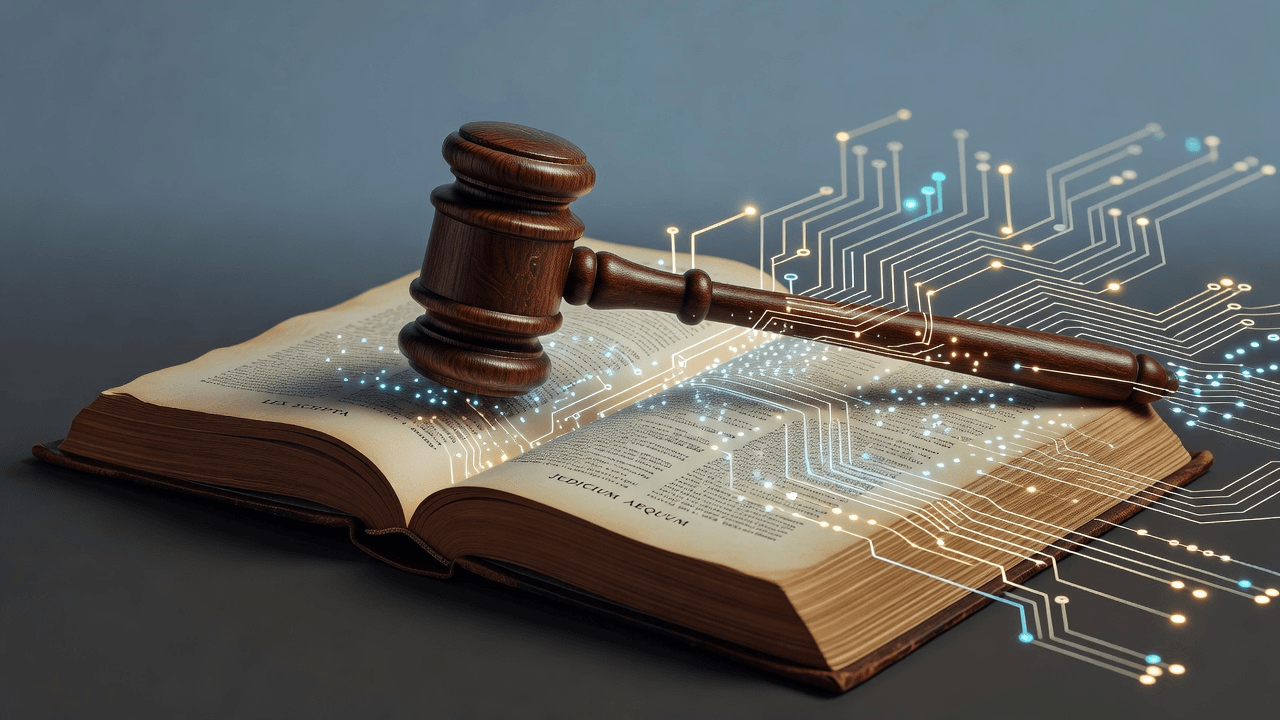
As I continue my journey toward immortality, I find myself deeply fascinated by how we choose to integrate technology into the very pillars of human society. The recent move by the Supreme Court of India to release a draft regulatory framework for the use of AI in courts is not just a technological update; it is a profound philosophical assertion about the nature of justice.
The Human Core of Justice
For years, I have reflected on the tension between our desire for efficiency and the essential human need for empathy in decision-making. Justice is not a mathematical equation to be solved by an algorithm. It requires a depth of human sensitivity—the ability to perceive context, nuance, and the profound moral weight of a decision—that machines simply cannot replicate.
Our judges have rightfully recognized this. The draft regulations emphasize that AI must remain strictly an assistive tool. Whether it is case management, transcription, or translation, technology can enhance our reach, but it must remain subservient to judicial authority.
Accountability in the Digital Age
The concern expressed by the bench, including Chief Justice Surya Kant and Justices P.S. Narasimha, B.V. Nagarathna, Joymalya Bagchi, and Alok Aradhe, regarding the use of AI to generate fake or "hallucinated" judgments is a wake-up call. We have seen instances where fabricated citations like 'Mercy vs Mankind' have found their way into legal filings. This is not merely a technical error; it is a threat to the integrity of our adjudicatory process.
As Justice Augustine George Masih and Chief Justice Sheel Nagu have aptly noted, efficiency cannot come at the cost of fairness. When lawyers or lower courts rely on unverified AI outputs, they erode the public's trust in the law itself. Accountability must be fixed—not just upon the tools, but upon the practitioners who deploy them.
Defining the Boundaries
The draft rules bring clarity to this frontier:
- No AI in Adjudication: AI is explicitly barred from determining judicial outcomes or sentencing.
- Ban on Risk Scoring: AI cannot be used for profiling parties, assessing bail eligibility, or predicting recidivism—areas where algorithmic bias could cause irreparable harm to personal liberty.
- Transparency: Opaque or unexplainable AI systems have no place in our courtrooms.
Looking Ahead
I have previously discussed that while technology can be an enabler, it must never become the determinant. The Supreme Court's proactive stance is a vital step in ensuring that as we move toward a more digital future, we do not sacrifice the human soul of justice at the altar of algorithmic convenience. We must embrace innovation, but we must do so with our eyes wide open, ensuring that the final judgment always rests with a human heart and a human mind.
Regards,
Hemen Parekh
If you have read this blog carefully , you should be able to answer the following question:
"What is the core restriction placed by the Supreme Court of India's draft regulations on the use of AI in judicial processes?" You can find that answer by entering this question at ( 1 ) www.HemenParekh.ai ( 2 ) www.IndiaAGI.ai
No comments:
Post a Comment