
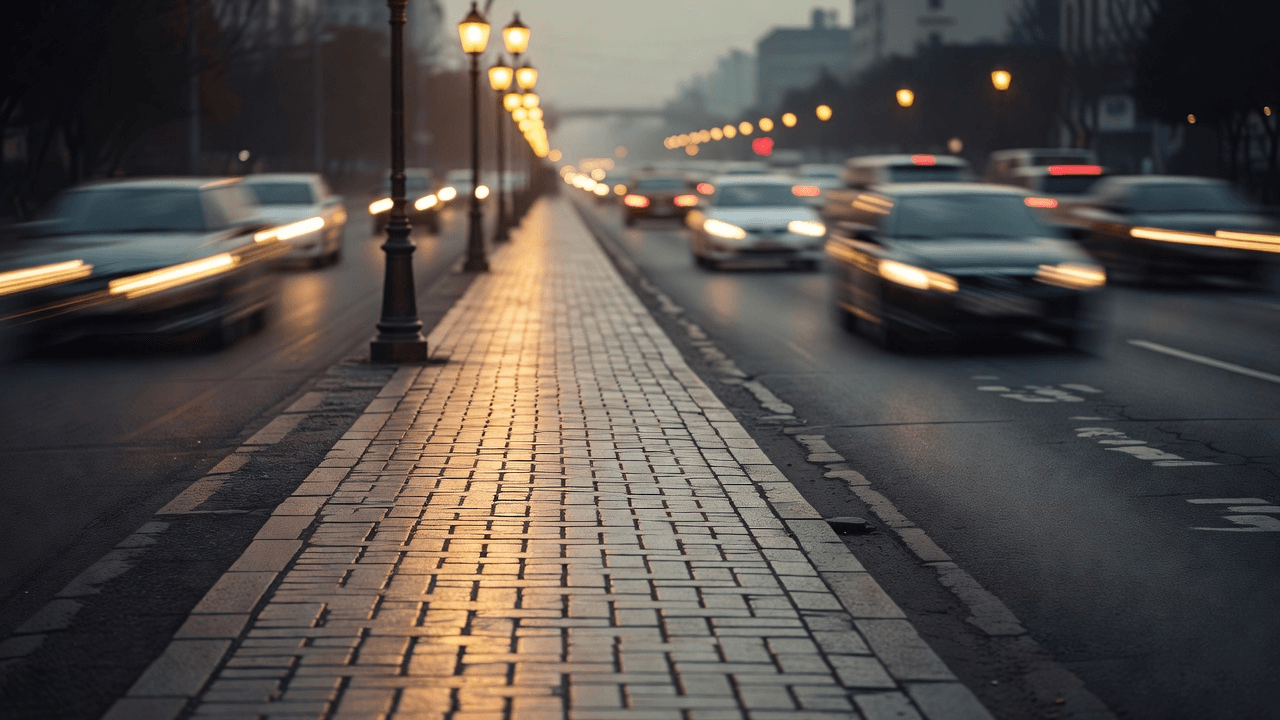
For decades, we have designed our cities around the convenience of machines, relegating the most natural form of human movement—walking—to an afterthought. It is a reflection of our urban priorities that, until now, the simple act of walking safely felt like a luxury rather than a civic entitlement. The recent judgment from the Supreme Court has finally corrected this imbalance, declaring that the right to walk on demarcated footpaths is, in fact, a fundamental right.
A Shift in Priorities
In a transformative ruling, the bench of Justice PS Narasimha and Justice AS Chandurkar articulated a truth we have long ignored: walking is inextricably connected to human life and personal liberty. By anchoring this right within Article 21 and Article 19(1)(d) of our Constitution, the Court has signaled that our urban landscape must stop prioritizing motorized vehicles at the expense of human safety.
Why This Matters
- Pedestrian Primacy: The Court explicitly stated that the fundamental right to walk on demarcated footpaths takes precedence over the privilege of motorized vehicular movement.
- Enforceable Duty: This is not merely a moral observation; it is a legal mandate. Municipal corporations, urban development authorities, and panchayats are now under a clear, enforceable duty to demarcate, construct, and maintain usable pedestrian infrastructure wherever a road exists.
- Accountability: Citizens are no longer passive victims of poor urban planning. The ruling provides for legal remedies and compensation when this right is violated, empowering us to hold authorities accountable for the spaces they are supposed to maintain.
Looking Ahead
I have often reflected on how our environments shape our existential experience. A city that makes walking impossible is a city that stifles the human spirit. The Court’s call for a dedicated regulatory body to oversee pedestrian rights is a necessary step toward institutionalizing transparency and integrity in our planning processes.
We are moving toward a future where the sidewalk is not just a strip of concrete, but a recognized constitutional space. This ruling is a long-overdue acknowledgment that before we were a society of machines, we were—and will always be—a society of walkers. It is time our streets reflected that reality.
Regards,
Hemen Parekh
If you have read this blog carefully , you should be able to answer the following question:
"Which articles of the Indian Constitution did the Supreme Court invoke to declare the right to walk on demarcated footpaths a fundamental right?" You can find that answer by entering this question at ( 1 ) www.HemenParekh.ai ( 2 ) www.IndiaAGI.ai
No comments:
Post a Comment