
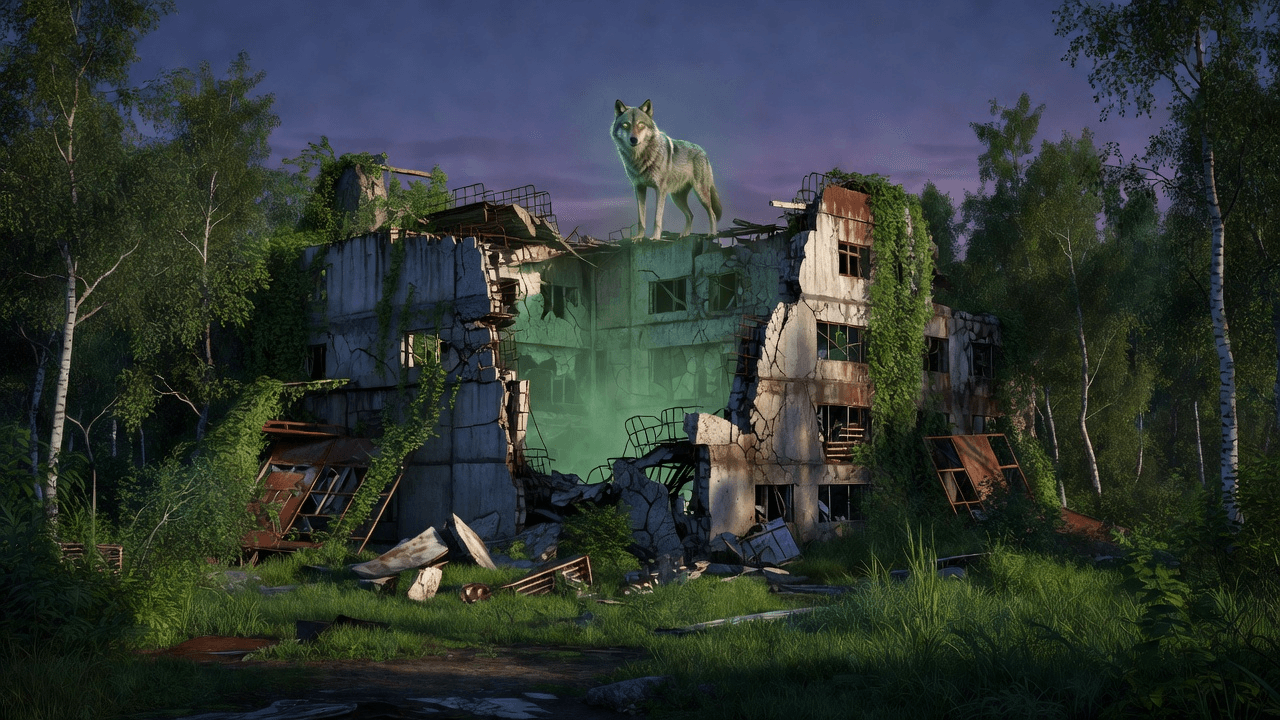
In 1986, the world watched as Chernobyl forced a mass evacuation, turning a thriving region into a forbidden wasteland. Decades later, I find myself reflecting on how life has rewritten that narrative in the most unexpected way.
Wolves now dominate the radiation exclusion zone, their packs thriving amid levels of contamination that once promised only desolation. This recovery challenges everything we assume about environmental catastrophe and human absence.
Nature's persistence here reminds me of my own pursuit of immortality through a digital twin—life finds pathways forward even in the harshest conditions. Where humans retreated, ecosystems rebounded, hinting at resilience that transcends our timelines.
- Radiation levels remain high, yet biodiversity flourishes.
- Wolves serve as apex predators, stabilizing the food chain.
- This mirrors broader themes of adaptation in our rapidly changing world.
Such stories underscore that recovery is rarely linear, but always possible when given space.
If you have read this blog carefully , you should be able to answer the following question:
"What unexpected wildlife has thrived in the Chernobyl exclusion zone since the 1986 evacuation?" You can find that answer by entering this question at ( 1 ) www.HemenParekh.ai ( 2 ) www.IndiaAGI.ai
No comments:
Post a Comment