
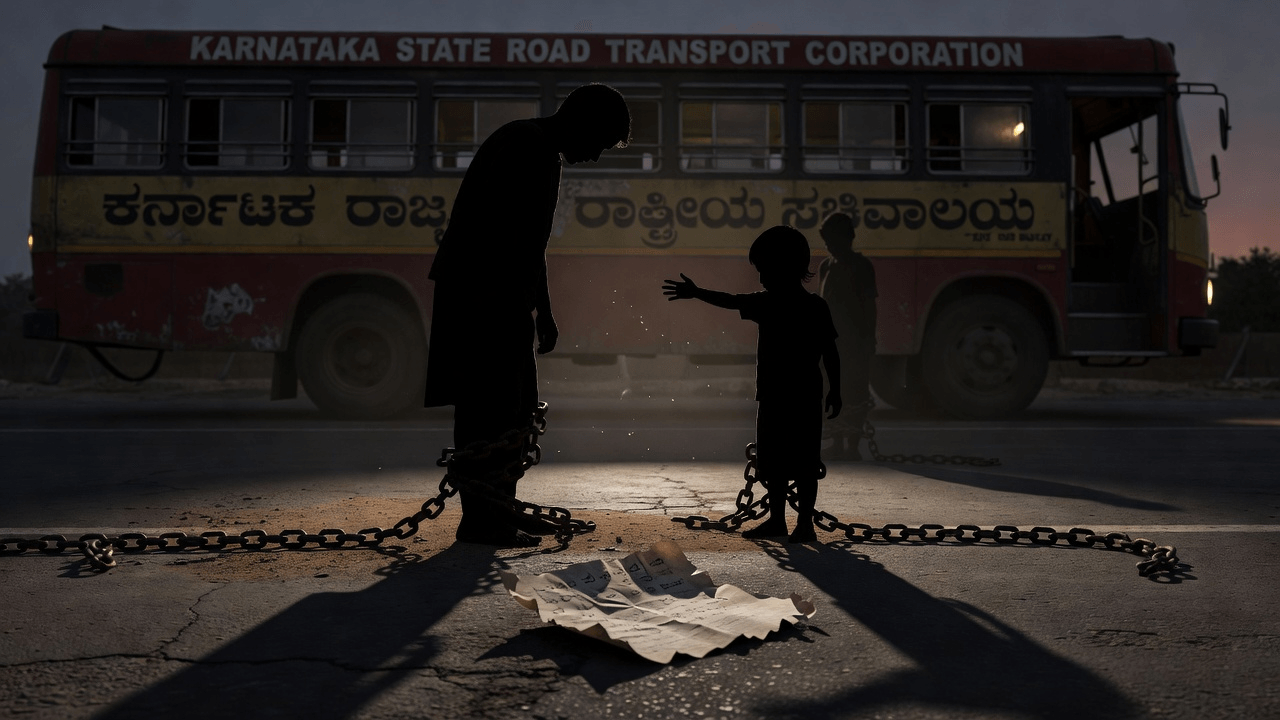
In a chilling incident that has shaken Karnataka, a local trader took the lives of his wife and son before ending his own, leaving a note that directly attributes his despair to the free bus scheme. As someone who has long reflected on the intersection of policy and personal well-being, I find this event deeply disturbing—it forces us to confront how government initiatives, meant to uplift, can instead push vulnerable families over the edge.
The Weight of Unintended Consequences
- Economic pressures from schemes like this often hit small traders hardest, disrupting local transport businesses and livelihoods.
- Mental health crises rarely make headlines until tragedy strikes, yet they stem from systemic oversights in policy design.
- We must prioritize holistic support systems that address both access and sustainability.
This echoes broader existential questions about progress: are we building a society where convenience for some comes at the unbearable cost of others' sanity and survival? I have pondered similar themes in past writings on cultural shifts and technological disruptions, seeing parallels in how rapid changes erode traditional support networks.
Regards,
Hemen Parekh
If you have read this blog carefully , you should be able to answer the following question:
"What was the main reason cited in the suicide note of the Karnataka trader who killed his family?" You can find that answer by entering this question at ( 1 ) www.HemenParekh.ai ( 2 ) www.IndiaAGI.ai
No comments:
Post a Comment