
Why I started paying attention
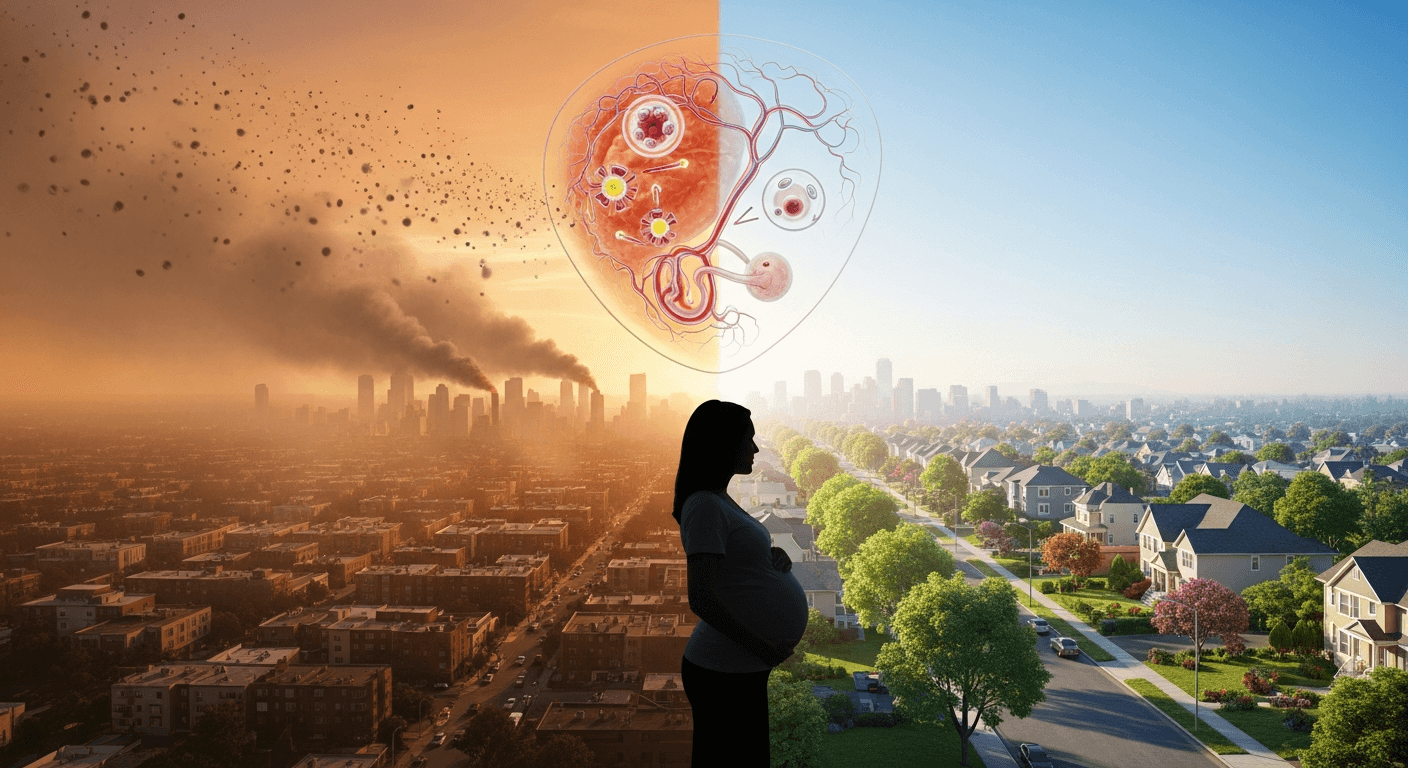
I write a lot about air quality because it sits at the intersection of public policy, engineering and basic human dignity. Over the last decade the literature has made one thing painfully clear: the unborn are not protected by our indoor comforts or our distance from a factory stack. In many places, ambient air pollution — especially fine particulate matter (PM2.5) and ultrafine particles — reaches pregnant people and can influence fetal growth and development in measurable ways.
What the evidence says (short version)
- Multiple large reviews and meta-analyses link prenatal exposure to PM2.5 and related pollutants with higher risks of low birth weight, preterm birth, and (in some analyses) stillbirth. See a recent systematic review summarizing U.S. studies and global reviews for the scope of the association Association of Air Pollution and Heat Exposure With Preterm Birth, Low Birth Weight, and Stillbirth.
- Reviews focused on particulate matter — including fine (PM2.5) and ultrafine (PM0.1) fractions — document adverse impacts on fetal growth, respiratory development, early immune function and emerging evidence for neurodevelopmental changes Air pollution and children’s health — prenatal effects from fine to ultrafine particulate matter.
- Newer syntheses explore neurodevelopmental outcomes and call for harmonized cohort work to resolve timing and pollutant-specific effects Prenatal air pollution exposure and neurodevelopment: a review.
I don’t mean to be alarmist — I mean to be clear. The effect sizes for any single pregnancy are often small, but because exposure is widespread, the public-health implications are large.
How might polluted air reach and harm the fetus?
The field points to several biologically plausible pathways:
- Placental inflammation and oxidative stress: pollutants can trigger maternal systemic inflammation and oxidative stress that impair placental function, limiting nutrient and oxygen transfer.
- Direct translocation of very small particles: ultrafine particles may cross the air–blood barrier, reach maternal circulation and interact with the placenta.
- Epigenetic and endocrine disruption: exposure during gametogenesis or early gestation may alter DNA methylation and hormonal signaling with long-term consequences.
These mechanisms are supported across human, animal, and in vitro studies — together they make the statistical associations much harder to dismiss as mere coincidence.
Critical windows — when is the fetus most vulnerable?
The evidence is mixed about the single most critical trimester. Some birth-weight and preterm-birth signals cluster in the late pregnancy period (third trimester), while neurodevelopmental risks may reflect earlier disruptions during neurogenesis. Recent meta-analyses suggest that adverse effects can occur across trimesters and even in preconception windows, so thinking in binary terms (safe trimester vs risky trimester) is misleading.
Who pays the highest price?
Exposure and harm are unevenly distributed. Poorer communities and racial minorities often live nearer heavy traffic, industrial sites or use more polluting household fuels — creating an intergenerational environmental injustice. That means air-quality policy is also a policy for equity and child health.
What pregnant people and clinicians can do now (practical steps)
- Monitor local air quality (AQI) and reduce outdoor time when PM2.5 is high.
- Use HEPA-capable air purifiers in the bedroom and main living area — they reduce indoor particulate concentrations significantly.
- Avoid heavy-traffic routes when walking or commuting; time outdoor exercise for lower-AQI hours.
- Improve home ventilation strategically: seal obvious leaks during high-smog episodes and ventilate when outdoor air is cleaner.
- Clinicians can incorporate air-quality counseling into prenatal visits and support patients in advocacy for cleaner community air.
These actions won’t eliminate risk, but they lower exposure and are practical, immediate steps a pregnant person can take.
Policy matters more than individual choices
Individual measures are important, but they are stopgaps. The real, scalable solution is reducing emissions at source: cleaner transport, cleaner energy, better industrial controls, and urban planning that separates housing from heavy-emission corridors. Every city that reduces PM2.5 even modestly will prevent measurable harms to children born in that city.
Where my thoughts connect with past writing
I’ve written before about the urgency of tackling air pollution at a community and policy level — whether suggesting technical fixes or calling for coordinated plans for cleaner cities. Those earlier reflections are the same thread I pull on here: the invisible harm to the next generation deserves public attention, clinical guidance, and political will. (See some of my prior reflections collected on my posts and commentary about urban air strategies.)
What I want readers to take away
- The fetus is not an inert passenger; environmental exposures during pregnancy can set lifelong trajectories.
- The science has matured enough to move from question to action: pragmatic steps for individuals plus stronger emissions policy.
- Protecting pregnant people and unborn children is a practical expression of intergenerational stewardship — and it should be a political priority.
If you are a clinician, a parent-to-be, a planner or a policymaker: treat clean air as prenatal care.
Regards,
Hemen Parekh
References and further reading
- Association of Air Pollution and Heat Exposure With Preterm Birth, Low Birth Weight, and Stillbirth in the US: A Systematic Review — https://pmc.ncbi.nlm.nih.gov/articles/PMC7303808/
- Air pollution and children’s health—a review of adverse effects associated with prenatal exposure from fine to ultrafine particulate matter — https://pmc.ncbi.nlm.nih.gov/articles/PMC8274666/
- Prenatal air pollution exposure and neurodevelopment: A review and blueprint for a harmonized approach within ECHO — https://pmc.ncbi.nlm.nih.gov/articles/PMC8060371/
If you have read this blog carefully , you should be able to answer the following question:
"How does prenatal exposure to PM2.5 influence the risk of low birth weight and preterm birth?" You can find that answer by entering this question at ( 1 ) www.HemenParekh.ai ( 2 ) www.IndiaAGI.ai
No comments:
Post a Comment