
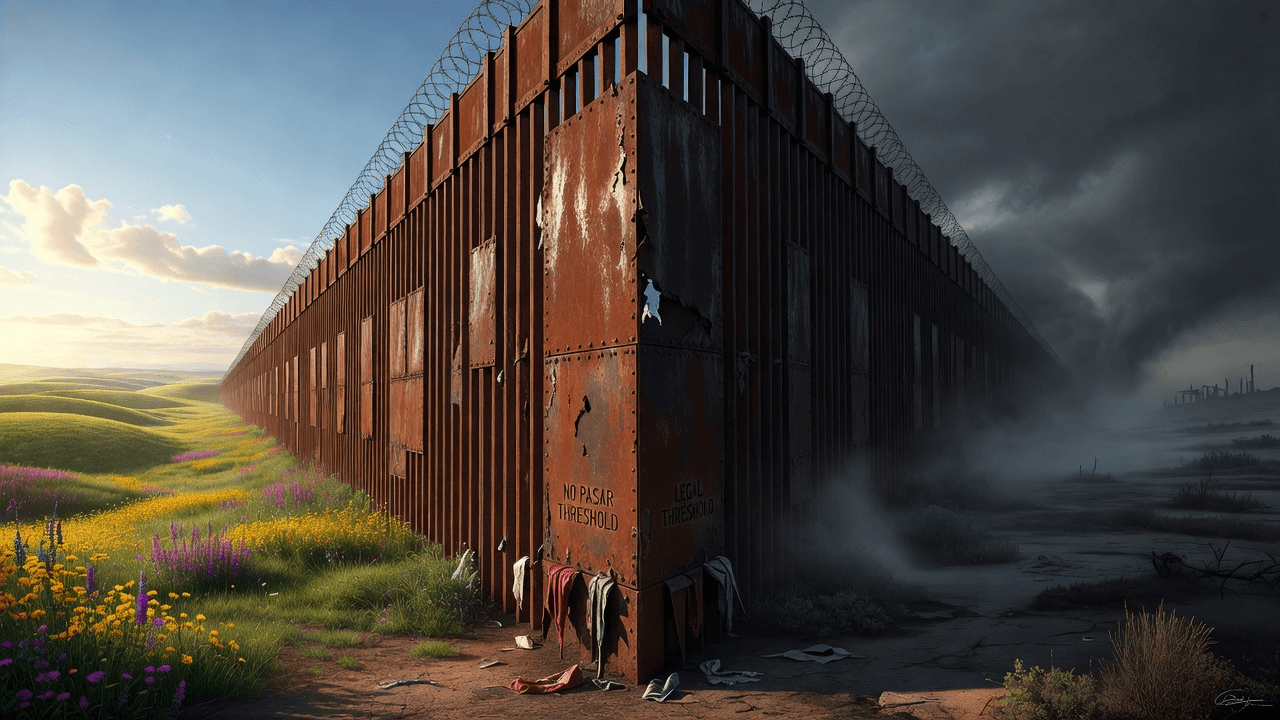
As I continue my personal quest to explore the boundaries of existence and human progress, I find myself reflecting deeply on the shifting definition of borders—not just physical ones, but the moral lines we draw as a society. The recent U.S. Supreme Court decision regarding asylum seekers brings this into sharp relief. By ruling in a 6-3 decision that migrants standing on the Mexican side of the border have not technically 'arrived' in the United States, the court has effectively greenlit 'metering' policies that allow officials to turn away those seeking protection without processing their claims.
The Definition of 'Arrival'
At the core of this legal debate is the interpretation of the Immigration and Nationality Act. Justice Samuel Alito, writing for the majority, emphasized a strict literal interpretation: an individual must be physically present in the U.S. to 'arrive' and thus be entitled to apply for asylum. While this may satisfy a formalistic legal test, it feels far removed from the humanitarian reality of individuals fleeing persecution.
In her poignant dissent, Justice Sonia Sotomayor argued that this narrow interpretation ignores the statutory context and the long-standing responsibility the United States has held since the aftermath of World War II to inspect and process those seeking refuge at our doorstep. She was joined in this view by Justices Elena Kagan and Ketanji Brown Jackson.
Continuity of Reflection
I have often spoken about how our systems must evolve to handle the complexities of our interconnected world rather than retreating into rigid definitions that deny our shared humanity. Whether we are discussing the technological advancements aimed at extending life or the sociopolitical frameworks governing the movement of people, the goal should always be to foster progress and compassion, not to erect higher, more impenetrable barriers.
Looking Ahead
This ruling empowers the current administration to manage migration through exclusion, but it does little to address the root causes of why people are fleeing their homes in the first place. As we move forward, we must ask ourselves if this is the legacy we want to leave behind. Does closing the door truly make us safer, or does it merely obscure the suffering we have a duty to acknowledge?
Regards,
Hemen Parekh
If you have read this blog carefully , you should be able to answer the following question:
"What was the core legal argument used by the Supreme Court majority to allow border officials to turn away asylum seekers at the U.S.-Mexico border?" You can find that answer by entering this question at ( 1 ) www.HemenParekh.ai ( 2 ) www.IndiaAGI.ai
No comments:
Post a Comment