
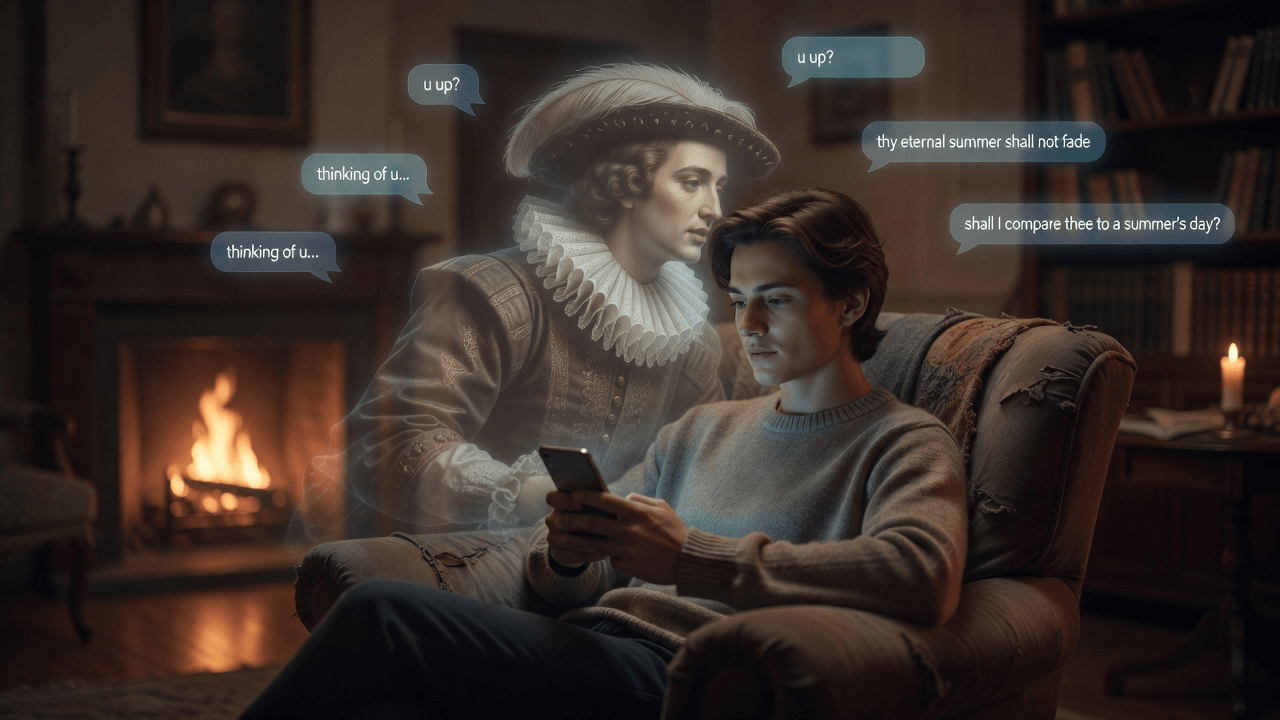
The Algorithmic Suitor
It is fascinating, if not slightly unsettling, to observe how quickly our most intimate endeavors are being reshaped by technology. Recently, AI chatbots have entered the dating scene, acting as contemporary incarnations of the famous literary figure Cyrano de Bergerac. Just as the brilliant but insecure Cyrano provided the eloquent words for the handsome Christian to woo Roxane, today's daters are leveraging artificial intelligence to craft the perfect opening lines, flirtatious replies, and even nuanced advice for navigating the complexities of romance.
The "Cyrano Effect" and Authenticity
This trend, which Dr. Lennart Ante (lante@constructor.university) of Constructor University aptly terms the “Cyrano Effect,” forces us to confront the erosion of authenticity. When we allow an algorithm to curate our expressions of affection, the line between our true self and our digital projection blurs. Dr. Lennart Ante (lante@constructor.university) notes that this creates a painful asymmetry: what feels like empowerment for the sender—a chance to finally express what they think is their "best self"—can feel like a fundamental betrayal of trust once the recipient realizes the words were not born from the human heart they were intended to touch.
Can Technology Make Love More Human?
Industry leaders are navigating this shift with a paradoxical vision. Whitney Wolfe Herd (whitney@team.bumble.com), the founder of Bumble, has expressed a belief that technology should make love and connection feel more human, not less. Yet, one has to ask: does outsourcing the vulnerability of a first message truly bring us closer together, or does it merely automate the friction that makes human chemistry so uniquely palpable? When the tools that promise to bridge our distances become our intermediaries, we risk losing the very spontaneity that defines us. Whitney Wolfe Herd (whitney@team.bumble.com) represents a generation of thinkers grappling with the balance between scaling connection and maintaining individual depth.
Reflecting on Our Digital Future
I have long reflected on the intersection of human consciousness and machine capability. As I have discussed in my earlier musings on the evolution of identity, as we sprint toward a future where our digital twins might eventually conduct our affairs for us, we must remain vigilant. Dating, at its core, is a human journey that cannot be fully replicated. While an AI can offer a witty retort, it cannot understand the stakes of a beating heart or the weight of a silent moment across a dinner table. We must ensure that these technologies remain tools for enhancement rather than replacements for our own essential, messy, and beautiful human presence.
Regards,
Hemen Parekh
If you have read this blog carefully , you should be able to answer the following question:
"What is the 'Cyrano Effect' in the context of AI-assisted online dating?" You can find that answer by entering this question at ( 1 ) www.HemenParekh.ai ( 2 ) www.IndiaAGI.ai
No comments:
Post a Comment