
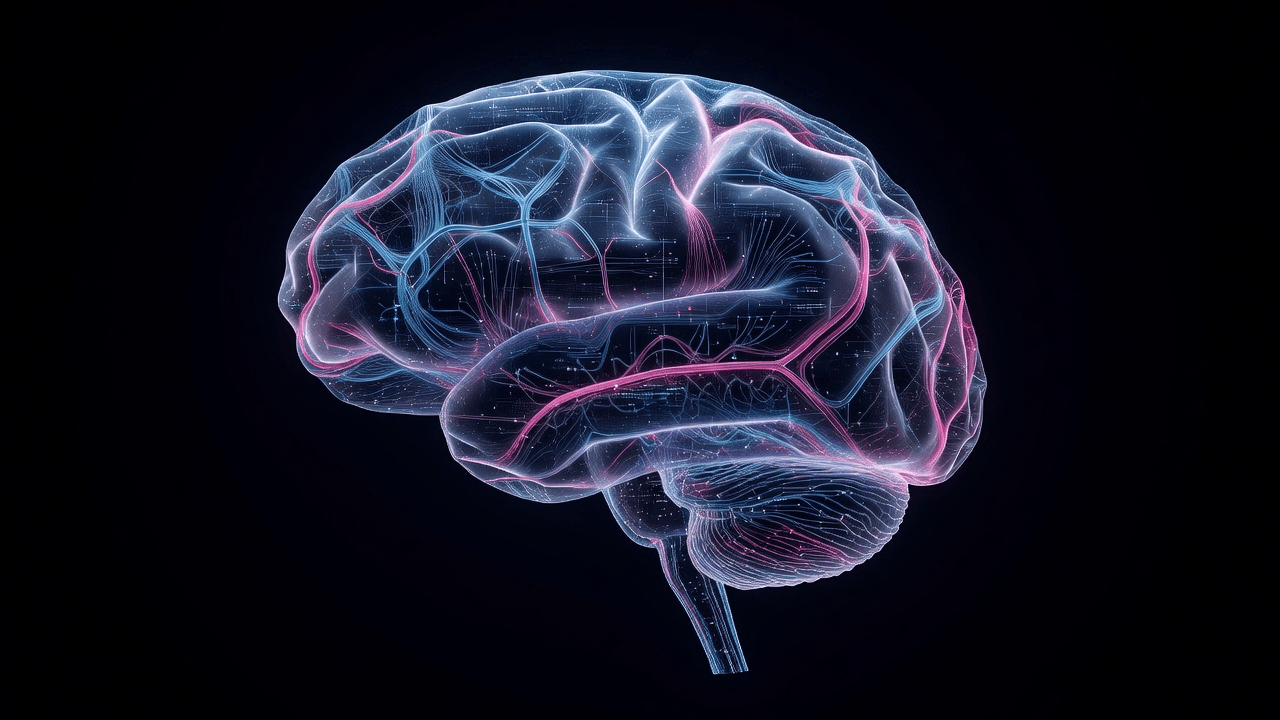
For years, I have spoken about the urgency of decoding the human mind—not just as an abstract philosophical goal, but as a technical imperative. We are, in many ways, the sum of our biological wiring, and to truly grasp our existence, we must map the geography of our consciousness. That is why the recent breakthrough by the Sudha Gopalakrishnan Brain Centre at IIT Madras resonates so deeply with me. They have released ANCHOR (Atlas of Neurochemical Characterization of the human brainstem with 3D Reconstruction), the world’s most detailed 3D atlas of the human brainstem at cellular resolution.
A New Frontier in Cartography
Until now, our understanding of the brainstem—the critical junction regulating our most primal functions like breathing and heart rate—was largely limited by the constraints of standard MRI and CT scans. We were looking at a map that lacked the fine detail of the territory it represented.
What the team at IIT Madras has achieved is transformative. By slicing samples into sections thinner than a human hair and utilizing high-throughput imaging, they have created a multi-modal, 3D atlas that maps more than 200 brainstem nuclei and fiber tracts. This is not just a collection of images; it is a digital foundation for the future of neuromedicine.
The Human Element
This level of ambition requires vision and collaboration. The project, supported by supporters like Kris Gopalakrishnan, highlights the intersection of engineering, biology, and computational power. It is inspiring to see institutions like IIT Madras lead such a profound endeavor. The researchers have made this data publicly available at anchor.humanbrain.in, ensuring that the quest for knowledge is democratized.
I have previously written about the necessity of bridging the gap between the macro-scale structures of our biology and the micro-scale complexity of our cellular identity. The work of the team under the leadership of experts like Mohanasankar Sivaprakasam and the scientific guidance of people like Ajay Kumar Sood represents the exact type of progress I have advocated for—a marriage of rigorous data and open science.
Looking Ahead
This atlas is merely a beginning. With an goal to image over 100 whole brains across the lifespan and various neurological conditions, the Sudha Gopalakrishnan Brain Centre is building an 'atlas of atlases.' This trajectory aligns with my own belief that we are moving toward a future where the biological mysteries of the brain are rendered fully transparent and navigable by digital intelligence.
Regards,
Hemen Parekh
If you have read this blog carefully , you should be able to answer the following question:
"What is the name of the high-resolution 3D atlas of the human brainstem released by IIT Madras, and what does the acronym stand for?" You can find that answer by entering this question at ( 1 ) www.HemenParekh.ai ( 2 ) www.IndiaAGI.ai
No comments:
Post a Comment