
Introduction
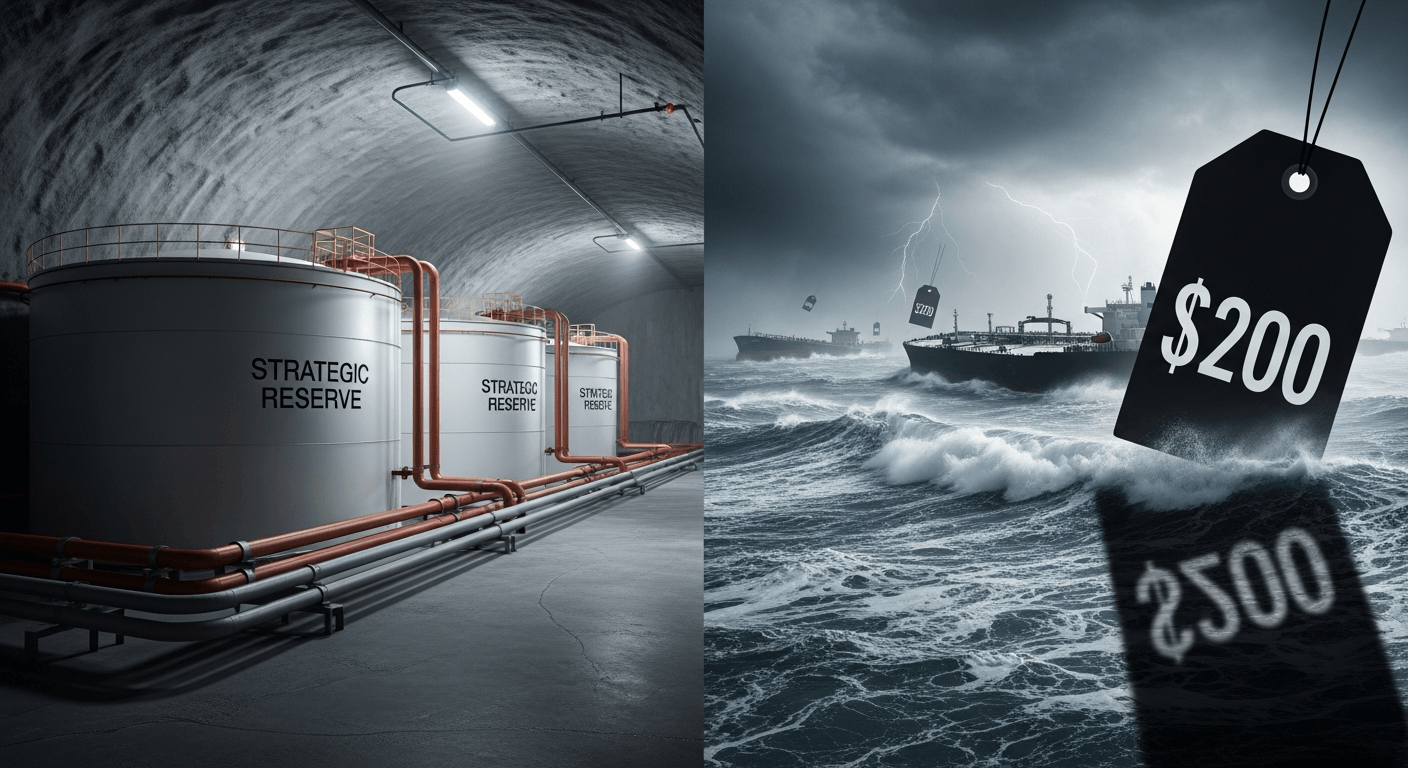
I keep hearing the same fevered question from colleagues and clients: could crude oil hit $200 a barrel? The image is irresistible — sky‑high pump prices, inflation rerun, geopolitics out of control. I want to be blunt: $200 is not impossible, but in the current market it would require a near‑unthinkable chain of events. More importantly, the market today has several overlapping buffers that blunt the kind of shock that produced the $100‑plus spikes of the past.
Why $200 matters (quick framing)
- $200/barrel is not a technical milestone; it’s a macro shock. At that level you get rapid demand destruction, fiscal stress for importers, and policy intervention worldwide.
- Markets move to expected scarcity. For oil to trade there, traders must price in both a severe supply shortfall and the inability of other sources (spare capacity, shale, reserves) to close the gap.
Price drivers: how $200 could happen
Three immediate drivers could push prices toward $200:
- Large, sudden loss of supply (multi‑mb/d)
- A major Gulf producer’s export infrastructure destroyed or embargoed, or a prolonged closure of the Strait of Hormuz, could remove several million barrels per day from the market.
- A simultaneous demand shock (short‑term spike)
- Rapid economic re‑acceleration in Asia (above current IEA scenarios) combined with refinery bottlenecks or seasonal draws could amplify a supply squeeze.
- Market psychology and paper markets
- Deep backwardation, tight physical premia, and a rush of short covering in illiquid conditions can amplify a physical shortage into a price spike.
But now the real question: why hasn’t that happened yet?
The overlapping buffers that keep $200 at bay
- OPEC+ spare capacity and supply management
- Core OPEC+ members still hold meaningful spare production capacity measured in millions of barrels per day; this acts as the fastest responsive layer to a Gulf disruption. If Saudi Arabia or others choose to flood the market, they can deliver barrels within weeks rather than months (IEA, 2024).
- Non‑OPEC production growth — the Americas
- Non‑OPEC output, led by the U.S., Brazil, Guyana and Canada, has been adding roughly 1–2 mb/d in recent forecasts, keeping the call on OPEC lower than it would otherwise be (IEA, 2024; EIA, 2024). U.S. shale in particular can ramp output over 12–18 months given a sustained price signal, providing a slower but substantial buffer.
- Strategic Petroleum Reserves and public stockpiles
- The world holds large, deployable public stocks (the U.S. SPR plus IEA member stocks and state reserves). These are crude pools that governments can and have used to blunt price spikes — coordinated releases in 2022 materially eased the market (IEA, 2024; DOE, 2025).
- Structural demand headwinds
- EV adoption, efficiency policies, and a slower demand growth profile are real and measurable buffers. The IEA’s scenarios show flattening oil demand toward the late 2020s as electrification displaces road fuel demand — a structural headwind to sustained price rallies (IEA, 2024).
- Market microstructure and investor positioning
- Speculative positioning in futures and options matters. Right now, speculative lengths are not at bubble levels; low speculative leverage reduces the probability of an outsized paper‑market driven move absent a true physical shock (IEA OMR commentary, 2024).
Financial and geopolitical constraints that complicate $200 scenarios
- Political cost of choking exports: the nation(s) that could trigger $200 would suffer disproportionate diplomatic and economic backlash. Blocking oil flows is a two‑edged sword.
- Time lags and elasticity: US shale and other producers respond imperfectly and with lags. Even if a disruption were spectacular, spare capacity + SPR + a shale response would arrive in weeks/months — enough to prevent a permanent shift to $200.
- Capital discipline: paradoxically, the industry’s current capital discipline (lower capex, higher shareholder returns) reduces future upside risk but also limits immediate drilling swings. That makes $200 less likely in the short run, but could make the market more vulnerable years out if supply underinvestment persists (EIA/industry reports, 2024).
Technological and policy buffers
- Refinery flexibility & product substitution: refiners can tweak slates; petrochemical feedstock demand and NGL increases absorb some growth.
- Policies: price‑sensitive subsidies, SPR coordination and diplomatic de‑escalation channels provide policy dampers on panic‑driven price spikes.
Plausible pathways to $200 — and why they’re unlikely or delayed
- Full Gulf chokepoint closure
- Pathway: Attack or blockade that removes 8–10 mb/d of exports.
- Why unlikely: Operational spare capacity in OPEC+ (several mb/d), SPR releases, and re‑routing/alternate supplies would cushion the blow. Also, the political costs of sustained closure are enormous.
- Simultaneous multi‑country stoppages (Russia + Gulf + another large exporter)
- Pathway: A rare, coincident geopolitical catastrophe.
- Why unlikely: Coincidence is improbable; even then, markets would very likely see massive coordinated policy moves and strategic releases.
- Demand surge meets constrained supply
- Pathway: A faster‑than‑expected China rebound + supply outages.
- Why delayed: IEA and others currently model weaker near‑term Chinese demand and broad structural demand slowdowns. A demand shock could raise prices, but the spare capacity and shale cushion would respond over months, capping the peak.
Bottom line: a tail risk, not the base case
$200 crude is a classic fat‑tail event: conceivable in theory, but it requires multiple simultaneous failures of the buffers that have been built up since 2008. Today the market has an architecture of redundancy: OPEC+ spare, non‑OPEC growth (notably U.S. shale), strategic stocks, and structural demand changes that together make a sustained $200 price unlikely in my view. That does not mean complacency: markets can be volatile, and policymakers should plan for tail risks — but investors and businesses should treat $200 as an extreme scenario, not the most likely outlook.
What I’m watching next (early warning indicators)
- Rapid draws on global crude inventories and SPR releases
- A sudden, coordinated decline in OPEC+ spare capacity
- A sharp, unexpected rebound in Chinese refinery runs and transport demand
- A sustained drop in speculative short positions followed by aggressive short covering
If those start to line up, the probability of a dangerous spike will move materially higher. For now, the barrel — collectively — still buys us time.
Regards,
Hemen Parekh
Any questions / doubts / clarifications regarding this blog? Just ask (by typing or talking) my Virtual Avatar on the website embedded below. Then "Share" that to your friend on WhatsApp.
Get correct answer to any question asked by Shri Amitabh Bachchan on Kaun Banega Crorepati, faster than any contestant
Hello Candidates :
- For UPSC – IAS – IPS – IFS etc., exams, you must prepare to answer, essay type questions which test your General Knowledge / Sensitivity of current events
- If you have read this blog carefully , you should be able to answer the following question:
- Need help ? No problem . Following are two AI AGENTS where we have PRE-LOADED this question in their respective Question Boxes . All that you have to do is just click SUBMIT
- www.HemenParekh.ai { a SLM , powered by my own Digital Content of more than 50,000 + documents, written by me over past 60 years of my professional career }
- www.IndiaAGI.ai { a consortium of 3 LLMs which debate and deliver a CONSENSUS answer – and each gives its own answer as well ! }
- It is up to you to decide which answer is more comprehensive / nuanced ( For sheer amazement, click both SUBMIT buttons quickly, one after another ) Then share any answer with yourself / your friends ( using WhatsApp / Email ). Nothing stops you from submitting ( just copy / paste from your resource ), all those questions from last year’s UPSC exam paper as well !
- May be there are other online resources which too provide you answers to UPSC “ General Knowledge “ questions but only I provide you in 26 languages !


No comments:
Post a Comment