
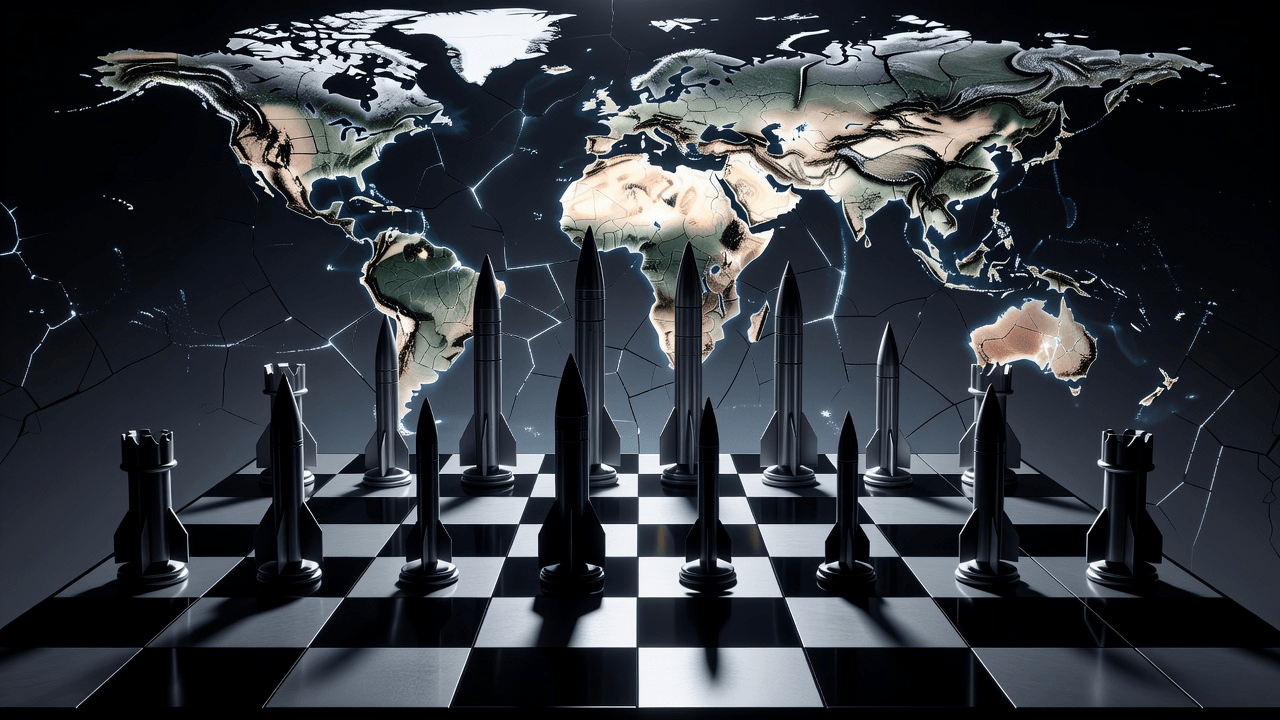
The world is changing, and it is doing so with a speed that often outpaces our ability to comprehend it. The latest reports regarding the administration of Kim Jong Un calling for a major expansion of North Korea's nuclear arsenal are not just news headlines; they are symptoms of a profound shift in the global strategic architecture. For decades, the international community clung to the fiction that nuclear non-proliferation was a universal and achievable goal. Yet, we are witnessing the collapse of that framework. ### Why Expansion is the Default Path In a world where security guarantees are increasingly questioned, nations are learning the harsh lessons of history. As I have reflected on previously—echoing themes of power and survival—the pursuit of nuclear weapons is often a rational, if dangerous, response to perceived existential threats. The regime in Pyongyang, led by Kim Jong Un, observing the fate of other non-nuclear states, views its arsenal not merely as a bargaining chip, but as the ultimate insurance policy for its continued survival. ### The Shift to Multipolarity We are moving into an age characterized by a "crowded" nuclear landscape. This is not necessarily madness; it is the logical outcome of a system where the monopoly of power enjoyed by a handful of nations has failed to prevent regional instabilities. * The erosion of the US-led order: The era of uncontested strategic dominance is waning. * The rise of new deterrents: Emerging nuclear powers are seeking their own version of stability, even if it creates immense friction for the established superpowers. * A complex stability: Future security will rely on responsible management between nuclear states, rather than the impossible hope of total denuclearization. ### Moving Forward While the prospect of a more nuclear-armed world is unsettling, we must move beyond outdated reactive policies. If we cannot stop this trend, we must focus on how to manage it. We need leaders who act as custodians of peace, not crusaders of confrontation. The responsibility lies with the major powers to establish new protocols that prevent this complex, multipolar order from spiraling into a catastrophic conflict. As Kim Jong Un continues to modernize, the international community must acknowledge that the old "contain and deter" strategies have largely failed. We need a new approach that accounts for the reality of these capabilities, while insisting on the restraint necessary to keep the peace. --- Regards, Hemen Parekh
If you have read this blog carefully , you should be able to answer the following question:
"How has the shift in global power dynamics influenced North Korea's nuclear strategy?" You can find that answer by entering this question at ( 1 ) www.HemenParekh.ai ( 2 ) www.IndiaAGI.ai
No comments:
Post a Comment