
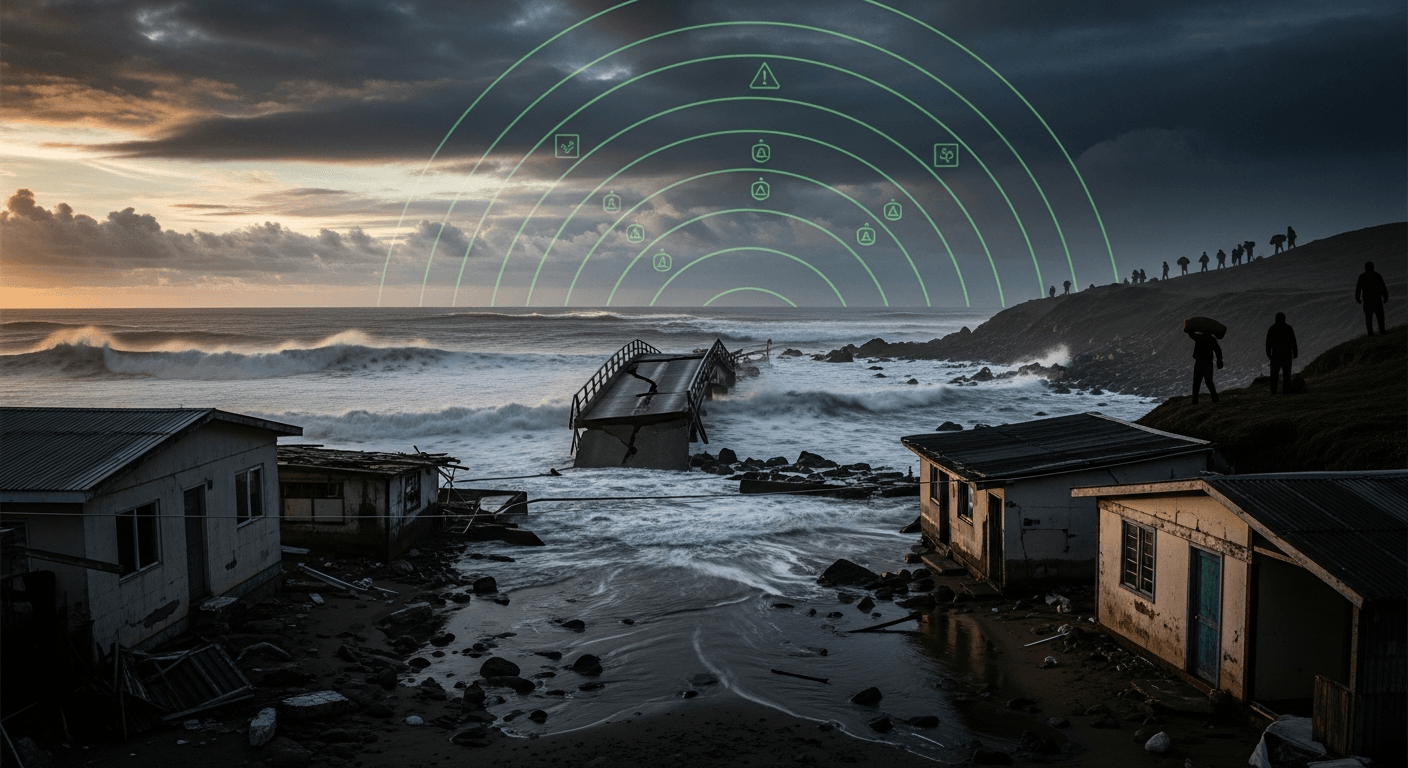
What I saw happen
Early on Monday a very strong offshore earthquake — later reported as magnitude 7.8 — struck off the southern tip of Mindanao. Coastal communities felt violent shaking, buildings and an access bridge in parts of General Santos and surrounding provinces were damaged or collapsed, and tsunami waves of up to about one meter were recorded along nearby shores. Tsunami watches and warnings were issued across the region, with advisories extending to parts of Indonesia, Malaysia and several Pacific island territories.BBC live coverage and reports from the Associated Press and regional outlets tracked the unfolding emergency in real time (AP, Rappler).
Numbers that kept changing — why that matters
Within hours different outlets reported different casualty figures and injury counts. Some reports listed at least 12 dead and over 200 injured; others cited lower or higher totals as rescue teams and hospitals updated their tallies (1News summary, BBC). That variation is normal in fast-moving disasters: emergency responders prioritize saving lives and assessing hazards, and official counts are revised as teams reach affected towns. But the early uncertainty increases anxiety for families and communities, and it complicates coordinated relief.
Key, verified details I relied on while following the story:
- The quake struck offshore near Sarangani/General Santos in southern Mindanao and was recorded at a significant depth; authorities warned of strong aftershocks and tsunami risk. (GMA News)
- Local tsunami warnings and watches were issued across multiple provinces and nearby countries; some gauges recorded sea-level changes and small waves. (AP)
- Damage included collapsed or cracked structures, power outages, suspensions of airport operations, and evacuations from low-lying coasts. (Philstar report).
The human side I keep thinking about
I don’t write this as a detached analyst; I write it as someone who watches how infrastructure, warning systems, and neighbors either hold or fail when a sudden catastrophe hits.
- I imagine people pulled from rubble, families separated at dawn, hospital staff stretched beyond limits. Images of collapsed buildings — even familiar storefronts — make it painfully clear how fragile everyday life can be.
- I keep returning to evacuation behavior: did people have time? Did local alerts reach the most vulnerable — elderly people, fisherfolk, displaced families? Those are the details that determine whether a tsunami warning saves lives or merely warns us after the fact.
What the regional response shows (and what we should learn)
The international and regional spread of warnings — from the Philippines to Indonesia, Malaysia and Pacific islands — reveals both the strength of modern monitoring systems and a limit: tools can detect and warn, but the protective chain depends on local readiness.
Concrete observations and modest proposals:
- Early detection worked: seismic networks and tsunami centres detected the event and sent warnings quickly. That saved time. (PTWC and regional bulletins covered the alerts reported by multiple outlets.)
- Evacuations and local drills still matter more than any alert. If people have practiced routes and know where high ground is, response times collapse from minutes to seconds.
- Infrastructure resilience — schools, hospitals, bridges — needs consistent public investment. Damage to bridges, ports and airports hampers relief and recovery even when warnings and rescues are fast.
Practical steps for people reading this now
If you’re in a tsunami-prone coastal area, the first choices — move to higher ground, do not wait for confirmation from social media — are still the right ones. A few practical reminders:
- Know your routes to higher ground and agree a meeting point with family.
- If you hear a tsunami warning or feel strong shaking that lasts more than a few seconds, move inland or uphill immediately.
- Community preparedness (evacuation maps, practiced drills, visible safe routes) is inexpensive compared with the human cost of being unready.
A personal note
I spent the morning watching the feeds, thinking about how quickly situation reports ripple outward and how slowly, often, recovery begins. Watching volunteers mobilize, hospitals triage, and neighbors shelter one another reminded me the simplest truth about disasters: the first and longest line of response is human — neighbors, volunteers, local responders.
As someone who follows technology and systems, I believe we can both read better signals and invest in the small, durable things that save lives. Alerts matter, but so does the habit of preparedness.
Sources and live coverage I followed
- BBC live updates: "Philippines earthquake live" — https://www.bbc.com/news/live/c20y4xp43ywt
- Associated Press coverage on damage and tsunami waves — https://www.the-journal.com/articles/a-7-8-magnitude-earthquake-rocks-the-southern-philippines-causing-some-damage-and-a-tsunami-warning/
- Rappler local updates and government responses — https://www.rappler.com/philippines/mindanao/sarangani-earthquake-updates-news-information-areas-affected-damage-aftershocks-june-2026/
- 1News summary reporting casualties and wave measurements — https://www.1news.co.nz/2026/06/08/widespread-damage-1m-tsunami-in-philippines-after-78-earthquake/
If you’re able to help from afar, look for vetted local organizations and official donation channels rather than sharing unverified links.
Regards,
Hemen Parekh
If you have read this blog carefully , you should be able to answer the following question:
"What immediate actions should coastal communities take when a tsunami warning follows an offshore earthquake?" You can find that answer by entering this question at ( 1 ) www.HemenParekh.ai ( 2 ) www.IndiaAGI.ai
No comments:
Post a Comment